 By Miles Sinclair
Updated November 2026
Choosing a generac 24kw whole house generator comes down to a few practical questions: how much of the house you need to keep running, which fuel line you can reach, whether you want remote monitoring, and how much noise the unit will make against your property line. The five models below were compared using manufacturer specifications, brand reputation and common owner feedback patterns, not hands-on testing.
Best overall: Generac 24kw Whole Home Generator with 200 Amp Transfer Switch – View on Amazon
Our top picks at a glance
- 1
 TOP CHOICEBest overallGenerac Whole House Backup Power, Automatic 200 Amp Transfer SwitchView on Amazon
- 2
 TOP CHOICEBest for cellular monitoringGenerac Automatic Backup Power, Whole House CoverageView on Amazon
- 3
 TOP CHOICEBest for portable backupWEN 56225i 2250-Watt Gas Powered Portable Inverter GeneratorView on Amazon
- 4
 Best for weather-resistant enclosureHoneywell 14kW Home Standby GeneratorView on Amazon
- 5
 Best for high running wattageGenerac PowerRush 8,000 Running Watts Portable Gas GeneratorView on Amazon
Our Top Picks
Quick Comparison
| Product | Best for | Key feature |
|---|---|---|
| Generac Whole House Backup Power 24kW | Automatic whole-home backup | 200 amp transfer switch |
| Generac Automatic Backup Power 24kW | Remote monitoring | WiFi and cellular alerts |
| WEN 56225i Inverter Generator | Portable backup | 2250 watts, fuel shut-off |
| Honeywell 14kW Home Standby Generator | Outdoor exposure | Weather-resistant enclosure |
| Generac PowerRush 8,000 W Portable | High running wattage | 10,000 starting watts |
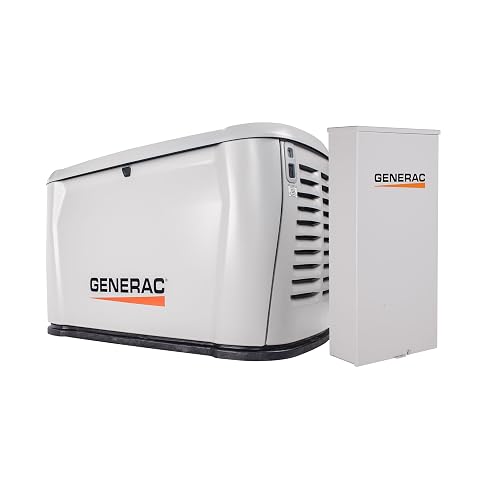
Generac Whole House Backup Power, Automatic 200 Amp Transfer Switch
GeneracWhole House Backup Power, Automatic 200 Amp Transfer Switch, Outdoor Gas Propane, Protects Home Outages, Storm Protection 24kW Whole Home Generator, Transfer Switch & Cellular Capability
Best for: Automatic whole-home backup
This suits homeowners who want the generator to start and transfer load without manual steps during an outage. Owners often report the 200 amp transfer switch is the main reason they chose it.
Pros
- Built-in 200 amp transfer switch
- Supports natural gas or propane
Cons
- Professional installation required
Generac Automatic Backup Power, Whole House Coverage
GeneracAutomatic Backup Power, Whole House Coverage, WiFi & Cellular Monitoring, Weather-Activated, Natural Gas or Propane Ready 24kW Whole Home Generator, Cellular Capability
Best for: Remote monitoring
A good fit for households that want status alerts on a phone, especially when someone is away for long periods. Owners often mention the cellular alerts as a key reason to buy.
Pros
- WiFi and cellular monitoring
- Weather-activated start
Cons
- Monitoring depends on a working cellular or WiFi connection
WEN 56225i 2250-Watt Gas Powered Portable Inverter Generator
WEN 56225i 2250-Watt Gas Powered Portable Inverter Generator with Fuel Shut-Off, CARB Compliant , Black
Best for: Portable backup
This is aimed at people who need a movable unit for a few circuits or tools rather than a permanent whole-house system. It is a different class from the 24kW units, so it should be sized to small loads only.
Pros
- Fuel shut-off feature
- CARB compliant
Cons
- Too small to run a full home
Honeywell 14kW Home Standby Generator
Honeywell 14kW Home Standby Generator – Automatic Backup Power for Whole Home – Runs on Natural Gas or Propane – Weather-Resistant Enclosure – Installation Pad Included
Best for: Outdoor exposure
Suited to homeowners in regions with heavy rain, snow or coastal humidity who want an enclosure built for outdoor placement. Its 14kW output is lower than the 24kW Generac units, so check your load calculation first.
Pros
- Weather-resistant enclosure
- Installation pad included
Cons
- Lower output than a 24kW unit
Generac PowerRush 8,000 Running Watts Portable Gas Generator
Generac 10,000 Starting Watt Portable Gas Generator, Electric Start | 8,000 Running Watts, PowerRush Technology, COsense Carbon Monoxide Detection, 11 Hour Runtime, 49 State Compliant
Best for: High running wattage
A portable choice for owners who need more running power than a small inverter unit provides, such as during extended outages at a job site or rural property. It is not a permanent whole-house solution.
Pros
- 10,000 starting watts
- COsense carbon monoxide detection
Cons
- Not a permanent whole-house unit
Buying Guide
Check your fuel source first
Confirm whether your home has a natural gas line or whether you will rely on a propane tank. Units that run on both give you more flexibility if one supply is interrupted. Review Whole House Generator Propane Usage: How Much You'll Burn (2026) to estimate tank size.
Size the unit to your real load
Add up the running and starting wattage of the circuits you want to keep on. A 24kW unit covers far more than a 2,250-watt portable. See Whole House Generator Sizing: How to Calculate the Right Wattage (2026) for a worked method.
Plan for the transfer switch
Automatic switching requires a transfer switch sized to your service. Read Whole House Switch for Generator: How to Choose and Install One Safely before buying.
Consider noise and placement
Standby units are louder than inverter portables. Plan a pad and location early, and see Whole-House Generator Noise Reduction: 8 Steps That Actually Work.
Good picks for this: Generac Whole House Backup Power 24kW and Generac Automatic Backup Power 24kW
FAQ
Can a 24kW Generac generator run my entire house?
A 24kW whole house unit is sized to carry most household loads at once, including central air, appliances and electronics. It is still worth adding up the circuits you want backed up before you buy, since very large loads like electric dryers or multiple HVAC systems can push a home past its rated output.
Do I need a transfer switch with a whole house generator?
Yes, a transfer switch is what safely connects the generator to your home’s wiring and keeps it from feeding power back into the utility lines. An automatic transfer switch will detect an outage, start the generator and switch over without you having to do anything. Most whole house installations depend on this component, so plan for it in your budget.
Should I choose natural gas or propane?
Natural gas is usually the lower-cost fuel where a gas line is already available, and it does not require on-site storage. Propane works well in areas without a gas main, but you will need a tank sized for your expected outage length. Check which fuel your home can support before comparing models.
Is professional installation required?
Installation for a permanent standby generator typically involves gas line connections, electrical work and local permits, so most homeowners hire a licensed electrician or dealer. Local codes vary, and a professional can confirm clearances from windows, doors and property lines. Doing the work yourself is generally not recommended for these systems.
What does cellular or WiFi monitoring actually do?
Monitoring features let you check the generator’s status, receive alerts about outages or maintenance needs, and in some cases run diagnostics from a phone app. This is most useful if you travel often or own a second home. Confirm the monitoring plan terms and any subscription costs with the manufacturer before buying.
How often does a standby generator need maintenance?
Most manufacturers recommend periodic maintenance such as oil changes, filter checks and a scheduled self-test run. Following the service interval in your owner’s manual helps the unit start reliably when you need it. Keeping a service record also supports any warranty claims later.
Conclusion
If you want the most complete whole house coverage with cellular monitoring and a fully integrated transfer switch, the Generac 24kw options are the best fit for most homeowners who plan a permanent installation. Choose the model with cellular capability if you value remote alerts, and the standard whole house version if you want a simpler setup.
If your budget or needs are smaller, the Honeywell 14kW standby unit or a portable model like the WEN or Generac PowerRush can cover essential circuits during shorter outages. Match the generator to your actual load and fuel access, and talk with a licensed installer before you commit.
Before you buy: helpful guides
- Generac Whole House Generator Battery: Replacement, Care and Sizing Guide
- Generac Whole House Generator Maintenance Schedule: Step-by-Step Guide (2026)
- Generac Whole House Generator Warranty: What It Covers and How to Claim (2026)
- Generac Whole House Generator Oil Change: Step-by-Step Guide for Homeowners
About Miles Sinclair
Miles Sinclair is part of our editorial team and reviews and edits our generators & noise guides, checking product details against manufacturer specifications and owner feedback.