 By Miles Sinclair
Updated November 2026
Shoppers searching for a natural gas Kohler whole house generator usually want one thing: a standby unit that starts on its own when the grid goes down and keeps the house running on the gas line already at the property. This list narrows the field to six options that fit that need. Selection criteria were built from published specifications, brand reputation, the rated output and fuel options each manufacturer states, the automatic transfer switch included or available, and recurring owner feedback about startup reliability and noise.
Our top picks at a glance
- 1
 TOP CHOICEBest overallGenerac Automatic Backup Power 22kWView on Amazon
- 2
 TOP CHOICEBest for mid-size homesGenerac 14kW Whole House Backup Power with Transfer SwitchView on Amazon
- 3
 TOP CHOICEBest for dual-fuel flexibilityChampion 22,000-Watt Dual Fuel Whole House Standby GeneratorView on Amazon
- 4
 Best portable tri-fuel optionDuroMax XP16000iHT Tri Fuel Portable Digital Inverter GeneratorView on Amazon
- 5
 Best budget pickmaXpeedingrods MXR10500ITE 10500 Watt Tri-fuel Inverter GeneratorView on Amazon
- 6
 Best for RV and partial backupWestinghouse 4650 Peak Watt Dual Fuel Portable GeneratorView on Amazon
Our Top Picks
Quick Comparison
| Product | Best for | Key feature |
|---|---|---|
| Generac Automatic Backup Power 22kW | Whole-house standby coverage | Weather-activated start with WiFi and cellular monitoring |
| Generac 14kW Whole House Backup Power | Mid-size homes with moderate loads | Integrated 200 Amp automatic transfer switch |
| Champion 22,000-Watt Dual Fuel Standby | Owners who may switch between propane and natural gas | Dual fuel with 200 Amp automatic transfer switch |
| DuroMax XP16000iHT | Portable backup with transfer-switch readiness | Tri-fuel operation with remote electric start |
| maXpeedingrods MXR10500ITE | Budget-conscious shoppers needing gas-capable backup | Tri-fuel inverter with CO sense and eco mode |
| Westinghouse 4650 Peak Watt Dual Fuel | RV and light partial-home backup | 30A RV-ready outlet and CO sensor |
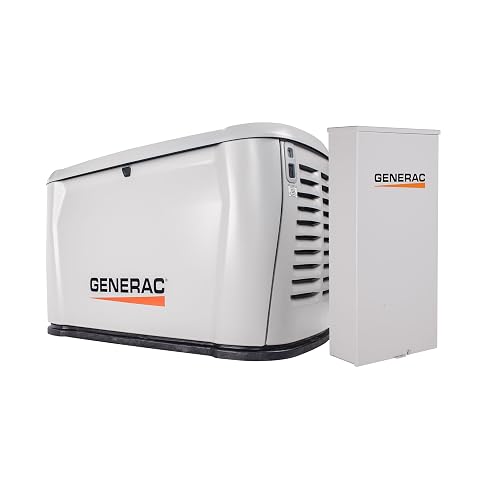
Generac Automatic Backup Power 22kW
GeneracAutomatic Backup Power, Whole House Coverage, WiFi & Cellular Monitoring, Weather-Activated, Natural Gas or Propane Ready 22kW Whole Home Generator, Cellular Capability
Best for: Whole-house standby coverage with remote monitoring
This unit suits homeowners who want a standby generator that starts automatically during outages and can be checked remotely. It is listed as natural gas or propane ready and is aimed at covering a full home rather than a few circuits.
Key specs
- Rated output: 22kW
- Fuel: natural gas or propane ready
- Monitoring: WiFi and cellular capability
- Activation: weather-activated automatic start
Pros
- Automatic startup without manual intervention
- Remote monitoring through WiFi and cellular connections
- Sized for whole-home coverage at 22kW
Cons
- Installation requires a licensed electrician and gas line work
- Monitoring features depend on a working connection and subscription terms set by the brand
Bottom line: A strong pick for homeowners who want full-house standby power with remote visibility and are prepared for professional installation.
Generac 14kW Whole House Backup Power with Transfer Switch
Whole House Backup Power, Automatic 200 Amp Transfer Switch, Outdoor Gas Propane, Protects Home Outages, Storm Protection Generac 14kW Whole Home Generator, Transfer Switch & Cellular Capability
Best for: Mid-size homes that need a smaller standby system
A 14kW unit is a reasonable match for homes with moderate loads such as refrigeration, HVAC blower operation, lighting and a few major appliances. It bundles a 200 Amp automatic transfer switch, which simplifies the electrical side of the install.
Key specs
- Rated output: 14kW
- Transfer switch: 200 Amp automatic
- Fuel: outdoor gas or propane configuration
- Connectivity: cellular capability
Pros
- Lower output suits smaller homes and reduces fuel draw
- Transfer switch included in the package
- Cellular capability for outage alerts
Cons
- May not cover large electric loads such as central air plus electric range simultaneously
- Requires a load calculation before purchase to confirm fit
Bottom line: Good for owners of mid-size homes who have calculated their essential loads and want a bundled transfer switch.
Champion 22,000-Watt Dual Fuel Whole House Standby Generator
Champion 22,000-Watt Dual Fuel (Liquid Propane/Natural Gas) Whole House Home Standby Generator and 200-Amp Automatic Transfer Switch with fleX Technology
Best for: Owners who may run on either liquid propane or natural gas
Dual-fuel standby units are useful where the gas supply could change, for example during a service interruption or after a move. This Champion model is listed for liquid propane and natural gas, with a 200 Amp automatic transfer switch in the package.
Key specs
- Rated output: 22,000 watts
- Fuel: dual fuel, liquid propane or natural gas
- Transfer switch: 200 Amp automatic
- Technology: fleX Technology per listing
Pros
- Runs on natural gas or propane
- Includes automatic transfer switch
- 22kW output covers larger whole-home loads
Cons
- Fuel consumption is higher at full load than smaller units
- Professional installation and permitting are required
Bottom line: A practical choice for buyers who want fuel flexibility and a full-size standby system with a transfer switch included.
DuroMax XP16000iHT Tri Fuel Portable Digital Inverter Generator
DuroMax XP16000iHT 16,000-Watt Tri Fuel Portable Digital Inverter Generator – Gas, Propane & Natural Gas, Remote Electric Start, Whole Home Power Backup, Transfer Switch Ready, RV & Emergency Ready
Best for: Portable backup that can be connected to a transfer switch
This is a portable inverter generator rather than a permanently installed standby unit. Its listing highlights transfer-switch readiness and tri-fuel operation, so it can be used with gasoline, propane or natural gas. It suits owners who want flexibility and accept manual setup during an outage.
Key specs
- Rated output: 16,000 watts
- Fuel: gasoline, propane and natural gas
- Start: remote electric start
- Design: digital inverter, transfer switch ready
Pros
- Tri-fuel flexibility
- Remote electric start
- Can be moved between locations
Cons
- Not automatic; someone must start it during an outage
- Must be placed outdoors with clearance from openings to avoid carbon monoxide risk
Bottom line: Best for owners who prefer a portable unit with transfer-switch readiness and are comfortable starting it manually.
maXpeedingrods MXR10500ITE 10500 Watt Tri-fuel Inverter Generator
maXpeedingrodsRemote Start, Gas Powered Generator,LPG Propane, NG,CO Sense,ECO Mode,Backup Power for Home, Gasrden,Job Sites, MXR10500ITE 10500 Watt Tri-fuel Inverter Generator,120/240V,E-start
Best for: Budget-conscious shoppers who want gas-capable backup
This inverter generator is listed for LPG propane and natural gas operation with remote start, an eco mode and CO sensing. Its 10,500-watt rating is best suited to critical circuits rather than a full house with central air.
Key specs
- Rated output: 10,500 watts
- Fuel: tri-fuel, including LPG and natural gas
- Voltage: 120/240V
- Features: remote start, CO sense, eco mode
Pros
- Lower purchase commitment than standby systems
- Natural gas and propane compatible
- CO sense and eco mode listed as standard features
Cons
- Output is too low for most whole-home loads
- Portable design requires manual setup and a separate transfer switch
Bottom line: A reasonable choice for partial backup of essential circuits on a limited budget, not a substitute for a true whole-house standby unit.
Westinghouse 4650 Peak Watt Dual Fuel Portable Generator
Westinghouse 4650 Peak Watt Dual Fuel Portable Generator, RV Ready 30A Outlet, Gas & Propane Powered, CO Sensor
Best for: RV use and light partial-home backup
The Westinghouse listing emphasizes a 30A RV-ready outlet, dual-fuel operation and a CO sensor. At 4,650 peak watts it is far below whole-house requirements, so it is included here mainly for owners who need a smaller gas-capable unit.
Key specs
- Peak output: 4,650 watts
- Fuel: gasoline or propane per listing, dual fuel design
- Outlet: 30A RV-ready
- Safety: CO sensor
Pros
- RV-ready 30A outlet
- Dual-fuel design
- Includes a CO sensor
Cons
- Output is far too low to run a whole house
- Requires manual operation and outdoor placement
Bottom line: Suitable for RV owners or those wanting a small portable backup, not for whole-house natural gas standby needs.
Buying Guide
Fuel Type and Gas Supply Capacity
Natural gas delivers lower pressure than propane, and many standby units require a dedicated gas meter or a line sized for the generator’s full-load draw. Check the manufacturer’s stated BTU consumption at full and half load, then compare it against your meter capacity. A gas supplier or licensed plumber can confirm pressure and line size.
Good picks for this: Generac Automatic Backup Power 22kW, Champion 22,000-Watt Dual Fuel Standby
Output Rating and Whole-House Sizing
Start with a load calculation that totals the wattage of appliances you need running at the same time, including starting surge for refrigerators, well pumps and HVAC compressors. Units around 14kW suit smaller homes with moderate loads, while 22kW units are sized for larger homes with central air and electric cooking.
Good picks for this: Generac 14kW Whole House Backup Power, Generac Automatic Backup Power 22kW
Automatic Transfer Switch
A standby generator without a transfer switch cannot safely power the house. Confirm whether the transfer switch is included, its amperage rating and whether it matches your service panel. A 200 Amp switch is common for whole-house systems. Never backfeed a panel through a standard plug.
Good picks for this: Generac 14kW Whole House Backup Power, Champion 22,000-Watt Dual Fuel Standby
Noise Level
Standby units are typically louder than inverter portables, and manufacturers usually publish decibel readings measured at a stated distance under a stated load. Compare those figures using the same distance. Placement matters: keeping the unit away from bedroom windows and using manufacturer-approved enclosures can reduce perceived noise.
Good picks for this: DuroMax XP16000iHT Tri Fuel Portable Digital Inverter Generator, maXpeedingrods MXR10500ITE Tri-fuel Inverter Generator
Monitoring and Automatic Start Features
Weather-activated starting and remote monitoring help owners learn about outages quickly, especially when away from home. Check whether monitoring requires a subscription or data plan and whether alerts work without a cellular signal at the property.
Good picks for this: Generac Automatic Backup Power 22kW, Generac 14kW Whole House Backup Power
Installation Requirements and Permits
Permanent gas-fueled standby generators generally require permits, a licensed electrician, gas line work and clearance from windows and doors under the manufacturer’s installation manual. Installation cost and timelines vary widely by region, so budget time for inspections. Consult a licensed professional before any gas or electrical work.
Good picks for this: Champion 22,000-Watt Dual Fuel Standby, Generac Automatic Backup Power 22kW
Carbon Monoxide Safety
All combustion generators produce carbon monoxide. Install CO alarms on every level of the home, never run any generator in an attached garage or near openings, and check that the unit includes or is compatible with CO sensing. Portable units must be used outdoors at a safe distance from doors and windows.
Good picks for this: maXpeedingrods MXR10500ITE Tri-fuel Inverter Generator, Westinghouse 4650 Peak Watt Dual Fuel Portable Generator
FAQ
Can a Kohler-style natural gas generator run on my home’s gas line?
Many standby generators are designed to run on natural gas supplied by the utility, provided the gas line can deliver the required volume and pressure at full load. A licensed plumber or gas utility can verify whether your meter and piping are adequate.
What size generator do I need to power a whole house?
Size depends on total simultaneous load, including motor starting surge. Many homes fall between roughly 14kW and 22kW, but a proper load calculation is the only reliable way to decide. A licensed electrician or the generator dealer can assist.
Do I need a transfer switch?
Yes. A transfer switch isolates the home from the utility grid so the generator does not feed power back into lines where utility workers may be working. It should be installed by a licensed electrician and matched to your panel.
Is natural gas or propane better for a standby generator?
Natural gas offers an unlimited supply while connected to the utility line, but it can be disrupted in some outages. Propane is stored on site and can keep running, though tank capacity and refills matter. Dual-fuel units offer both options.
How loud is a whole house standby generator?
Noise varies by model and load, and manufacturers publish decibel figures at specified distances. Standby units are generally louder than inverter portables, so placement and enclosure choices matter for neighbors and nearby bedrooms.
Can I install a natural gas generator myself?
Most jurisdictions require permits and licensed work for gas and electrical connections. Improper gas connections or backfeeding a panel can cause fires, injuries or utility hazards. Consult a licensed professional before installing any standby system.
Conclusion
For a full-house natural gas standby system, the Generac Automatic Backup Power 22kW and the Champion 22,000-Watt Dual Fuel unit are the most directly aligned with whole-home coverage. The Generac 14kW suits smaller homes that have calculated lighter loads. Owners who want portable flexibility with transfer-switch readiness should look at the DuroMax XP16000iHT, while the maXpeedingrods unit fits a tighter budget for partial backup. The Westinghouse 4650 is best kept to RV or light portable use. Match the output to a written load calculation before buying, and have a licensed professional confirm gas and electrical requirements.
Sources
- Federal guidance on home backup power, generator selection and safe operation (energy.gov)
- Consumer safety recalls and carbon monoxide hazard information for portable and standby generators (cpsc.gov)
- Standards for installing stationary engine generators, including fuel supply and clearance requirements (nfpa.org)
Before you buy: helpful guides
- Whole House Generator Natural Gas Cost: What to Expect in 2026
- Whole House Generator LP Gas: Sizing, Setup and Key Steps (2026)
- Kohler Whole House Generator: Sizing, Setup and Noise Guide
- Kohler Whole House Generator Price: A Practical Guide (2026)
- Best Fuel for Whole House Generator: Gas, Propane or Diesel Compared (2026)
About Miles Sinclair
Miles Sinclair is part of our editorial team and reviews and edits our generators & noise guides, checking product details against manufacturer specifications and owner feedback.