 By Miles Sinclair
Updated November 2026
Shopping for a best price whole house generator means balancing three things: how many watts you actually need to keep the house running, which fuel your home can reliably supply, and whether the unit can connect to your electrical panel safely. This guide compares six options against those criteria. We looked at manufacturer specifications, brand reputation, transfer switch compatibility and patterns in owner feedback. We did not test these units ourselves, so treat the notes below as a research summary rather than hands-on results.
Our top picks at a glance
- 1
 TOP CHOICEBest overallDuroMax XP13000EH 13,000-Watt Dual Fuel Portable GeneratorView on Amazon
- 2
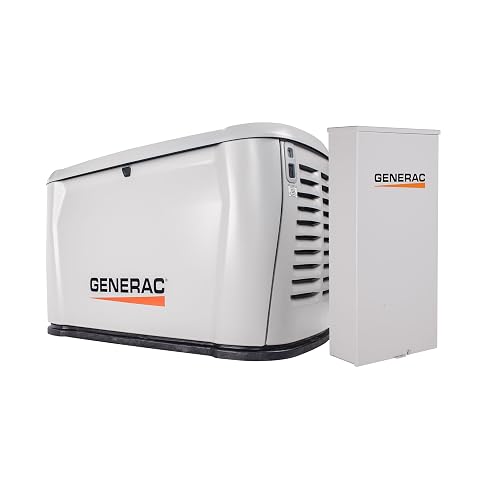
 TOP CHOICEBest for standby backupGenerac 26kW Whole Home Generator with WiFi and Cellular MonitoringView on Amazon
- 3
 TOP CHOICEBest for quiet, solar-assisted useOSCAL PowerMax 6000 Solar Generator with 3×400W Solar PanelView on Amazon
- 4
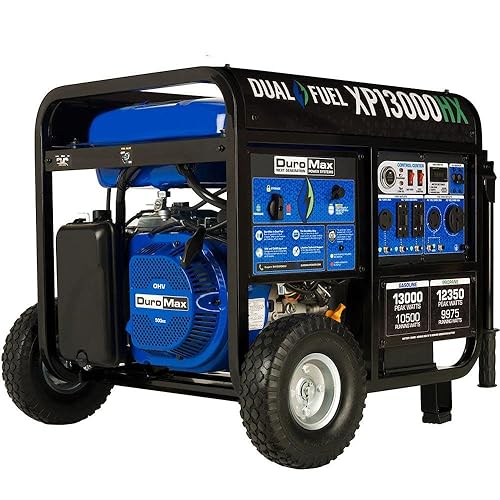 Best for transfer switch wiringDuroMax XP13000HX 13,000-Watt Dual Fuel Portable GeneratorView on Amazon
- 5
 Best permanent installChampion 22,000-Watt Dual Fuel Whole House Home Standby GeneratorView on Amazon
- 6
 Best battery-based backupJackery HomePower 3600 Plus Power Station, 3584Wh, 3600W AC OutputView on Amazon
Our Top Picks
Quick Comparison
| Product | Best for | Key feature |
|---|---|---|
| DuroMax XP13000EH | Budget-minded whole-home backup | 13,000 W dual fuel, electric start |
| Generac 26kW Whole Home Generator | Automatic standby backup | 26 kW output, automatic transfer |
| OSCAL PowerMax 6000 Solar Generator | Quiet, solar-assisted outages | 6000 W AC output, 120V/240V split phase |
| DuroMax XP13000HX | Transfer switch hookups | 13,000 W dual fuel, transfer switch ready |
| Champion 22,000-Watt Dual Fuel Standby Generator | Permanent whole-house install | 22,000 W with 200-amp automatic transfer switch |
| Jackery HomePower 3600 Plus | Battery-based, fume-free backup | 3584 Wh capacity, 3600 W AC output |
DuroMax XP13000EH 13,000-Watt Dual Fuel Portable Generator
DuroMax XP13000EH 13,000-Watt Dual Fuel Portable Generator – Gas & Propane, Electric Start, Whole Home Backup Power, Transfer Switch Ready, RV & Emergency Ready
Best for: Budget-minded whole-home backup
This suits homeowners who want to power essential circuits through a transfer switch without paying for a permanent standby system. It runs on gasoline or propane, which gives flexibility when one fuel supply is limited.
Key specs
- 13,000-watt rated output (per listing name)
- Dual fuel: gasoline and propane
- Electric start
- Transfer switch ready
Pros
- Dual fuel operation adds fuel flexibility
- Electric start is convenient in cold weather
- Transfer switch readiness supports safer whole-home hookup
Cons
- Portable units are louder than standby models and need outdoor placement
- Requires manual fueling and a properly installed transfer switch
Bottom line: A good pick for homeowners who accept some manual work in exchange for a lower overall investment.
Generac 26kW Whole Home Generator with WiFi and Cellular Monitoring
Automatic Backup Power, Whole House Coverage, WiFi & Cellular Monitoring, Weather-Activated, Natural Gas or Propane Ready Generac 26kW Whole Home Generator, Cellular Capability
Best for: Automatic standby backup
This is aimed at homeowners who want the generator to start and transfer load without anyone present. Cellular and WiFi monitoring lets owners check status remotely, which matters during extended outages.
Key specs
- 26 kW whole-home output (per listing name)
- Natural gas or propane ready
- WiFi and cellular monitoring
- Weather-activated operation
Pros
- Automatic start and transfer during outages
- Remote monitoring keeps owners informed
- Natural gas option avoids refueling
Cons
- Installation cost is significant and requires licensed work
- Monitoring features depend on an active connection plan
Bottom line: Best for households that want true set-and-forget backup and can budget for professional installation.
OSCAL PowerMax 6000 Solar Generator with 3×400W Solar Panel
OSCAL PowerMax 6000 Solar Generator with 3×400W Solar Panel, 120V/240V Split Phase Voltage 6000W AC Outlets (9000W Peak), 2200W AC Charging/2400W Solar Charging, Emergency for Home, Battery Backup
Best for: Quiet, solar-assisted use
This fits households that want near-silent backup for critical loads and can accept a smaller power envelope than a full standby unit. It is better suited to running select circuits than the entire house at once.
Key specs
- 6000 W AC output (9000 W peak, per listing name)
- 120V/240V split phase outlets
- Three 400 W solar panels included
- 2200 W AC charging, 2400 W solar charging
Pros
- Battery-based operation runs without fumes or fuel
- Solar charging extends runtime during daylight outages
- Split phase output supports larger appliances
Cons
- Limited runtime compared with fuel-powered generators
- Not a full-home solution for large electric loads like central AC
Bottom line: A practical choice for critical-load backup where quiet operation matters more than long runtimes.
DuroMax XP13000HX 13,000-Watt Dual Fuel Portable Generator
DuroMax XP13000HX 13,000-Watt Dual Fuel Portable Generator – Gas & Propane, Electric Start, Whole Home Power Backup, Transfer Switch Ready, RV & Emergency Ready
Best for: Transfer switch hookups
This suits owners planning to wire a portable unit into the home through an interlock or transfer switch. The listing emphasizes whole-home power backup and transfer switch readiness.
Key specs
- 13,000-watt rated output (per listing name)
- Dual fuel: gasoline and propane
- Electric start
- Transfer switch ready
Pros
- Dual fuel gives backup options during shortages
- Electric start simplifies starting
- Transfer switch readiness suits planned home wiring
Cons
- Requires outdoor operation and manual refueling
- Noise level is higher than inverter or standby models
Bottom line: A reasonable pick for owners who will have a qualified electrician install the transfer switch.
Champion 22,000-Watt Dual Fuel Whole House Home Standby Generator
Champion 22,000-Watt Dual Fuel (Liquid Propane/Natural Gas) Whole House Home Standby Generator and 200-Amp Automatic Transfer Switch with fleX Technology
Best for: Permanent whole-house install
This is a home standby system with a 200-amp automatic transfer switch, designed for permanent mounting. It suits owners who want the entire panel covered and are prepared for professional installation and code-compliant permitting.
Key specs
- 22,000-watt output (per listing name)
- Dual fuel: liquid propane and natural gas
- 200-amp automatic transfer switch included
- fleX Technology
Pros
- Automatic transfer switch removes manual steps
- Dual fuel supports natural gas or propane supply
- Permanent installation suits long-term backup
Cons
- Professional installation and permits add significant project cost
- Heavier and less portable than any unit in this list
Bottom line: Best for homeowners who want a full-house standby system and are ready for a permanent installation.
Jackery HomePower 3600 Plus Power Station, 3584Wh, 3600W AC Output
Jackery HomePower 3600 Plus Power Station, 3584Wh, 3600W AC Output | LFP Battery, Expandable to 21kWh, Solar Generator, Essential Home Backup for Home Use, Emergencies, RV (Solar Panel Optional)
Best for: Battery-based, fume-free backup
This suits households that want indoor-safe backup for essential loads without running an engine. It is a battery power station rather than a fuel-burning generator, so runtime depends on load and battery capacity.
Key specs
- 3584 Wh capacity (per listing name)
- 3600 W AC output (per listing name)
- LFP battery chemistry
- Expandable to 21 kWh with added batteries (per listing name)
Pros
- No fuel, no exhaust, and quiet operation
- LFP batteries are known for long cycle life
- Expandable capacity suits growing needs
Cons
- Runtime on whole-house loads is limited without expansion
- Not designed to run high-draw appliances like central AC for long periods
Bottom line: A strong option for essential-circuit backup where indoor, fume-free operation is the priority.
Buying Guide
Wattage and Sizing
Add the running watts of the circuits you want to keep on, then add the starting surge for motors such as the well pump, refrigerator and central AC compressor. Surge demands can be two to three times running watts. Generators in the 13,000 W class suit most essential-circuit setups; whole-house coverage of a large home with central air usually calls for 20 kW or more. See our guide on What Size Generator to Power Whole House: 4 Best Picks for 2026 for worked examples.
Good picks for this: Generac 26kW Whole Home Generator, Champion 22,000-Watt Dual Fuel Standby Generator
Fuel Type
Gasoline is widely available but degrades in storage. Propane stores indefinitely and is cleaner-burning. Natural gas offers continuous supply where a utility line is connected. Dual-fuel units let you switch depending on supply. Compare options in Best Fuel for Whole House Generator: Gas, Propane or Diesel Compared (2026).
Good picks for this: DuroMax XP13000EH, Champion 22,000-Watt Dual Fuel Standby Generator
Transfer Switch Compatibility
A generator cannot safely feed the house through a regular outlet. You need a transfer switch or interlock kit rated for your panel, commonly 200 amps for whole-home service. Confirm the switch matches your service size before buying. Our overview of 6 Best Whole House Generators for 200 Amp Service Compared (2026) covers this in more detail.
Good picks for this: DuroMax XP13000HX, Champion 22,000-Watt Dual Fuel Standby Generator
Noise Level
Manufacturers usually publish decibel ratings measured at a set distance, often around 23 feet under a specific load. Inverter and standby designs are generally quieter than open-frame portable engines. If neighbors are close, look at Top 6 Quiet Whole House Generators for Homes in 2026 for quieter options.
Good picks for this: OSCAL PowerMax 6000 Solar Generator, Jackery HomePower 3600 Plus
Automation and Monitoring
Automatic start and transfer matter most when you may be away or asleep during an outage. Remote monitoring helps you track fuel, load and maintenance alerts. Confirm whether monitoring requires a subscription or cellular plan before buying.
Good picks for this: Generac 26kW Whole Home Generator, Champion 22,000-Watt Dual Fuel Standby Generator
Durability and Maintenance
Standby units need periodic oil changes, air filter service and load testing. Portable units need fuel stabilizer for gasoline and regular startup checks. Lithium battery systems have no oil or fuel maintenance but do require storage at proper charge levels. Check the manufacturer’s service interval before you buy.
Good picks for this: Jackery HomePower 3600 Plus, DuroMax XP13000HX
Placement and Safety
Fuel-burning generators must operate outdoors, well away from windows, doors and vents, because carbon monoxide can build up quickly. Keep the unit dry and on level ground. Install a battery-backed carbon monoxide alarm near sleeping areas. For safe placement guidance, consult the sources listed below.
Good picks for this: Jackery HomePower 3600 Plus, OSCAL PowerMax 6000 Solar Generator
FAQ
What is the best price whole house generator for most homes?
There is no single answer. For budget-minded homeowners willing to handle manual setup, a dual-fuel portable with transfer switch readiness is a common choice. For automatic whole-home coverage, a standby unit is more suitable, though installation adds cost.
How many watts do I need to power a whole house?
It depends on the circuits you want to run. Total the running watts of essential loads and add surge capacity for motors. Many homes with central air need 20 kW or more for full coverage, while essential-circuit setups often use much less.
Can I plug a generator directly into a wall outlet?
No. Backfeeding through an outlet is dangerous to utility workers and can damage equipment. Use a properly rated transfer switch or interlock kit installed by a licensed electrician.
Is propane or natural gas better for a standby generator?
Natural gas gives continuous supply if your home is connected to a utility line. Propane stores indefinitely in a tank and works where no gas line exists. Your choice depends on local infrastructure and fuel storage space.
How loud is a whole house generator?
Noise varies widely. Standby units and inverter designs are generally quieter than open-frame portable engines. Check the manufacturer’s decibel rating and the distance it is measured at, since figures are not directly comparable across brands.
Do I need a permit to install a standby generator?
Often yes. Many jurisdictions require permits for fuel line and electrical work. A licensed installer typically handles permitting. Verify local requirements before starting any installation.
Conclusion
For a dual-fuel portable with transfer switch readiness, the DuroMax models are a practical starting point. Homeowners who want automatic whole-home coverage should look at the Generac 26kW or Champion standby systems and plan for professional installation. The OSCAL solar generator and Jackery battery station suit quiet, fume-free backup of essential loads. Match the choice to your wattage needs, fuel supply and installation tolerance rather than to a single headline spec.
Sources
- Guidance on home backup power, generator sizing considerations and fuel options (energy.gov)
- Carbon monoxide safety information and recall notices for portable generators (cpsc.gov)
- Standards and safety guidance for emergency and standby power systems (nfpa.org)
Before you buy: helpful guides
About Miles Sinclair
Miles Sinclair is part of our editorial team and reviews and edits our generators & noise guides, checking product details against manufacturer specifications and owner feedback.