 By Miles Sinclair
Updated November 2026
If a standby unit feels like too much equipment, too much noise or too much installation work, you are not alone in looking for an alternative to whole house generator setups. This list compares seven options that can keep essential circuits running during an outage without a permanent fuel line, a concrete pad or a full transfer install. The selection criteria were usage capacity, noise and fuel type, the need for a transfer switch, portability and how owners describe setup and day-to-day operation. Every pick here is a published specification-based comparison; none of these units were tested by the author.
Our top picks at a glance
- 1
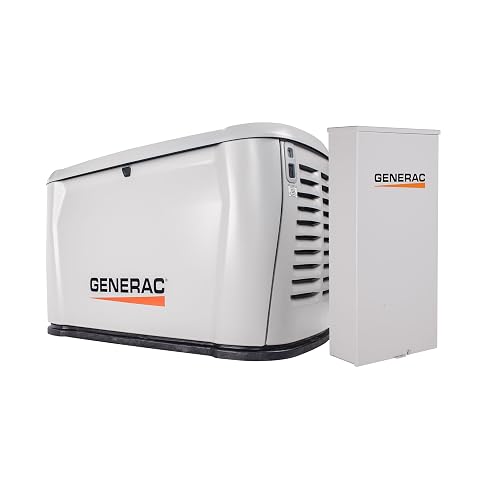 TOP CHOICEBest overallGenerac 10kW Whole Home Generator, Transfer Switch and Cellular CapabilityView on Amazon
- 2
 TOP CHOICEBest for whole-home standby with less setupHoneywell 14kW Home Standby GeneratorView on Amazon
- 3
 TOP CHOICEBest for portable dual-fuel backupWEN 14,500-Watt Tri-Fuel Generator (TF-1450X)View on Amazon
- 4
 Best for high-capacity battery backupJackery HomePower 3600 Plus Power StationView on Amazon
- 5
 Best for solar-ready expansionOSCAL PowerMax 6000 Solar GeneratorView on Amazon
- 6
 Best for quiet, lightweight backupEcoFlow Delta 3 Portable Power StationView on Amazon
- 7
 Best budget pickPECRON Portable Power Station F3000LFPView on Amazon
Our Top Picks
Quick Comparison
| Product | Best for | Key feature |
|---|---|---|
| Generac 10kW Whole Home Generator | Whole-home standby with a transfer switch | 16-circuit automatic transfer switch, outdoor gas or propane |
| Jackery HomePower 3600 Plus | Quiet, high-capacity battery backup | 3,584Wh capacity, 3600W AC output, expandable battery |
| OSCAL PowerMax 6000 | Solar-ready home backup | 120V/240V split-phase output, 9000W peak |
| Honeywell 14kW Home Standby Generator | Standby power without a large install | Natural gas or propane, weather-resistant enclosure, pad included |
| WEN 14,500-Watt Tri-Fuel Generator | Portable dual-fuel backup | Gas, propane or natural gas, transfer-switch ready |
| EcoFlow Delta 3 Portable Power Station | Quiet, lightweight backup | 1,024Wh LiFePO4, 1800W AC output, fast recharge |
| PECRON F3000LFP Portable Power Station | Budget-minded battery backup | 3,072Wh LiFePO4, expandable to 10,752Wh |
Generac 10kW Whole Home Generator, Transfer Switch and Cellular Capability
Whole House Backup Power, Automatic 16 Circuit Transfer Switch, Outdoor Gas or Propane, Protects Home Outages Generac 10kW Whole Home Generator, Transfer Switch & Cellular Capability
Best for: Whole-house standby with automatic transfer
This suits homeowners who want the convenience of a standby system but are looking for a unit that is smaller than a full-size home generator and works with an existing gas or propane supply. It fits well where a permanent install is acceptable but a 20kW-class unit is more than the home needs.
Key specs
- 10kW rated output
- 16-circuit automatic transfer switch
- Outdoor gas or propane operation
- Cellular connectivity for remote monitoring
Pros
- Automatic transfer during outages with no manual switching
- Covers a set of critical circuits rather than requiring a full-panel install
- Cellular capability supports remote status checks
Cons
- Requires professional installation and a fuel line
- Limited to the circuits connected to the transfer switch
Bottom line: A strong choice for homeowners who want a true standby system with automatic transfer but do not need full-house coverage.
Jackery HomePower 3600 Plus Power Station
Jackery HomePower 3600 Plus Power Station, 3584Wh, 3600W AC Output | LFP Battery, Expandable to 21kWh, Solar Generator, Essential Home Backup for Home Use, Emergencies, RV (Solar Panel Optional)
Best for: Quiet, high-capacity battery backup
This suits households that want silent, fume-free backup for refrigerators, medical devices, lighting and internet during short outages, and who are comfortable running a battery system indoors. It is also a good match for people who want solar expansion later.
Key specs
- 3,584Wh battery capacity
- 3600W AC output
- LFP battery chemistry, expandable up to 21kWh per the listing
Pros
- Silent operation compared with combustion generators
- No fuel to store or refill
- Scales with add-on batteries and optional solar panels
Cons
- Runtime depends on the connected load and is limited by stored energy
- Does not cover whole-house loads like central air for long periods
Bottom line: Best for owners who want quiet, indoor-safe backup for essential loads and plan to add solar over time.
OSCAL PowerMax 6000 Solar Generator
OSCAL PowerMax 6000 Solar Generator with 3×400W Solar Panel, 120V/240V Split Phase Voltage 6000W AC Outlets (9000W Peak), 2200W AC Charging/2400W Solar Charging, Emergency for Home, Battery Backup
Best for: Solar-ready home backup
This fits homeowners who want a battery backup that can run 240V appliances and recharge from solar panels or an AC source. It is a reasonable option for people who want a bigger battery platform than a typical portable station.
Key specs
- 6000W AC output, 9000W peak
- 120V/240V split-phase output
- 2200W AC charging and 2400W solar charging per the listing
Pros
- Split-phase output supports 240V loads
- Designed for solar recharging
- Large output for short high-draw loads
Cons
- Heavy and not especially compact
- Owner feedback on long-term support varies by brand, so check warranty terms
Bottom line: A good fit for solar-minded households that need 240V capability in a battery format.
Honeywell 14kW Home Standby Generator
Honeywell 14kW Home Standby Generator – Automatic Backup Power for Whole Home – Runs on Natural Gas or Propane – Weather-Resistant Enclosure – Installation Pad Included
Best for: Standby power without a large install
This suits homeowners who want permanent, automatic backup but prefer a compact 14kW unit that runs on natural gas or propane. It is aimed at those willing to pay for professional installation in exchange for hands-off operation.
Key specs
- 14kW rated output
- Runs on natural gas or propane
- Weather-resistant enclosure with installation pad included
Pros
- Permanent automatic standby operation
- Dual-fuel capability
- Pad included, which simplifies placement
Cons
- Requires professional installation, a fuel line and a transfer switch
- Still a permanent fixture with noise and maintenance needs
Bottom line: Best for homeowners who want a standby generator and are willing to have it professionally installed.
WEN 14,500-Watt Tri-Fuel Generator (TF-1450X)
WEN 14,500-Watt 120V/240V Tri-Fuel Generator for Gas, Propane, and Natural Gas, Transfer-Switch Ready with Electric Start, Wheel Kit, and CO Watchdog (TF-1450X), Black & Red
Best for: Portable dual-fuel backup
This suits people who want a portable generator that can run on gasoline, propane or natural gas and can be connected to a transfer switch. It works for households that need flexibility over a permanent install.
Key specs
- 14,500-watt rated output
- 120V/240V output
- Gas, propane and natural gas capable
- Electric start and wheel kit
Pros
- Three fuel options for flexibility during outages
- Electric start simplifies operation
- Transfer-switch ready for connecting to home circuits
Cons
- Portable units are loud and must be run outdoors, away from windows
- Requires fuel storage or a gas supply and regular maintenance
Bottom line: A practical choice for owners who want a portable, multi-fuel generator and can manage noise and placement.
EcoFlow Delta 3 Portable Power Station
LiFePO4 Battery, Full Charge in 56 Min, 1800W AC/100W USB-C Output, Solar Generator for Home Backup Power, Camping & RVs EF ECOFLOW Delta 3 Portable Power Station, 1024Wh 1800W
Best for: Quiet, lightweight backup
This suits people who need a small, quiet battery for phones, laptops, a router, a CPAP or a mini-fridge during short outages. It is also useful for apartments or spaces where combustion is not allowed.
Key specs
- 1,024Wh LiFePO4 battery
- 1800W AC output
- 100W USB-C output
- Listing states full charge in 56 minutes
Pros
- Silent and indoor-safe
- Fast recharging relative to capacity
- Compact enough to move between rooms
Cons
- Capacity is small for extended outages
- Cannot carry large resistive loads like electric heat for long
Bottom line: Best for light essential loads and apartment or indoor use where a generator is not practical.
PECRON Portable Power Station F3000LFP
PECRON Portable Power Station F3000LFP, 3072Wh Solar Generator, 3600W LiFePO4 Battery Home Backup, Fast Charging Power Station Expand Capacity to 10752Wh, Solar Generators for Home Use, Camping, RV
Best for: Budget-minded battery backup
This fits households that want a large LiFePO4 battery with expansion options without buying a premium-tier system. It is a sensible starting point for those who may add batteries later.
Key specs
- 3,072Wh LiFePO4 capacity
- 3600W AC output
- Expandable to 10,752Wh per the listing
Pros
- Large capacity for the category
- Expansion path for longer runtimes
- Silent operation for indoor use
Cons
- Heavy to move without a cart
- Brand support and warranty details should be checked before buying
Bottom line: A reasonable pick for owners who want big battery capacity with room to grow on a tighter budget.
Buying Guide
Power capacity and what you need to run
Start by listing the loads you want to keep running: refrigerator, well pump, furnace blower, lights, medical equipment. Add up their running watts and the startup surge of motors. Battery systems are rated in watt-hours, so a 3,000Wh battery running a 600W load lasts roughly five hours before losses, while a 1,000W load cuts that to about three. Check the surge rating against the largest motor.
Good picks for this: Jackery HomePower 3600 Plus, PECRON F3000LFP
Fuel type and availability
Natural gas is typically the most reliable fuel for standby use because it is piped in. Propane works well with a tank but requires refills. Gasoline is the least convenient for long outages because it degrades in storage. Dual-fuel units let you switch depending on what is available.
Good picks for this: Honeywell 14kW Home Standby Generator, WEN 14,500-Watt Tri-Fuel Generator
Noise level and placement
Combustion generators are commonly rated in decibels at a set distance, so compare the rating at the same distance from the source. Battery stations produce little or no operating noise. Place any combustion unit away from windows, doors and bedrooms, and never run one in an enclosed space.
Good picks for this: EcoFlow Delta 3 Portable Power Station, Jackery HomePower 3600 Plus
Transfer switch and installation
Connecting any generator to house wiring requires a transfer switch or interlock to prevent backfeeding the utility grid. Whole-house standby systems need professional installation. Portable units can be connected through a manual or automatic switch, but the wiring should be done by a licensed electrician.
Good picks for this: Generac 10kW Whole Home Generator, WEN 14,500-Watt Tri-Fuel Generator
Runtime and expandability
For multi-day outages, runtime matters more than peak output. Battery systems with expansion ports let you add capacity later, but check the maximum supported battery total. Fuel-based units run as long as fuel is supplied, which makes fuel logistics the limiting factor.
Good picks for this: OSCAL PowerMax 6000 Solar Generator, PECRON F3000LFP
Durability and weather protection
Outdoor equipment should have a weather-resistant enclosure or be rated for outdoor use. Check for protective housings and whether the manufacturer specifies outdoor placement. Battery stations should stay in a dry, ventilated spot within their stated temperature range.
Good picks for this: Honeywell 14kW Home Standby Generator, Generac 10kW Whole Home Generator
Maintenance and care
Combustion units need oil changes, air filter checks and periodic exercise runs as the manufacturer specifies. Battery systems need periodic full charges and storage at moderate charge levels. Keep the owner’s manual and a maintenance log so you know when service is due.
Good picks for this: WEN 14,500-Watt Tri-Fuel Generator, EcoFlow Delta 3 Portable Power Station
FAQ
Can a portable power station replace a whole house generator?
A large battery station can power essential circuits such as refrigeration, lighting, internet and some medical devices, but it generally cannot run central air, electric heat or large motors for multi-day outages. Plan for critical loads only and consult a licensed electrician before connecting any backup system to house wiring.
Is a battery backup safer than a gas generator indoors?
Battery stations produce no combustion exhaust, so they are generally considered safer for indoor use than gasoline or propane generators, which must be operated outdoors away from openings. Follow the manufacturer’s temperature and ventilation guidance regardless.
What size backup do I need for a typical home?
Size depends on the loads you choose to power. Add up running watts and motor startup surge for your essential circuits, then compare against the rated output and battery capacity. Whole-house sizing usually requires a professional load calculation.
Do I need a transfer switch for a portable generator?
Yes, if you want to power house circuits. Plugging a generator into a wall outlet or backfeeding through a dryer outlet is dangerous and can energize utility lines. Use a properly installed transfer switch or interlock, and have a licensed electrician do the work.
How long will a power station run my refrigerator?
Divide the battery’s watt-hour rating by the refrigerator’s average running draw, then reduce the result by roughly 10 to 20 percent for conversion losses. Refrigerators cycle on and off, so average consumption is often well below the nameplate rating, but check your appliance’s energy label for real figures.
Are dual-fuel generators better for long outages?
Dual-fuel units offer flexibility because they can run on propane or natural gas when gasoline is unavailable. Natural gas supply is often more reliable during outages, but propane storage can be a practical backup. Choose based on what your home can actually access.
How often should I maintain a standby generator?
Follow the manufacturer’s maintenance schedule, which typically covers oil changes, filter checks and periodic exercise runs. Schedules vary by model and fuel type. For installation and service questions, consult a licensed installer or technician.
Conclusion
For a true automatic standby system, the Generac 10kW and Honeywell 14kW units are the closest alternatives to a full whole-house install, though both still require professional setup. For quiet, indoor-safe backup of essential loads, the Jackery HomePower 3600 Plus and EcoFlow Delta 3 are good fits, with the EcoFlow suiting lighter loads. The WEN tri-fuel unit suits owners who want portable flexibility and can handle noise and placement. The OSCAL PowerMax 6000 and PECRON F3000LFP appeal to households that plan to expand battery or solar capacity over time. Match the pick to your critical loads, fuel access and noise tolerance before you buy.
Sources
- Guidance on home energy use, backup power planning and generator safety basics (energy.gov)
- Consumer safety recalls and carbon monoxide warnings for portable generators (cpsc.gov)
- Electrical and fire safety standards relevant to standby power and transfer equipment (nfpa.org)
Before you buy: helpful guides
Related reading
- Whole House UPS with Generator: 3 Best Options for Home Backup
- Whole House Switch for Generator: How to Choose and Install One Safely
- Whole House Standby Generator Installation: A Step-by-Step Guide
About Miles Sinclair
Miles Sinclair is part of our editorial team and reviews and edits our generators & noise guides, checking product details against manufacturer specifications and owner feedback.


