 By Owen Palmer
Updated November 2026
A quiet generator for camping keeps your campsite usable without drowning out the night. Most campers care about three things: how loud the unit is under load, how easy it is to carry to a site, and whether it can run the gear you actually bring. The picks below were selected from product listings, brand reputation and common owner feedback patterns. Noise levels are as manufacturers specify them, and we have not run independent sound tests on any of these units.
At a glance:
Our top picks at a glance
- 1
 TOP CHOICEBest overallWEN Super Quiet 2350-Watt Portable Inverter GeneratorView on Amazon
- 2
 TOP CHOICEBest for lightweight carryingSuper Quiet Lightweight Design,EPA Compliant Generator,Ideal For CampiView on Amazon
- 3
 TOP CHOICEBest for a 2500-watt camping budget pickSuper Quiet, Clean Power PowerSmart 2500 Watt Portable Inverter Generator for CampingView on Amazon
- 4
 Best for higher wattage loadsPulsar PGD40ISCO Ultra Light Quiet 4000W Portable Gas Inverter GeneratorView on Amazon
- 5
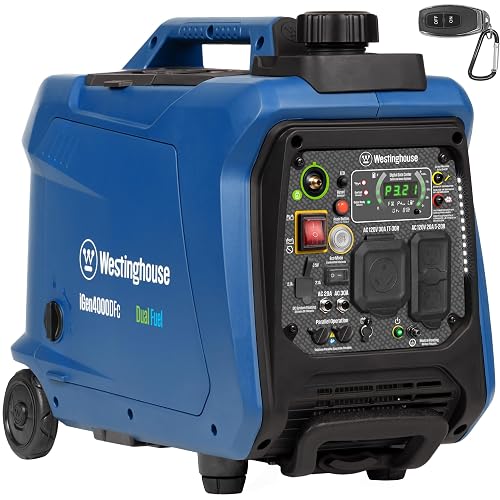
 Best for RV-style dual fuel useWEN Quiet and Lightweight 3600-Watt Dual Fuel RV-Ready Portable InvertView on Amazon
- 6
 Best for 4800-watt camp setupsWEN Quiet and Lightweight 4800-Watt RV-Ready Portable Inverter Generator (56477i)View on Amazon
Our Top Picks
Quick Comparison
| Product | Best for | Key feature |
|---|---|---|
| WEN 56235i 2350-Watt Inverter | Overall camping use | Ultra lightweight build |
| AMERISUN 2500W Gas Inverter | Lightweight carrying | CO sensor included |
| PowerSmart 2500 Watt Inverter | Budget camping pick | Clean power output |
| Pulsar PGD40ISCO 4000W | Higher wattage loads | 4000-watt capacity |
| WEN DF360iX 3600-Watt Dual Fuel | RV-style dual fuel use | Gas or propane operation |
| WEN 56477i 4800-Watt RV-Ready | 4800-watt camp setups | Fuel shut off |
WEN Super Quiet 2350-Watt Portable Inverter Generator
WEN Super Quiet 2350-Watt Portable Inverter Generator with Fuel Shut Off, Gasoline Power, Ultra Lightweight (56235i), Black
Best for: Overall camping use with a light, compact unit
This is a fit for campers running phones, lights, a small fridge and a fan who want the lowest weight in the group. Owners often report it is easy to lift into a trunk.
Pros
- Ultra lightweight design for carrying
- Includes a fuel shut off feature
Cons
- 2350 watts limits heavier appliances
Super Quiet Lightweight Design, EPA Compliant Generator, Ideal For Camping, Emergency Use And Residential Home Backup AMERISUN 2500W Gas Inverter Generator
Super Quiet Lightweight Design,EPA Compliant Generator,Ideal For Camping, Emergency Use And Residential Home Backup AMERISUN 2500W Gas Inverter Generator,Portable Generator with CO Sensor
Best for: Lightweight carrying and emergency backup
Suited to campers who want a generator they can move alone and keep as a home backup. The listing highlights a built-in CO sensor, which many buyers look for.
Pros
- Built-in CO sensor
- Designed for portable use
Cons
- Output is modest for large appliances
Super Quiet, Clean Power PowerSmart 2500 Watt Portable Inverter Generator for Camping
Super Quiet, Clean Power PowerSmart 2500 Watt Portable Inverter Generator for Camping
Best for: A 2500-watt camping budget pick
Good for weekend campers who run lights, a phone charger and small electronics and want clean power for sensitive devices.
Pros
- Clean power output for electronics
- Designed around camping use
Cons
- Limited runtime at high load
Pulsar PGD40ISCO Ultra Light Quiet 4000W Portable Gas Inverter Generator
Pulsar PGD40ISCO Ultra Light Quiet 4000W Portable Gas Inverter Generator, white
Best for: Higher wattage loads
Fits campers who need more output for a window AC unit or power tools and are willing to accept a larger footprint.
Pros
- 4000-watt rated capacity
- Lighter than many units in its class
Cons
- Higher output usually means more noise at full load
WEN Quiet and Lightweight 3600-Watt Dual Fuel RV-Ready Portable Inverter Generator (DF360iX)
WEN Quiet and Lightweight 3600-Watt Dual Fuel RV-Ready Portable Inverter Generator with Fuel Shut Off and CO Watchdog (DF360iX)
Best for: RV-style dual fuel use
A good match for campers who want to switch between gasoline and propane, depending on fuel availability at the site.
Pros
- Dual fuel flexibility
- Includes a CO watchdog and fuel shut off
Cons
- Propane runs typically deliver less output than gasoline
WEN Quiet and Lightweight 4800-Watt RV-Ready Portable Inverter Generator (56477i)
WEN Quiet and Lightweight 4800-Watt RV-Ready Portable Inverter Generator with Fuel Shut Off (56477i)
Best for: 4800-watt camp setups
For larger campsites or RV users who run an air conditioner or several appliances at once.
Pros
- 4800-watt capacity for heavier loads
- Fuel shut off feature
Cons
- Heavier to move than the smaller units
Buying Guide
Noise Level Under Load
Generator noise is usually listed in decibels, and the number that matters most is the one measured under load, not at idle. Inverter generators tend to run quieter than conventional open-frame models because they adjust engine speed to match the power being drawn. Check the manufacturer’s stated rating and compare it against the rest of your campsite setup.
Running Wattage and Surge Capacity
Add up the devices you plan to power, such as a small fridge, phone chargers, lights, a CPAP, or a coffee maker. Starting appliances like fridges and air conditioners need extra surge power for a moment, so look at the peak rating as well as the running rating. Leaving a little headroom above your total load will keep the unit from straining.
Weight and Portability
If you hike or carry gear to a tent site, weight matters more than almost anything else. Compact inverter models are much easier to lift and store in a trunk or on a rack than heavier units, though higher-wattage machines generally weigh more. Look for a sturdy handle and a frame that fits your vehicle.
Fuel Type and Runtime
Gasoline is widely available, while dual-fuel models can also run on propane, which is useful for longer trips or when fuel access is limited. Check the fuel tank size and the approximate runtime at half load, since that is how most campers actually use a generator. Built-in fuel shut-off features can also help reduce spills and make transport safer.
Safety Features
Carbon monoxide is the biggest risk with any portable generator, so a generator should never run inside a tent, vehicle, or enclosed space. Some models include a CO sensor or shutdown feature, which adds a layer of protection but does not replace safe placement away from people and open windows. Pay attention to features like low-oil shutoff and overload protection as well.
FAQ
How quiet is a quiet generator for camping?
Most inverter generators designed for camping are noticeably quieter than traditional open-frame models, especially at partial load. Exact noise levels depend on how much power you draw and how far you are from the unit. Always check the manufacturer’s listed decibel rating and compare it under similar conditions.
Can I run a CPAP machine from a camping generator?
Many campers do run CPAP machines from inverter generators, since the clean power output suits sensitive electronics. You should confirm the generator’s running wattage exceeds your device’s requirement with some margin. Check your CPAP manufacturer’s guidance as well before relying on a generator.
Is it safe to run a generator at a campsite?
It can be safe when used correctly, which means placing the generator outdoors, well away from tents, and pointing the exhaust away from people. Never run it inside a tent, a vehicle, or a garage. A CO alarm placed nearby is a good additional precaution.
Do I need a dual-fuel generator?
A dual-fuel model is helpful if you want flexibility, such as running on propane during a long stay or when gasoline is hard to find. Gasoline-only models are often simpler and may be sufficient for shorter weekend trips. Consider how far you travel and where you typically refuel.
How long will a portable generator run on one tank?
Runtime depends on the tank size and the load you place on the unit, with lighter loads generally extending run time considerably. Manufacturers usually list approximate runtime at a specified load, which is a good starting point. Plan to refuel before the tank runs low to avoid interruptions.
Conclusion
If you want the quietest, most versatile option for light to moderate camping loads, the smaller inverter models are a strong starting point. Campers who need to power more appliances, such as RV systems or larger devices, should look at the higher-wattage picks with more running capacity.
For lightweight carrying and simple weekend trips, the more compact units make the most sense, while dual-fuel and 4000-plus-watt models suit longer stays and bigger power needs. Match the wattage to your actual devices, confirm the noise rating, and always use the generator safely away from your tent.
Related reading
- Top 5 Quiet Power Inverter Generators Compared for Home and Camping
- Most Quiet Generator for Camping: 6 Best Picks Compared (2026)
- Generator Quiet Box for Camping: Build One That Cuts Noise Safely
- 7 Best Small Quiet Camping Generator Picks for Campsites in 2026
- 7 Best Clean Power Inverter Generator Models for Quiet Home and Camping (2026)
- 6 Best Quiet Portable Gas Generators for Home and Camping (2026)
About Owen Palmer
Owen Palmer is part of our editorial team and reviews and edits our generators & noise guides, checking product details against manufacturer specifications and owner feedback.