 By Miles Sinclair
Updated November 2026
Choosing a gas line for whole house generator service is less about brand names and more about matching the hose, fittings and pressure regulation to your generator and your home’s gas supply. Homeowners usually want a line that handles the required flow without pressure loss, uses fittings that seal reliably, and carries a clear rating for the gas type they plan to burn. The picks below were selected by comparing manufacturer specifications, brand reputation and common owner feedback patterns. They are not based on any testing we performed, so always check the listing details against your generator’s installation manual before you buy.
Our top picks at a glance
- 1
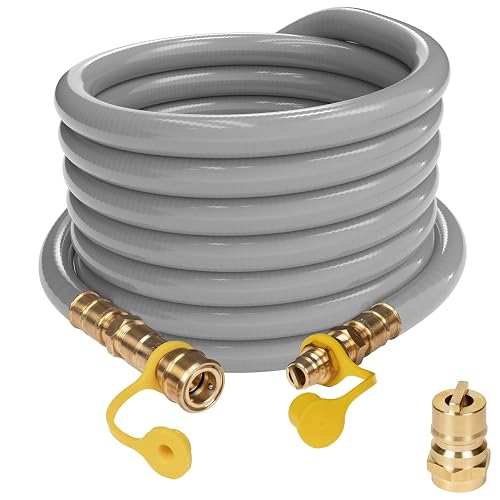 TOP CHOICEBest overallWestinghouse 25-Foot Natural Gas Hose with Adapter, 3/4-Inch Diameter,View on Amazon
- 2
 TOP CHOICEBest for dual-fuel setupsGas Line with Quick Connect Fitting, Low Pressure LPG Hose for Weber,View on Amazon
- 3
 TOP CHOICEBest for pressure controlPropane Regulator R622H 1st Stage Gas RegulatorView on Amazon
- 4
 Best short-run optionNatural Gas Conversion Kit for Gas Grill, Generator, Patio Heater andView on Amazon
- 5
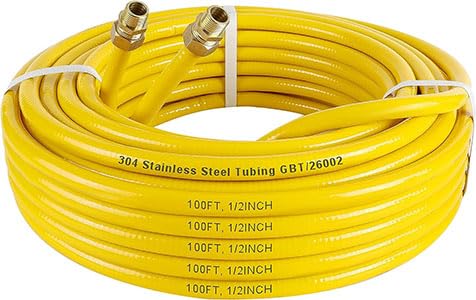 Best for permanent runs100FT Standard 1/2'' CSST Gas Line for Natural Gas Propane, 100FT 1/2iView on Amazon
Our Top Picks
Quick Comparison
| Product | Best for | Key feature |
|---|---|---|
| Westinghouse 25-Foot Natural Gas Hose with Adapter | Westinghouse tri-fuel generators | 3/4-inch diameter with included adapter |
| Gas Line with Quick Connect Fitting, 25 Feet | Dual-fuel and appliance hookups | Quick connect fitting, 1/2-inch ID |
| Propane Regulator R622H 1st Stage | Pressure regulation at the source | Adjustable 4–12 PSI output, 3/4″ NPT |
| Natural Gas Conversion Kit with 10 FT Hose | Short connections near the unit | CSA certified quick connect hose |
| 100FT Standard 1/2” CSST Gas Line | Long permanent runs | 100 feet of corrugated stainless steel tubing |
Westinghouse 25-Foot Natural Gas Hose with Adapter, 3/4-Inch Diameter, For Westinghouse Tri Fuel Generators
Westinghouse 25-Foot Natural Gas Hose with Adapter, 3/4-Inch Diameter, For Westinghouse Tri Fuel Generators
Best for: Owners of Westinghouse tri-fuel generators who want a hose matched to the manufacturer’s gas connection.
This is the most application-specific choice on the list. If your generator is a Westinghouse unit that runs on natural gas, a hose sized and labeled for that brand is the simplest route to a correct fit.
Key specs
- Length: 25 feet
- Diameter: 3/4 inch
- Includes adapter for Westinghouse tri-fuel generators
Pros
- Designed for a specific generator family, reducing fitting guesswork
- 3/4-inch diameter supports higher flow than 1/2-inch lines
- Length gives room to position the generator at a safe distance from the house
Cons
- Only a sensible choice if you own a compatible Westinghouse unit
- Owners of other brands will still need a separate regulator and fittings
Bottom line: Pick this if you own a Westinghouse tri-fuel generator and want the closest match to the manufacturer’s setup.
Gas Line with Quick Connect Fitting, Low Pressure LPG Hose, 25 Feet 1/2 inch ID Natural Gas Hose
Gas Line with Quick Connect Fitting, Low Pressure LPG Hose for Weber, Grill, Pizza Oven, Heater and More 25 Feet 1/2 inch ID Natural Gas Hose for Outdoor Grill
Best for: Dual-fuel and multi-appliance setups where quick disconnects are useful.
This hose is marketed for grills, heaters and similar appliances as well as generators. It suits homeowners who want flexibility to move a connection between devices, provided the setup stays within the appliance’s rated pressure and flow.
Key specs
- Length: 25 feet
- Inside diameter: 1/2 inch
- Quick connect fitting included
Pros
- Quick connect fitting speeds up connection and disconnection
- Length suits most outdoor placement distances
- Low-pressure rating matches typical appliance and small generator needs
Cons
- 1/2-inch ID may restrict flow for larger whole-house units
- General-purpose appliance hose, so confirm generator compatibility first
Bottom line: A practical choice for smaller generators and mixed appliance setups, but verify flow requirements before committing.
Propane Regulator R622H 1st Stage Gas Regulator
Propane Regulator R622H 1st Stage Gas Regulator, Adjustable 4–12 PSI, 3/4" NPT, High Capacity LP/Natural Gas Regulator for Residential, Commercial & Industrial System,Heater, Burner,Generator etc.
Best for: Controlling supply pressure between the gas source and the generator.
A first-stage regulator reduces high supply pressure to a lower, steady level. This is useful when the house supply pressure is higher than what the generator or line is rated for. It is a component, not a hose, so it belongs in the plan alongside your line.
Key specs
- Adjustable outlet pressure: 4–12 PSI
- Connection: 3/4-inch NPT
- Rated for LP and natural gas applications
Pros
- Adjustable range covers many residential appliance and generator requirements
- High-capacity design suits larger loads
- Standard NPT connection works with common fittings
Cons
- Installation requires correct sizing and pressure settings, which a professional should verify
- Not a complete line on its own; you still need hose or pipe and fittings
Bottom line: Best for owners who need pressure control and are comfortable working with a licensed installer on setup.
Natural Gas Conversion Kit for Gas Grill, Generator, Patio Heater – CSA Certified GasSaf 10 FT 1/2″ ID Natural Gas Hose
Natural Gas Conversion Kit for Gas Grill, Generator, Patio Heater and More – CSA Certified GasSaf 10 FT 1/2" ID Natural Gas Hose with Quick Connect Fitting
Best for: Short connections between a gas meter or manifold and a nearby generator.
A 10-foot hose limits how far the generator can sit from the connection point. It is a reasonable fit when the generator is close to the gas supply, and the listing’s CSA certification is a useful signal to check for.
Key specs
- Length: 10 feet
- Inside diameter: 1/2 inch
- Quick connect fitting included
- Listed as CSA certified
Pros
- CSA certification indicates a recognized safety standard
- Short length reduces the number of joints and pressure drop over the run
- Quick connect simplifies service access
Cons
- 10 feet is too short for many placements that meet clearance rules
- Marketed for multiple appliances, so generator-specific sizing must be confirmed
Bottom line: Suitable when the generator sits very close to the gas source and the certification and flow match your installation.
100FT Standard 1/2” CSST Gas Line for Natural Gas Propane, 100FT 1/2in Natural Gas Hose with 2 Male Fittings
100FT Standard 1/2'' CSST Gas Line for Natural Gas Propane, 100FT 1/2in Natural Gas Hose Propane Pipe with 2 Male Fittings, CSST Corrugated Stainless Steel Tubing Pipe for Dryer Heater
Best for: Longer permanent runs from a gas meter to a generator location away from the house.
Corrugated stainless steel tubing (CSST) is a common material for fixed gas piping. Its length makes it suitable for runs that need to reach a generator pad at a safe distance, but it requires proper bonding, support and installation practice.
Key specs
- Length: 100 feet
- Diameter: 1/2 inch
- Material: corrugated stainless steel tubing
- Includes two male fittings
Pros
- 100-foot length accommodates generator placement well away from living areas
- Stainless construction resists corrosion in outdoor runs
- Two included fittings simplify the connection points
Cons
- CSST installations often must be bonded and sized to local code, which many homeowners overlook
- Requires professional installation in most jurisdictions
Bottom line: The right choice for long permanent runs, but it should be installed and bonded by a licensed professional.
Buying Guide
Gas type and generator compatibility
Confirm whether your generator runs on natural gas, propane or both. Natural gas and LP systems operate at different pressures, and a line or regulator rated for one may not be correct for the other. Check the generator’s manual for the required supply pressure in inches of water column or PSI.
Good picks for this: Westinghouse 25-Foot Natural Gas Hose with Adapter, Propane Regulator R622H 1st Stage Gas Regulator
Inside diameter and flow capacity
Inside diameter drives how much gas can pass without excessive pressure drop. A 1/2-inch line may be adequate for smaller units, while larger whole-house generators often call for 3/4-inch or larger piping. Undersized lines can starve the generator under load, causing stalls or failed starts.
Good picks for this: Westinghouse 25-Foot Natural Gas Hose with Adapter, 100FT Standard 1/2” CSST Gas Line
Length and placement distance
Measure the actual route from the gas source to the generator, including bends and vertical rises. Add slack rather than running the line taut. Keep generator placement consistent with clearance and exhaust rules in your local code and the manufacturer’s instructions.
Good picks for this: 100FT Standard 1/2” CSST Gas Line, Gas Line with Quick Connect Fitting, 25 Feet
Pressure regulation
Many residential supplies deliver pressure above what a generator requires. A regulator with an adjustable outlet range lets you match the supply to the appliance. Have a licensed installer set and verify the outlet pressure before the generator is put into service.
Good picks for this: Propane Regulator R622H 1st Stage Gas Regulator
Connection fittings and quick disconnects
Quick connect fittings make service and temporary moves easier, but they add joints that must be leak tested. Threaded connections should use approved pipe dope or tape rated for gas service. Every joint should be checked with a soap-and-water solution or an approved leak detector after installation.
Good picks for this: Gas Line with Quick Connect Fitting, 25 Feet, Natural Gas Conversion Kit with 10 FT Hose
Certification and standards
Look for listings that reference recognized standards, such as CSA certification for gas appliance connectors. Certification does not replace code compliance, but it is a useful filter when comparing otherwise similar products.
Good picks for this: Natural Gas Conversion Kit with 10 FT Hose, 100FT Standard 1/2” CSST Gas Line
Durability and outdoor exposure
Lines exposed to sun, moisture and temperature swings degrade over time. Stainless steel tubing resists corrosion better than many rubber or plastic hoses. Inspect any exposed line each season for cracks, kinks, abrasion and loose fittings, and replace damaged sections promptly.
Good picks for this: 100FT Standard 1/2” CSST Gas Line, Westinghouse 25-Foot Natural Gas Hose with Adapter
FAQ
What size gas line do I need for a whole house generator?
Size depends on the generator’s rated gas consumption at full load, the supply pressure and the total length of the run. Check the generator’s installation manual for the required pipe size and maximum run length, and have a licensed installer confirm the calculation against your local code.
Can I use a flexible appliance hose for a whole house generator?
Only if the hose is rated for the generator’s gas type, pressure and flow, and if your local code permits it. Many jurisdictions require rigid or CSST piping for fixed installations. Always confirm before using any hose for a permanent connection.
Do I need a regulator between the gas meter and the generator?
It depends on the supply pressure and the generator’s requirements. If the house supply exceeds the generator’s rated inlet pressure, a regulator is needed. A licensed professional should measure the pressure and make that determination.
Is natural gas or propane better for a whole house generator?
Natural gas offers an unlimited supply when the utility line is working, while propane is stored on site and can keep running during a utility outage. The right choice depends on your location, storage options and backup goals. Our comparison of fuel types covers the trade-offs in more depth.
How do I check a gas line for leaks?
Brush a soap-and-water solution onto each joint and watch for bubbles while the system is pressurized. Never use an open flame. If you smell gas or hear hissing, leave the area, shut off the supply if it is safe to do so, and call your gas utility or 911.
How often should a generator gas line be inspected?
Inspect exposed lines at least once a year and after severe weather. Look for cracks, corrosion, kinks, loose fittings and damage from animals or equipment. Any problem should be repaired by a qualified professional before the generator is run again.
Conclusion
For a Westinghouse tri-fuel generator, the Westinghouse-specific hose is the most direct match. Dual-fuel owners who want quick disconnects may prefer the 1/2-inch quick connect line, provided flow requirements are met. Anyone managing supply pressure should look at the first-stage regulator, and homeowners with a long permanent run should consider the 100-foot CSST line, with professional installation. The 10-foot conversion kit suits only short connections. In every case, match the line to the generator’s manual and have a licensed professional verify pressure, sizing and leak testing.
Sources
- Guidance on home energy systems, backup power planning and fuel considerations (energy.gov)
- Consumer safety information on portable generators and carbon monoxide hazards (cpsc.gov)
- Fire and gas safety codes and standards relevant to fuel gas piping (nfpa.org)
Before you buy: helpful guides
Related reading
- Top 3 Whole House Gas Generator Options for Home Backup
- 6 Best Natural Gas Generators for Whole House Backup (2026)
- 4 Best Whole House Natural Gas Generators for Home Backup (2026)
- Whole House UPS with Generator: 3 Best Options for Home Backup
About Miles Sinclair
Miles Sinclair is part of our editorial team and reviews and edits our generators & noise guides, checking product details against manufacturer specifications and owner feedback.