 By Miles Sinclair
Updated November 2026
Shopping for a whole house generator kit usually means one of two things: you already own a portable or standby generator and need a safe way to feed your panel, or you are building a backup system from parts. This list covers both situations. The selection criteria were compatibility with common home panels, the number of parts included (cord, inlet box, interlock or transfer switch), the power output the kit is designed around, and the kind of owner feedback that tends to appear for each product. Nothing here was tested in a lab or on our own equipment; the picks are based on manufacturer specifications and recurring owner patterns.
Our top picks at a glance
- 1
 TOP CHOICEBest overallGenerac 22kW Whole Home Generator, 200 Amp Automatic Transfer SwitchView on Amazon
- 2
 TOP CHOICEBest for 50-amp generator connectionsNEMA 14-50P Generator to House Cord and Power Inlet Box Combo KitView on Amazon
- 3
 TOP CHOICEBest for Square D panels30 Amp Generator to House Hook-up Kit for Square D Homeline Load CenterView on Amazon
- 4
 Best for off-grid or solar-backed homesWhole House System 10KW Solar Inverter and 16kWh Energy Storage KitView on Amazon
- 5
 Best for dual-fuel portable backupWestinghouse 12500 Watt Dual Fuel Home Backup Portable GeneratorView on Amazon
- 6
 Best for tri-fuel flexibilityWestinghouse 14500 Peak Watt Tri-Fuel Home Backup Portable GeneratorView on Amazon
Our Top Picks
| Product | Best for | Key feature |
|---|---|---|
| Generac 22kW Whole Home Generator with 200 Amp Automatic Transfer Switch | Permanent whole-home standby backup | Automatic transfer switch and cellular capability |
| NEMA 14-50P Generator Cord and Power Inlet Box Combo Kit | Connecting a 50-amp portable generator | Pre-assembled cord and inlet box |
| 30 Amp Generator Hook-up Kit for Square D Load Center | Square D Homeline panels | Panel interlock kit with breaker |
| 10KW Off-Grid Solar Inverter and 16kWh Storage Kit | Solar-backed off-grid homes | Split-phase 120V/240V output with battery storage |
| Westinghouse 12500 Watt Dual Fuel Portable Generator | Portable backup with transfer switch readiness | Gas or propane operation |
| Westinghouse 14500 Peak Watt Tri-Fuel Portable Generator | Flexible fuel choice in outages | Gas, propane and natural gas operation |
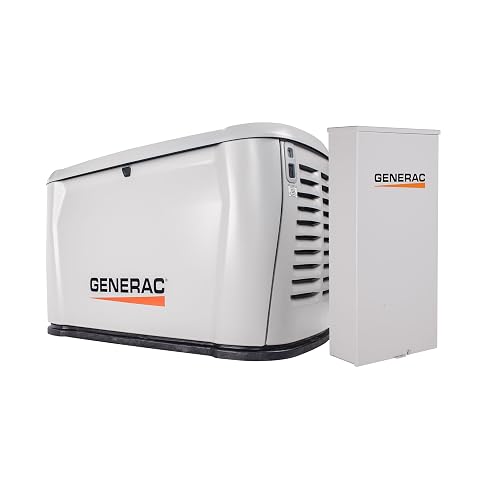
Generac 22kW Whole Home Generator, 200 Amp Automatic Transfer Switch
Generac 22kW Whole Home Generator, Transfer Switch & Cellular Capability | Whole House Backup Power, Automatic 200 Amp Transfer Switch, Outdoor Gas Propane, Protects Home Outages, Storm Protection
Best for: Permanent whole-home standby backup with automatic switching
This is the most complete option on the list. It suits homeowners who want backup power that starts and transfers without anyone touching a switch, and who plan to run the house during extended outages.
Key specs
- 22kW rated output (per listing name)
- 200 amp automatic transfer switch included
- Outdoor propane fuel configuration
- Cellular capability for remote monitoring
Pros
- Automatic transfer during outages with no manual switching
- Whole-home capacity suited to larger loads
- Built-in transfer switch simplifies installation compared with separate parts
Cons
- Requires professional installation, gas or propane supply and permits
- Larger physical footprint than portable options
Bottom line: Best for homeowners who want a permanent, hands-off whole-house system and can handle a professional install.
NEMA 14-50P Generator to House Cord and Power Inlet Box Combo Kit
NEMA 14-50P Male to SS2-50R STW 6/3+8/1 AWG 125/250V Twist Locking with Inlet Box for Generator to House 50 Amp 15Feet Generator Cord and Power Inlet Box Combo Kit
Best for: Connecting a 50-amp portable generator to a home panel through an inlet box
This kit suits owners who already have a compatible portable generator with a 50-amp outlet and want a pre-assembled cord and inlet box instead of sourcing parts separately.
Key specs
- NEMA 14-50P male plug on the generator end
- SS2-50R style receptacle configuration on the inlet side (per listing name)
- Approximately 15 feet of cord length (per listing name)
- 125/250V rating (per listing name)
Pros
- Pre-assembled cord and inlet box reduces parts sourcing
- Twist-locking connections resist accidental disconnection
- Straightforward for a 50-amp generator-to-house link
Cons
- The inlet box still needs a licensed electrician to wire into the panel
- Fixed 15-foot length may be short for some generator placements
Bottom line: A solid choice for owners of a 50-amp portable generator who want an integrated cord and inlet set.
30 Amp Generator to House Hook-up Kit for Square D Homeline Load Center
30 Amp Generator to House Hook-up Kit for Square D Homeline 150/200/225 Amp Load Center, Including Generator Cord,Power Inlet Box,Panel Interlock Kit and Circuit Breaker (15 Ft Gen Cord)
Best for: Square D Homeline panels that need a generator interlock and inlet
This kit targets homes with a Square D Homeline load center in the 150, 200 or 225 amp range. It bundles the parts needed to back-feed safely through a panel interlock.
Key specs
- 30 amp generator connection (per listing name)
- Designed for Square D Homeline 150/200/225 amp load centers (per listing name)
- Includes generator cord, power inlet box, panel interlock kit and circuit breaker
- 15-foot generator cord (per listing name)
Pros
- Matches a specific panel family, reducing guesswork
- Includes the interlock and breaker in one package
- Clear compatibility statement in the listing name
Cons
- Only useful if your panel is a compatible Square D Homeline model
- 30 amp capacity limits how much of the house it can carry at once
Bottom line: The right pick for a Square D Homeline owner who wants a matched interlock kit and a 30-amp feed.
Whole House System 10KW Solar Inverter and 16kWh Energy Storage Kit
Whole House System:10KW 120V/240V Split Phase Solar Inverter| 48V 314Ah 16kWh High Capacity Energy Storage| 2950W Solar Panel ECO WORTHY 10000W Output Complete Off-Grid Solar Panel Kit for Home
Best for: Solar-backed off-grid homes that need battery storage alongside a generator option
This is a solar inverter and battery storage system rather than a combustion generator. It fits homeowners who want to run the whole house from stored solar energy and may keep a generator as a secondary source.
Key specs
- 10KW split-phase 120V/240V inverter output (per listing name)
- 48V 314Ah storage, roughly 16kWh capacity (per listing name)
- Solar panel array rated 2950W (per listing name)
Pros
- Silent operation compared with combustion generators
- Split-phase output suits typical US household loads
- Battery storage can cover loads at night
Cons
- Output depends on sunlight and battery state, so it is not an instant-on backup in every case
- Installation involves significant electrical and battery work, best left to a qualified installer
Bottom line: A good fit for off-grid or solar-focused homeowners, not a plug-and-play generator replacement for most users.
Westinghouse 12500 Watt Dual Fuel Home Backup Portable Generator
Westinghouse 12500 Watt Dual Fuel Home Backup Portable Generator, Remote Electric Start, Transfer Switch Ready, Gas and Propane Powered
Best for: Portable backup with transfer switch readiness and gas or propane flexibility
This generator suits owners who want a portable unit that can be connected to a home through a transfer switch and can run on either gasoline or propane.
Key specs
- 12500 watt rated power (per listing name)
- Dual fuel: gasoline and propane (per listing name)
- Remote electric start (per listing name)
- Transfer switch ready (per listing name)
Pros
- Remote electric start simplifies startup
- Dual fuel gives a fallback if one supply is limited
- Transfer switch readiness supports a proper home connection
Cons
- Portable units are loud at full load, so placement matters
- Requires a separate transfer switch or interlock for safe home connection
Bottom line: Best for homeowners who want a portable dual-fuel unit they can connect to the house with a proper transfer switch.
Westinghouse 14500 Peak Watt Tri-Fuel Home Backup Portable Generator
Westinghouse 14500 Peak Watt Tri-Fuel Home Backup Portable Generator, Remote Electric Start, Transfer Switch Ready, Gas, Propane, and Natural Gas Powered
Best for: Flexible fuel choice during outages, including natural gas where available
This model adds natural gas to the fuel options, which helps owners who have a gas line and want a backup source that does not depend on stored fuel.
Key specs
- 14500 peak watt rating (per listing name)
- Tri-fuel: gasoline, propane and natural gas (per listing name)
- Remote electric start (per listing name)
- Transfer switch ready (per listing name)
Pros
- Three fuel options add resilience
- Higher peak rating than the 12500-watt model
- Remote start and transfer readiness included
Cons
- Natural gas operation depends on the utility supply staying on, and may need a qualified installer to connect
- Peak rating differs from continuous output, so check running loads carefully
Bottom line: A strong choice for households with a natural gas line that want the widest fuel flexibility in a portable unit.
Buying Guide
Match the kit to your generator and panel
Before buying, confirm your generator’s outlet type (30-amp or 50-amp, for example) and your panel’s make and amperage. A kit built for one panel family or one plug type will not work with others. Check the listed compatibility before ordering.
Good picks for this: 30 Amp Generator to House Hook-up Kit for Square D Homeline, NEMA 14-50P Generator Cord and Power Inlet Box Combo Kit
Understand transfer switches and interlocks
Connecting a generator to a home panel requires a transfer switch or an interlock to prevent back-feeding the utility grid. Some kits include the interlock; others leave it to you. Never bridge a generator into a panel with an improvised cord.
Good picks for this: Whole House Backup Power 200 Amp Automatic Transfer Switch, 30 Amp Generator Hook-up Kit for Square D
Check output and running load
Add up the wattage of the circuits you plan to run during an outage, including motor startup surges from refrigerators, well pumps and HVAC. Compare that total with the generator’s running watts, not just its peak rating.
Good picks for this: Westinghouse 12500 Watt Dual Fuel Portable Generator, Westinghouse 14500 Peak Watt Tri-Fuel Portable Generator
Consider fuel type and supply
Gasoline needs stabilized storage. Propane is easier to keep for long periods. Natural gas offers continuous supply but depends on the utility line staying active. Dual or tri-fuel units give a fallback when one fuel runs short.
Good picks for this: Westinghouse 12500 Watt Dual Fuel Portable Generator, Westinghouse 14500 Peak Watt Tri-Fuel Portable Generator
Plan for placement and noise
Portable and standby units produce noticeable sound at full load, and exhaust must be kept clear of windows and doors. Place the generator outdoors at a safe distance from the house, on a level surface, with clearance on all sides as the manufacturer specifies.
Good picks for this: Generac 22kW Whole Home Generator, Westinghouse 12500 Watt Dual Fuel Portable Generator
Evaluate durability and weather exposure
Outdoor components face rain, heat and cold. Look for weather-resistant enclosures and rated outdoor connection boxes. Inlet boxes and cords should use locking connectors and gauges suited to the amperage.
Good picks for this: NEMA 14-50P Generator Cord and Power Inlet Box Combo Kit, Whole House Backup Power 200 Amp Automatic Transfer Switch
Plan maintenance and care
Standby and portable generators both need regular oil changes, filter checks and load tests. Keep a logbook and follow the manufacturer’s service interval. Store cords dry and inspect connectors for corrosion or heat marks each season.
Good picks for this: Generac 22kW Whole Home Generator, Westinghouse 14500 Peak Watt Tri-Fuel Portable Generator
FAQ
Can I plug a generator kit directly into a wall outlet?
No. Feeding a generator into a household outlet can energize utility lines and endanger linemen, and it can damage equipment. A transfer switch or interlock is the safe method. Have a licensed electrician install it.
Do I need a professional to install a whole house generator kit?
In most cases, yes. Inlet boxes, interlocks and transfer switches involve panel work and often require permits. Consult a licensed electrician and check local code requirements before you connect anything.
What size generator do I need for a whole house kit?
It depends on the circuits you plan to power and their combined running and starting wattage. Add up the loads you need during an outage, then compare with the generator’s running watts. A qualified electrician or load calculation can give a more reliable number.
Is a solar inverter kit a replacement for a generator?
Not always. Solar and battery systems depend on sunlight and stored charge, so output can vary. Many owners keep a generator as a backup source. Check your local conditions and consult an installer before relying on solar alone.
Can I use propane and natural gas with the same portable generator?
Some tri-fuel models support gasoline, propane and natural gas, but connecting natural gas usually requires a qualified installer and a compatible gas line. Confirm fuel compatibility in the manufacturer’s manual before connecting.
How often should I service a generator used with a kit?
Follow the manufacturer’s maintenance schedule, which typically covers oil, filters and spark plugs. Run a load test periodically to confirm the unit starts and carries its rated load. Keep records of every service.
Conclusion
For a permanent, hands-off whole-house setup, the Generac 22kW unit with its automatic transfer switch is the most complete option here. Owners of 50-amp portable generators will find the NEMA 14-50P cord and inlet combo a practical match, while Square D Homeline owners should look at the 30-amp hook-up kit built for that panel family. Off-grid and solar-focused homes may prefer the 10KW inverter and storage kit, and households wanting portable flexibility can compare the two Westinghouse dual and tri-fuel units based on fuel access and running load. Whichever you choose, have a licensed electrician confirm compatibility and wiring before you connect.
Sources
- Guidance on home backup power, generator safety and efficient energy use (energy.gov)
- Consumer safety information on portable generator carbon monoxide hazards and safe operation (cpsc.gov)
- Electrical and fire safety standards relevant to standby and portable generator installations (nfpa.org)
Before you buy: helpful guides
- Whole-House Generator Noise Reduction: 8 Steps That Actually Work
- Whole House Generator Install: A Step-by-Step Guide for Beginners
- Whole House Generator Cost Installed: What to Expect in 2026
- Whole House Generator Installation Cost: What to Expect in 2026
- Whole House Generator Installer: How to Choose One Safely (2026)
Related reading
- Generac Whole House Generator Maintenance Kits: 5 Best Picks for 2026
- 7 Best Whole House Generator Maintenance Kits for Home Standby Units (2026)
- Whole House UPS with Generator: 3 Best Options for Home Backup
About Miles Sinclair
Miles Sinclair is part of our editorial team and reviews and edits our generators & noise guides, checking product details against manufacturer specifications and owner feedback.