 By Miles Sinclair
Updated November 2026
Installing a whole house standby generator starts with picking the right unit, and the right unit depends on fuel type, output, noise and whether it ships with a transfer switch. Below we compare six options using manufacturer specifications, brand reputation and common owner feedback patterns. We did not test these units ourselves.
Our top picks at a glance
- 1
 TOP CHOICEBest overallHoneywell 14kW Home Standby GeneratorView on Amazon
- 2
 TOP CHOICEBest for high-capacity homesChampion 22,000-Watt Dual Fuel Whole House Standby GeneratorView on Amazon
- 3
 TOP CHOICEBest for app monitoringGenerac Guardian 26kW Home GeneratorView on Amazon
- 4
 Best for budget-minded buyersDuroMax XP13000EH Dual Fuel Portable GeneratorView on Amazon
- 5
 Best for electric start preferenceDuroMax XP13000HX Dual Fuel Portable GeneratorView on Amazon
- 6
 Best for small loadsWestinghouse 6500 Watt Dual Fuel Portable GeneratorView on Amazon
Our Top Picks
| Product | Best for | Key feature |
|---|---|---|
| Honeywell 14kW Home Standby Generator | Overall whole-home coverage | Automatic natural gas or propane |
| Champion 22,000-Watt Dual Fuel Standby Generator | Large homes with heavy loads | Included 200-amp transfer switch |
| Generac Guardian 26kW Home Generator | Remote monitoring | WiFi monitoring and alerts |
| DuroMax XP13000EH Dual Fuel Portable Generator | Budget-minded buyers | Transfer switch ready |
| DuroMax XP13000HX Dual Fuel Portable Generator | Electric start preference | Electric start, dual fuel |
| Westinghouse 6500 Watt Dual Fuel Portable Generator | Small loads and essentials | 30A outlet and CO sensor |
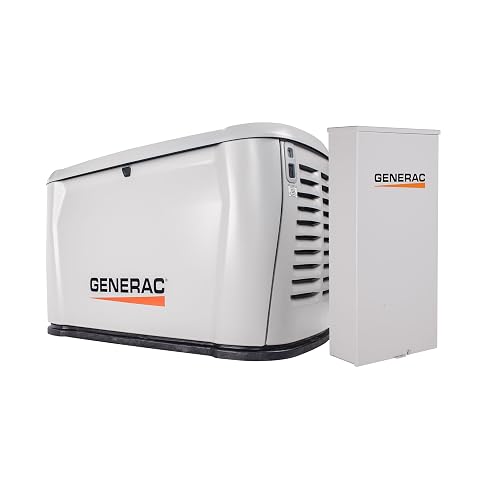
Honeywell 14kW Home Standby Generator
Honeywell 14kW Home Standby Generator – Automatic Backup Power for Whole Home – Runs on Natural Gas or Propane – Weather-Resistant Enclosure – Installation Pad Included
Best for: Overall whole-home coverage For another angle, check out Whole House Off-Grid Solar System: Sizing Steps and Parts for Your Home.
A strong fit for homeowners who want a permanently installed standby unit that switches on automatically during outages.
Pros
- Runs on natural gas or propane
- Weather-resistant enclosure and installation pad included
Cons
- Installation requires a licensed professional
Champion 22,000-Watt Dual Fuel Whole House Standby Generator
Champion 22,000-Watt Dual Fuel (Liquid Propane/Natural Gas) Whole House Home Standby Generator and 200-Amp Automatic Transfer Switch with fleX Technology
Best for: Large homes with heavy loads
Suited to households with central air, electric water heating and other high-draw appliances that need more capacity.
Pros
- 22,000-watt output for large loads
- Includes a 200-amp automatic transfer switch
Cons
- Larger footprint than smaller standby units
Generac Guardian 26kW Home Generator
Whole House Backup Power, Natural Gas Or Propane, WiFi Monitoring, Automatic Transfer, Storm And Outage Protection Generac Guardian 26kW Home Generator, Transfer Switch & WiFi Monitoring
Best for: Remote monitoring
Aimed at owners who want status alerts and outage notifications on a phone while away from home.
Pros
- WiFi monitoring included
- Automatic transfer with storm and outage protection
Cons
- Monitoring features depend on a stable home network
DuroMax XP13000EH Dual Fuel Portable Generator
DuroMax XP13000EH 13,000-Watt Dual Fuel Portable Generator – Gas & Propane, Electric Start, Whole Home Backup Power, Transfer Switch Ready, RV & Emergency Ready
Best for: Budget-minded buyers
A practical option for owners who want a transfer switch ready generator and are comfortable with a semi-permanent setup.
Pros
- Runs on gasoline or propane
- Transfer switch ready
Cons
- Portable design needs a manual setup for whole-home use
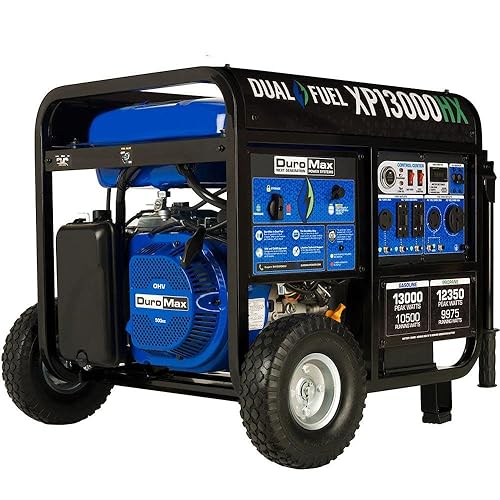
DuroMax XP13000HX Dual Fuel Portable Generator
DuroMax XP13000HX 13,000-Watt Dual Fuel Portable Generator – Gas & Propane, Electric Start, Whole Home Power Backup, Transfer Switch Ready, RV & Emergency Ready
Best for: Electric start preference
Fits owners who prefer push-button starting and want the same 13,000-watt class output with a transfer switch option.
Pros
- Electric start
- Dual fuel operation
Cons
- Still a portable unit that requires a transfer switch for home wiring
Westinghouse 6500 Watt Dual Fuel Portable Generator
Westinghouse 6500 Watt Dual Fuel Home Backup Portable Generator, Transfer Switch Ready 30A Outlet, RV Ready 30A Outlet, CO Sensor
Best for: Small loads and essentials
Best for keeping refrigeration, lighting and a few circuits running rather than powering the entire house.
Pros
- Transfer switch ready 30A outlet
- Includes a CO sensor
Cons
- Output is limited for whole-home use
Buying Guide
Fuel type
Natural gas offers a continuous supply, while propane storage lets you run during gas line disruptions. Dual fuel units give you both options.
Wattage and load calculation
Add up the running and starting watts of the circuits you want to power. Manufacturers list rated and maximum output, so size to the higher number.
Transfer switch
A transfer switch isolates the house from the utility grid during outages. Some units include one; others require separate purchase and professional wiring.
Noise and placement
Check the decibel rating at a stated distance and plan for a concrete pad away from bedroom windows. Local code often sets minimum clearances.
Good picks for this: Honeywell 14kW Home Standby Generator and Champion 22,000-Watt Dual Fuel Whole House Standby Generator
FAQ
Do I need a licensed electrician to install a whole house standby generator?
In most areas, yes. A standby unit typically requires a permanent gas or propane line, a transfer switch wired into your main panel, and a permit and inspection. Local codes vary, so check with your building department before you start.
Can I use a portable generator as a whole house backup?
It is possible with a properly installed transfer switch or interlock kit, but portable units are designed to run for shorter periods and must be operated outdoors. Standby units are built for automatic, long-duration use and are generally the safer choice for whole home backup.
Should I choose natural gas or propane?
Natural gas offers a continuous supply if your utility line stays intact, while propane works well if you have no gas line and can keep a tank filled. Many of the units above run on either fuel, so your local fuel availability and storage options should guide the decision.
How do I know what size generator my home needs?
Start by listing the appliances and systems you want to keep running, then add up their starting and running wattages. A licensed installer can help with a load calculation so the unit covers your critical circuits, including motor-driven loads like the HVAC system.
Where should a standby generator be placed?
Placement should keep the exhaust well away from windows, doors and vents, and leave enough clearance for airflow and service access. Many manufacturers specify minimum distances from the home, and a concrete or installation pad helps keep the unit level and stable.
Do these generators need regular maintenance?
Yes. Standby units generally need periodic exercise cycles, oil and filter changes, and inspections of the battery and fuel system. Following the manufacturer’s maintenance schedule helps the unit start reliably when the power goes out.
Conclusion
For most homeowners who want automatic whole house backup with a permanent installation, the Honeywell 14kW and Generac Guardian 26kW are the most straightforward standby choices, with the Champion 22,000-watt unit suited to larger homes with heavier loads. Buyers who need a lower-cost option or a portable unit that can also be connected through a transfer switch should look at the DuroMax and Westinghouse models.
Whichever you choose, confirm your required wattage, fuel source and local permit rules before buying, and have a licensed electrician or installer handle the transfer switch and final connections.
Related reading
- Whole House Standby Generator Installation: A Step-by-Step Guide
- Whole House Standby Generator Installation Cost: What Drives the Price (2026)
- Whole House Standby Generator Cost: What to Expect in 2026
- Top 3 Standby Generator 26kW with Whole House Switch WiFi Enabled Compared
- 7 Best Whole House Generator Maintenance Kits for Home Standby Units (2026)
- Whole-House Generator Noise Reduction: 8 Steps That Actually Work
About Miles Sinclair
Miles Sinclair is part of our editorial team and reviews and edits our generators & noise guides, checking product details against manufacturer specifications and owner feedback.