 By Owen Palmer
Updated November 2026
Choosing a whole house inverter generator comes down to three things: how many watts you need to run your critical circuits, whether the unit can connect to your home through a transfer switch, and how loud it runs at the distances where you will actually sleep or sit outside. This list compares four models against those criteria. The selection looked at manufacturer specifications, brand reputation for service and parts, and patterns in owner feedback about starting reliability, noise and fuel flexibility. Nothing here is based on our own lab testing, and all specs should be confirmed against the listing and manual before purchase.
Our top picks at a glance
- 1
 TOP CHOICEBest overallWEN 13,000-Watt Tri-Fuel Inverter Generator (TF1300iX)View on Amazon
- 2
 Best for automatic whole-home backupGenerac 14kW Whole Home Generator with Transfer SwitchView on Amazon
- 3
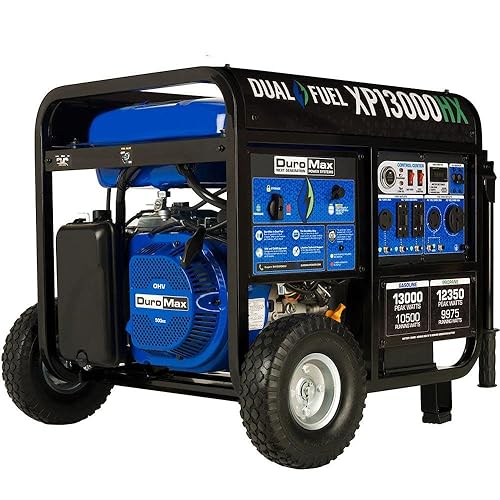 Best for transfer-switch wiring on a budgetDuroMax XP13000HX Dual Fuel Portable GeneratorView on Amazon
- 4
 Best for quiet, light-duty backupWestinghouse 1500 Peak Watt Super Quiet Portable Inverter GeneratorView on Amazon
Our Top Picks
Quick Comparison
| Product | Best for | Key feature |
|---|---|---|
| WEN 13,000-Watt Tri-Fuel Inverter Generator (TF1300iX) | Flexible fuel backup for a mid-size home | Gasoline, propane and natural gas operation |
| Generac 14kW Whole Home Generator with Transfer Switch | Automatic whole-home standby power | Automatic 200 amp transfer switch |
| DuroMax XP13000HX Dual Fuel Portable Generator | Transfer-switch-ready portable backup | Gas and propane with electric start |
| Westinghouse 1500 Peak Watt Super Quiet Inverter Generator | Quiet, light-duty home backup | Parallel capable with CO sensor |
WEN 13,000-Watt Tri-Fuel Inverter Generator (TF1300iX)
WEN 13,000-Watt 120V/240V Tri-Fuel Inverter Generator with Quiet 550cc Engine, Electric Start, Wheel Kit, and CO Watchdog, Gas, Propane, and Natural Gas Powered (TF1300iX)
Best for: Flexible fuel backup for a mid-size home
This suits homeowners who want one generator that can run on gasoline, propane or natural gas, and who plan to connect it to a dedicated circuit panel rather than run extension cords to individual appliances. It is a strong fit if you want 120V and 240V output in one unit.
Key specs
- Listed at 13,000 watts with 120V/240V output
- Tri-fuel operation: gasoline, propane and natural gas
- Electric start
- Wheel kit included
- CO Watchdog sensor
Pros
- Runs on three fuel types, useful when gasoline is scarce or stored propane is on hand
- Electric start simplifies operation during an outage
- Wheel kit makes repositioning easier
Cons
- Fuel consumption rises sharply at full load, so runtime depends heavily on tank size or gas supply
- Requires a properly installed transfer switch for safe whole-home use
Bottom line: A good choice for homeowners who want fuel flexibility and 240V output in a portable frame, provided they install a transfer switch and plan for fuel supply.
Generac 14kW Whole Home Generator with Transfer Switch
Whole House Backup Power, Automatic 200 Amp Transfer Switch, Outdoor Gas Propane, Protects Home Outages, Storm Protection Generac 14kW Whole Home Generator, Transfer Switch & Cellular Capability
Best for: Automatic whole-home standby power
This is aimed at homeowners who want power to return within seconds of an outage without anyone touching a cord or switch. Because it is a standby system with an automatic transfer switch, installation by a licensed electrician is expected.
Key specs
- 14kW rated output
- Automatic 200 amp transfer switch
- Outdoor propane operation
- Cellular connectivity option
Pros
- Fully automatic switchover with no manual steps during an outage
- Built for continuous outdoor installation with weather protection
- Strong brand presence for local service and replacement parts
Cons
- Installation complexity and permitting make this more involved than a portable unit
- Standby units are less suited to moving between locations
Bottom line: Best for homeowners who want a permanent, hands-off backup system and are prepared for professional installation.
DuroMax XP13000HX Dual Fuel Portable Generator
DuroMax XP13000HX 13,000-Watt Dual Fuel Portable Generator – Gas & Propane, Electric Start, Whole Home Power Backup, Transfer Switch Ready, RV & Emergency Ready
Best for: Transfer-switch-ready portable backup
This fits households that want a portable generator they can wire into the home through a transfer switch, keeping the option to unplug and relocate it later. It is a practical middle ground between a standby system and a plug-in unit.
Key specs
- 13,000-watt rated output
- Dual fuel: gasoline and propane
- Electric start
- Transfer switch ready
Pros
- Dual fuel gives a backup option if one supply runs short
- Transfer switch compatibility supports whole-home wiring
- Electric start is convenient for regular use
Cons
- Conventional (non-inverter) output produces more noise and fluctuates more than sensitive electronics prefer
- Heavy frame limits easy movement without help
Bottom line: A good pick for those who want high output, dual fuel and transfer-switch wiring, and who can accept more noise and a heavier unit.
Westinghouse 1500 Peak Watt Super Quiet Portable Inverter Generator
Westinghouse 1500 Peak Watt Super Quiet & Lightweight Portable Inverter Generator, Gas Powered, CO Sensor, Parallel Capable, Long Run Time,Blue
Best for: Quiet, light-duty home backup
This is the lightest-duty option here and suits those who need to keep a refrigerator, lights, a furnace fan and a few small devices running rather than full household loads. Its quiet operation makes it a good fit for use near living spaces.
Key specs
- 1,500 peak watts
- Gasoline powered
- CO sensor
- Parallel capable
Pros
- Inverter output is cleaner for sensitive electronics
- Quieter operation than conventional open-frame generators
- Parallel capability allows adding a second unit later for more power
Cons
- Output is too limited for whole-house loads without careful load management
- Runtime on the included tank is modest at higher loads
Bottom line: Right for a smaller home or partial backup where quiet operation and clean power matter more than total capacity.
Buying Guide
Wattage and Load Planning
Start by listing the circuits you want to power. Add the running watts of each appliance, then add the starting surge of motor loads such as well pumps, refrigerators and HVAC blowers. Manufacturers list both rated (running) and peak (surge) watts, and the surge number determines whether the unit can start your largest motor.
Good picks for this: WEN 13,000-Watt Tri-Fuel Inverter Generator, Generac 14kW Whole Home Generator
Transfer Switch Compatibility
A whole-home connection requires a transfer switch that isolates the house from the utility grid. Backfeeding through an outlet is dangerous to utility workers and can damage equipment. Confirm your panel and generator have compatible connection options, and have a licensed electrician install and inspect the setup.
Good picks for this: Generac 14kW Whole Home Generator, DuroMax XP13000HX Dual Fuel Portable Generator
Noise Levels and Placement
Inverter generators run noticeably quieter than conventional units at similar output because engine speed adjusts to load. Manufacturers typically publish decibel readings at a stated distance, often 23 feet, under specific load. Compare those figures at the same distance, and remember that placement, enclosures and walls can change what reaches your bedroom windows.
Good picks for this: Westinghouse 1500 Peak Watt Super Quiet Portable Inverter Generator, WEN 13,000-Watt Tri-Fuel Inverter Generator
Fuel Type and Supply
Gasoline stores poorly for long periods and is hard to keep fresh. Propane and natural gas offer longer shelf life, and natural gas removes the need for on-site tanks. Dual and tri-fuel models give you a fallback, but check how each fuel affects output, since propane and natural gas typically reduce rated power.
Good picks for this: WEN 13,000-Watt Tri-Fuel Inverter Generator, DuroMax XP13000HX Dual Fuel Portable Generator
Start Method and Ease of Use
Electric start is a significant convenience during a storm, when pull-cord starting can be difficult in the cold or for older users. Check for a remote or auto start feature if the unit will be used unattended.
Good picks for this: WEN 13,000-Watt Tri-Fuel Inverter Generator, DuroMax XP13000HX Dual Fuel Portable Generator
Durability and Weather Protection
Standby systems are built for outdoor exposure, while portable units need covers and dry storage. Look for weather-resistant enclosures, corrosion-resistant hardware and a documented maintenance schedule from the manufacturer.
Good picks for this: Generac 14kW Whole Home Generator, Westinghouse 1500 Peak Watt Super Quiet Portable Inverter Generator
Care and Maintenance
Plan for oil changes, air filter cleaning and spark plug checks, and run the unit under load periodically so the engine does not sit idle. Stabilize fuel if it will be stored, and follow the manual’s interval for each service task.
Good picks for this: Westinghouse 1500 Peak Watt Super Quiet Portable Inverter Generator, DuroMax XP13000HX Dual Fuel Portable Generator
FAQ
Can a portable inverter generator power a whole house?
Some large portable units can power essential circuits through a transfer switch, but few can run every load in a typical home at once. Calculate your running and surge watts first, and use a load management plan so you do not exceed the rated output.
What is the difference between an inverter generator and a standby generator?
An inverter generator produces clean, variable-speed power and is usually portable. A standby generator is permanently installed, starts automatically during an outage, and is typically sized for larger loads.
Do I need a transfer switch?
Yes, for connecting a generator to your home’s wiring. A transfer switch keeps the house isolated from the utility grid and protects utility workers. Have a licensed electrician install it.
Is it safe to run a generator indoors or in a garage?
No. Generators produce carbon monoxide, which can build up quickly in enclosed spaces. Operate them outdoors, at a distance from doors and windows as the manual specifies, and use a CO alarm.
Which fuel is best for a home generator?
Natural gas and propane have longer storage life and cleaner-burning characteristics than gasoline. Gasoline is widely available but degrades over time, so it requires stabilizer and regular rotation.
How loud is a whole house inverter generator?
Noise varies by model and load. Manufacturers publish decibel figures at a stated distance under a specific load, so compare those numbers at the same distance. Inverter designs are generally quieter than conventional open-frame units.
How often should I run a standby or portable generator?
Follow the manufacturer’s schedule, which commonly includes periodic exercise runs under load. Regular runs keep the engine lubricated and help catch problems early.
Conclusion
For a whole house inverter generator setup, the right choice depends on how much power you need, how you want it to start, and where you can place it. The WEN TF1300iX suits buyers who want fuel flexibility and 240V output. The Generac 14kW is the choice for automatic, permanent whole-home standby backup. The DuroMax XP13000HX fits those who want a transfer-switch-ready portable unit with dual fuel. The Westinghouse 1500 suits quiet, light-duty backup for essential circuits. Before buying, confirm specifications in the manufacturer’s documentation and consult a licensed electrician for any transfer switch installation.
Sources
- Guidance on generator selection, sizing and safe operation for home backup power (energy.gov)
- Safety recalls and carbon monoxide warnings for portable generators (cpsc.gov)
- Electrical code and standards for standby and portable generator installation (nfpa.org)
Related reading
- Whole-House Generator Noise Reduction: 8 Steps That Actually Work
- Westinghouse 11000 Inverter Generator: Specs, Noise and Buying Guide
- Wen Inverter Generator 2000w: Specs, Noise Data and Buying Tips
About Owen Palmer
Owen Palmer is part of our editorial team and reviews and edits our generators & noise guides, checking product details against manufacturer specifications and owner feedback.