By Owen Palmer
Updated November 2026
The honda eu1000i generator inverter is a compact, 1000-watt portable unit built for people who need clean power for small electronics, camping gear, or emergency backup without the racket of a conventional open-frame generator. It suits campers, RV owners, tailgaters, and households that only need to keep a refrigerator, lights, phones, and a CPAP or small medical device running during short outages. It is a poor match for anyone planning to run central air conditioning, well pumps, or large resistive heaters, since its continuous output is modest. Buyers who want maximum runtime per dollar of fuel or the largest possible wattage should look at bigger models. The information below is based on manufacturer specifications and common owner feedback rather than hands-on testing.

Honda EU1000i 1000 Watt Inverter Generator, Super Quiet 120V Gas Powered Portable Generator for Camping or Home Backup Power Supply, Up to 6.8 Hour Run Time (EU1000T1AN)
Product Overview
The EU1000i is part of Honda’s inverter generator line and is sold under the model designation EU1000T1AN in the listing title. Like other inverter generators, it produces alternating current that is regulated by electronics rather than by engine speed alone. Manufacturers describe this design as delivering a stable sine wave, which matters for sensitive loads such as laptops, phone chargers, and some medical equipment. The unit is powered by a four-stroke Honda engine, uses an electronic fuel injection-style approach to adjust output to demand, and is designed to run quietly enough for campgrounds and residential neighborhoods.
The unit is marketed for camping and home backup. Its carrying handle, compact frame, and relatively light weight make it easier to move than many open-frame competitors. Owners who compare it against heavier conventional generators often mention that the smaller footprint is the first thing they notice. For a deeper understanding of how this class of machine works and how it compares to other Honda models, the site’s overview of the Honda Inverter Generator EU2000i: Specs, Noise Data and Buying Guide explains the shared design principles across the lineup.
Key Features & Specifications
The figures below reflect commonly published specifications for this model. Always confirm the current numbers on the manufacturer’s data sheet, since regional versions and revisions can change details.
| Specification | Value |
|---|---|
| Rated output | 1,000 watts |
| Rated current | 8.3 amps at 120 V |
| Voltage | 120 V AC |
| Waveform | Pure sine wave (inverter design) |
| Engine type | Honda four-stroke, air-cooled |
| Fuel | Unleaded gasoline |
| Run time | Up to about 6.8 hours at 25% load on a 0.95-gallon tank (per listing) |
| Noise level | Quieter-than-average for its class; manufacturer lists low-decibel operation at light load |
| Parallel capability | Two units can be paralleled for higher output with the appropriate cable (check the manual) |
The run time figure is worth reading carefully. Manufacturers typically quote run time at a fraction of rated load, so real-world runtime at higher loads will be shorter. The noise rating is also strongly load-dependent. Inverter generators reduce engine speed when demand is light, which is the main reason they are quieter than conventional units at comparable output.
Pros & Cons
Pros
- Clean sine-wave output suitable for most electronics, phones, laptops, and many medical devices.
- Quiet operation for campgrounds and residential use, particularly at low load.
- Compact, lightweight frame that is easier to transport than many open-frame generators.
- Honda engine reputation for reliability and a broad service network.
- Parallel capability allows a second unit to be added later for more power.
- Long run time at light load stretches a single tank through a night of use.
Cons
- The 1,000-watt rating is too small for air conditioners, well pumps, electric ranges, or large heaters.
- A small fuel tank means refueling is needed more often at higher loads.
- Output is limited to 120 V, so 240 V appliances are not supported without a second unit and proper setup.
- Honda units are priced at a premium relative to many budget inverter generators.
- Noise increases noticeably as load rises, so the quiet rating applies mainly to light use.
Performance Analysis
Performance for a 1000-watt inverter generator is best judged against the loads you actually plan to run. A typical refrigerator draws a few hundred watts while running, but its compressor start-up surge can be several times higher for a moment. Owners generally report that the EU1000i handles a single refrigerator, a few LED lights, phone and laptop charging, and a small fan without difficulty. Problems tend to appear when several motor-driven appliances start at once, because the surge overwhelms the rated output.
Noise performance follows the inverter pattern. At light load, the engine idles down and the unit is noticeably quieter than an open-frame conventional generator. As load climbs, the engine speeds up and the sound level rises. Owners who camp in close quarters often report that keeping loads light is the simplest way to stay within the quiet range. The Eco-Throttle mode on related Honda units follows the same principle, matching engine speed to demand.
Fuel economy is another area where the design pays off. Because the engine runs at variable speed, fuel consumption at light load is lower than at full output. Runtime at a quarter load on the listed tank size is the figure most often cited, and it is the one to plan around for overnight use. For a broader picture of how Honda inverter models compare on noise and run time, the guide to Honda 3000 Watt Generator Inverter: Specs, Noise Data and Buying Steps covers the trade-offs between smaller and larger units.
Power quality is a strength. Inverter output is regulated by electronics, producing a clean waveform with low total harmonic distortion, which manufacturers describe as safe for sensitive electronics. This is the main reason inverter generators are preferred for charging devices and running equipment with microprocessors.
Who Should Buy This Product?
The EU1000i fits a specific set of users well. Campers, RV owners, and people who attend outdoor events will value its low noise, portability, and clean power for phones, cameras, lights, and small cooling fans. Households that need emergency backup for a refrigerator, a few lights, and medical devices during short outages are also a good match, especially when paired with careful load management.
Buyers who should skip it include anyone planning to run central air conditioning, a well pump, an electric dryer, or a space heater. These loads exceed the continuous rating and will trip the unit or cause shutdowns. Anyone needing 240 V service for a whole-house transfer switch should also look at larger models. A useful reference on matching capacity to loads is the 3000w Honda Inverter Generator: Models, Noise Data and How to Choose guide, which walks through wattage planning in detail.
Buying Guide
Before buying any inverter generator, start by listing every device you intend to run at the same time and adding up their running watts. Then check the starting watts for motor-driven items such as refrigerators and pumps, since these can briefly demand two to three times their running load. Keep a margin of at least 20 percent below the rated output for safe, reliable operation. For the EU1000i, that means planning on roughly 800 watts of steady running load.
Noise is the second consideration. Manufacturers publish decibel ratings measured at a specified distance and load, so compare figures at the same test conditions. Units with an eco or variable-speed mode generally run quieter at light load, which is the condition most campers and backup users experience most of the time.
Fuel and runtime come next. Estimate hours of use per day and multiply by the fuel consumption at your expected load, then compare against tank size. Small-tank units are fine for occasional camping but may require frequent refueling for all-night backup. Finally, consider parallel capability, portability, and service access. Honda’s dealer network is one of the widest among small-engine brands, which helps owners find maintenance support.
Several well-known alternatives are worth comparing, depending on your needs:
- Honda EU1000i Inverter Generator, Super Quiet, Eco-Throttle (Red): a near-identical 1000-watt model that includes the Eco-Throttle mode for fuel savings at light load.

Honda EU1000i Inverter Generator, Super Quiet, Eco-Throttle, 1000 Watts/8.3 Amps @ 120v (Red)
- Honda EU2200i 2200-watt Inverter Generator: a step up in capacity for buyers who need more running watts for appliances such as a small window air conditioner or a larger refrigerator setup.
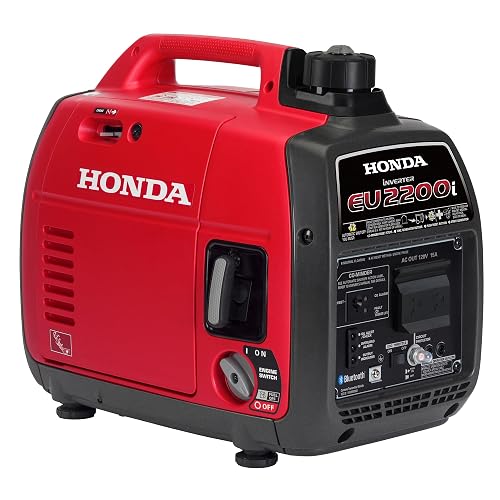
HondaSuper Quiet 120V Gas Powered Portable Generator for Camping or Home Backup Power Supply, Up to 8.1 Hour Run Time EU2200i 2200 Watt Inverter Generator (EU2200ITAN)
Buyers who want a deeper look at how Honda’s mid-range inverter models stack up can also read about the Honda Inverter Generator EU2000i: Specs, Noise Data and Buying Guide lineup.
FAQ
Can the honda eu1000i generator inverter run a refrigerator?
Yes, a standard refrigerator can usually run on this unit, provided no other large loads start at the same time. Compressor start-up surge is the main risk, so avoid running the refrigerator alongside a power tool or pump. Confirm the appliance’s nameplate running and starting watts before connecting it.
How long will it run on a full tank?
The listing cites up to about 6.8 hours at 25 percent load on its 0.95-gallon tank. Runtime shortens as load increases, so a heavier load will reduce the total hours. Plan around the lower figure for critical backup use.
Is it quiet enough for camping in a campground?
The model is marketed as super quiet, and it is generally quieter than conventional open-frame generators at comparable output. Noise rises with load, so keeping demand low helps you stay within campground quiet-hour expectations. Check local rules, since some sites set specific decibel or hours limits.
Can it power sensitive electronics?
Inverter generators produce a clean sine-wave output, which is generally suitable for laptops, phones, cameras, and many electronics. Manufacturers describe the output as stable and low in harmonic distortion. Medical devices should be confirmed with the device maker before use.
Can two units be run together for more power?
Yes, Honda inverter models of this type can be paralleled using a compatible cable, which combines output for higher wattage. Check the owner’s manual for the correct cable and setup procedure, and never parallel units of different models.
What fuel should I use?
Use fresh unleaded gasoline. Avoid fuel that has been stored for long periods, and consider a fuel stabilizer for storage. Honda recommends following the owner’s manual for specific fuel guidance, including ethanol content limits.
Is it safe to run indoors?
No. Generators produce carbon monoxide, which can be fatal. Operate the unit only outdoors, well away from doors, windows, and vents, and use a CO alarm in any space near the unit.
Final Verdict
The honda eu1000i generator inverter is a well-regarded choice for campers, RV owners, and light home backup, offering clean power, low noise at light load, and a compact, portable frame. It is not designed for whole-house backup or high-draw appliances, and buyers with those needs should look at larger units. Weigh your real running loads against its 1000-watt rating, and the decision becomes straightforward.
For electrical installations, transfer switch wiring, or medical equipment backup, consult a licensed electrician or the device manufacturer before relying on the unit.
About Owen Palmer
Owen Palmer is part of our editorial team and reviews and edits our generators & noise guides, checking product details against manufacturer specifications and owner feedback.