 By Owen Palmer
Updated November 2026
Choosing a honda inverter generator for camping comes down to noise, weight, run time and how cleanly the power is produced for phones, CPAPs and small appliances. Campsites often set quiet-hour limits, so decibel ratings matter as much as wattage. The picks below are based on manufacturer specifications, brand reputation and common owner feedback patterns, not on our own testing.
Best overall: Honda EU2200i – View on Amazon
Our top picks at a glance
- 1
 TOP CHOICEBest overallHonda EU2200i 2200 Watt Inverter GeneratorView on Amazon
- 2
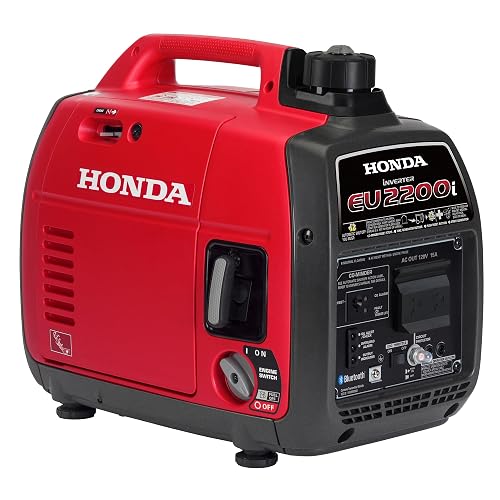 TOP CHOICEBest for tight campsitesHonda EU2200i 2200 Watt Inverter Generator (alternate listing)View on Amazon
- 3
 TOP CHOICEBest for RV and large loadsHonda EU7000iS Inverter GeneratorView on Amazon
- 4
 Best budget dual-fuel pickPowerSmart 3800 Watt Dual Fuel Inverter GeneratorView on Amazon
- 5
 Best for dual-fuel flexibilityWEN DF360iX 3600-Watt Dual Fuel Inverter GeneratorView on Amazon
- 6
 Best for EV and RV backupWEN DF680iX 6800-Watt Dual Fuel Inverter GeneratorView on Amazon
Our Top Picks
Quick Comparison
| Product | Best for | Key feature |
|---|---|---|
| Honda EU2200i | Overall camping | Quiet inverter output |
| Honda EU2200i (alternate listing) | Tight campsites | Compact, light frame |
| Honda EU7000iS | RV and large loads | 120/240V, long run time |
| PowerSmart 3800 Watt Dual Fuel | Budget dual-fuel use | Under 59 dBA rating |
| WEN DF360iX | Dual-fuel flexibility | Fuel shut-off, CO watchdog |
| WEN DF680iX | EV and RV backup | Electric start, 6800 W |
Honda EU2200i 2200 Watt Inverter Generator
Honda EU2200i 2200 Watt Inverter Generator, Super Quiet 120V Gas Powered Portable Generator for Camping or Home Backup Power Supply, Up to 8.1 Hour Run Time (EU2200ITAN)
Best for: Overall camping and quiet home backup
Suits campers who run phones, lights, a small fridge or a CPAP and want the lowest noise at neighboring sites. Manufacturers specify quiet operation and run time up to about 8.1 hours at light load.
Pros
- Clean inverter output suited to sensitive electronics
- Lightweight, easy to carry to a tent site
Cons
- Limited capacity for air conditioners or heaters
Honda EU2200i 2200 Watt Inverter Generator (alternate listing)
Super Quiet 120V Gas Powered Portable Generator for Camping or Home Backup Power Supply, Up to 8.1 Hour Run Time Honda EU2200i 2200 Watt Inverter Generator (EU2200ITAN)
Best for: Tight campsites
Fits campers who need the same EU2200i platform in a different listing and want a compact unit for crowded sites. Owners often report it is easy to move between picnic tables and tent pads.
Pros
- Same quiet inverter design as the EU2200i line
- Compact footprint for small spaces
Cons
- Same wattage limits as the standard EU2200i
Honda EU7000iS Inverter Generator
Super Quiet Gas Powered Portable Generator for Camping, RV, Tailgating, or Home Backup Power Supply, Up to 16 Hour Run Time Honda EU7000iS 7000 120/240V Watt Inverter Generator (EU7000ISNAT1X)
Best for: RV and large loads
Aimed at campers running an RV or heavier appliances who need 120/240V output. Manufacturers list run times up to about 16 hours at light load.
Pros
- 120/240V output for larger loads
- Long run time between refueling
Cons
- Heavier and bulkier than 2000-watt models
PowerSmart 3800 Watt Dual Fuel Inverter Generator
PowerSmart8H Run Time, Ultra-Quiet <59 dBA, CO Protect, Clean Power <3% THD, Parallel Ready 3800 Watt Dual Fuel Inverter Generator for Camping or Home Use
Best for: Budget dual-fuel use
Suits campers who want dual-fuel flexibility and a low-noise rating without a premium brand. The listing cites operation under 59 dBA and total harmonic distortion below 3%.
Pros
- Rated under 59 dBA according to the listing
- Dual-fuel operation and parallel-ready design
Cons
- Brand service network is less established than Honda’s
WEN DF360iX 3600-Watt Dual Fuel Inverter Generator
WEN Quiet and Lightweight 3600-Watt Dual Fuel RV-Ready Portable Inverter Generator with Fuel Shut Off and CO Watchdog (DF360iX)
Best for: Dual-fuel flexibility
Fits campers who want to switch between gasoline and propane and value a CO watchdog feature. It is marketed as lightweight and RV-ready.
Pros
- Fuel shut-off and CO watchdog included
- Runs on gasoline or propane
Cons
- Noise levels are typically higher than Honda’s EU line at similar loads
WEN DF680iX 6800-Watt Dual Fuel Inverter Generator
WEN 6800-Watt Dual Fuel RV-Ready Electric Start Portable Inverter Generator with Fuel Shut Off and CO Watchdog for Electric Vehicle Backup (DF680iX)
Best for: EV and RV backup
Aimed at campers who need higher output for RV systems or EV charging backup and want electric start. Manufacturers list 6800 watts of peak output.
Pros
- Electric start for easier cold-weather use
- Higher wattage for RV and EV loads
Cons
- Heavier and louder under full load
Buying Guide
Noise Level and Campsite Rules
Many campgrounds and state parks set quiet hours and limit how loud a generator can run. Check the decibel rating listed by the manufacturer, and look for models designed for low-noise operation, especially if you plan to run them after dark.
Inverter designs typically run quieter than conventional generators because the engine speed adjusts to the load. Lower noise also means you can keep a generator running closer to your tent or camper without disturbing neighbors.
Power Output and Your Real Loads
Start by listing what you plan to power, such as phones, a CPAP machine, lights, a small fridge, or an air conditioner. Add up the running watts of those items and choose a generator with some headroom above that total, since starting loads for motors and compressors can spike higher than their normal draw.
Smaller units around the 2000 to 3800 watt range generally suit phones, lights, CPAP machines and small electronics. Larger models are better suited to RVs, multiple appliances or heavier household backup needs.
Weight, Portability and Storage
If you hike in, backpack or tow a small trailer, weight and size matter a great deal. Compact inverter generators are easier to lift into a vehicle and position on uneven ground, while heavier models may need a cart or a stable tow setup.
Consider where the generator will ride during transport and whether it has a sturdy handle, a fold-down design or built-in carrying features.
Run Time and Fuel Options
Run time depends on fuel tank size and how heavily the unit is loaded. Look at the manufacturer’s stated run time at a given load, and think about how often you would need to refuel during a multi-day trip.
Dual fuel models can run on gasoline or propane, which can be useful if you want flexibility or plan to use propane tanks already on hand. Make sure you have a reliable fuel supply at your destination.
Clean Power and Safety Features
Clean, stable power matters for sensitive electronics, medical devices and newer chargers. Look for a low total harmonic distortion rating and check whether the generator is parallel ready, which lets you link two units for more output if needed.
Safety features such as carbon monoxide shutoff or monitoring, automatic low-oil shutdown and fuel shutoff valves add peace of mind, especially in tents, campers and enclosed spaces. Always operate any generator outdoors and well away from openings.
FAQ
Are Honda inverter generators quiet enough for campgrounds?
Honda inverter generators are generally designed to run more quietly than conventional models, which is why many campers choose them. Quiet-hour rules still vary by campground, so check the posted policy and the decibel rating before you go.
How many watts do I need for a camping trip?
Add up the running watts of the devices you plan to use, then add extra capacity for motor startup surges. Many campers find that a unit in the low thousands of watts covers phones, lights, a CPAP and small kitchen appliances.
Can I run a CPAP machine from an inverter generator?
Inverter generators are commonly used to power CPAP machines because they produce clean, stable power. Confirm your CPAP’s wattage requirement and consult your medical provider if you have questions about backup power.
What is the difference between a standard and a dual fuel generator?
A standard generator runs on gasoline only, while a dual fuel model can also run on propane. Dual fuel units offer flexibility in fuel choice, which can be helpful on long trips or when gasoline is hard to find.
Do I need to ground an inverter generator at a campsite?
Follow the manufacturer’s instructions and your campground’s rules for grounding and connection. Never connect a generator to a home electrical system without a proper transfer switch installed by a qualified electrician.
Conclusion
If you want a quiet, compact option for phones, lights and small electronics, a smaller Honda model is a practical choice for tent campers and hikers. Those who need more output for an RV or a wider range of appliances should look at the larger Honda or the higher-wattage WEN and PowerSmart options.
Budget-minded campers who want dual fuel flexibility and RV compatibility may prefer the WEN models, while anyone prioritizing very low noise and a well-known brand should weigh the Honda units first.
Before you buy: helpful guides
Related reading
- Top 5 Quiet Power Inverter Generators Compared for Home and Camping
- Top 5 Honda Inverter Generators for Camper Picks Compared for 2026
- Quietest Inverter Generator for Camping: 5 Best Picks Compared (2026)
About Owen Palmer
Owen Palmer is part of our editorial team and reviews and edits our generators & noise guides, checking product details against manufacturer specifications and owner feedback.




