By Owen Palmer
Updated November 2026
Shopping for the best tri fuel inverter generator usually comes down to a few practical questions: how many watts you actually need, whether the unit runs on gasoline, propane and natural gas without fuss, how loud it will be at a campsite or beside a bedroom window, and whether it has the safety features that keep carbon monoxide out of your home. This guide compares four tri fuel inverter models that owners and manufacturers commonly point to for home backup, RV use and camping. Our selection method weighed published specifications, brand reputation, outlet and output configuration, and the patterns that show up in owner feedback. We did not run these units ourselves; everything below is drawn from manufacturer listings and documented owner experience.
Our top picks at a glance
- 1
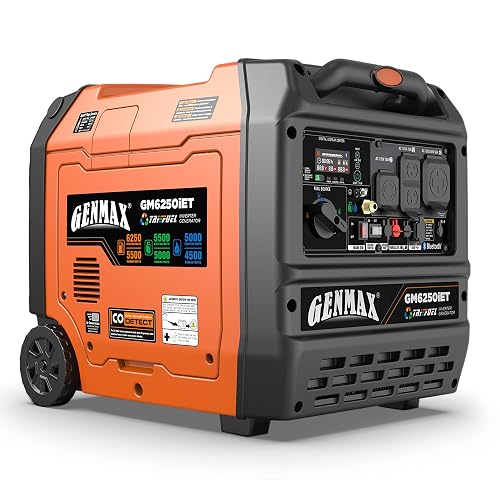 TOP CHOICEBest overallGENMAX 6250w Tri-Fuel Silent Inverter GeneratorView on Amazon
- 2
 Best for large home backupWEN 13,000-Watt Tri-Fuel Inverter Generator TF1300iXView on Amazon
- 3
 Best for RV and camping hookupsGENMAX 13500W Tri-Fuel Inverter GeneratorView on Amazon
- 4
 Best budget pickChampion 10,000-Watt Electric Start Tri Fuel Open Frame Inverter GeneratorView on Amazon
Our Top Picks
| Product | Best for | Key feature |
|---|---|---|
| GENMAX 6250w Tri-Fuel Silent Inverter Generator | Home backup and camping | 2-wire auto start/stop with Bluetooth app control |
| WEN 13,000-Watt Tri-Fuel Inverter Generator TF1300iX | Whole-home backup on 120V/240V | Dual voltage output with electric start and wheel kit |
| GENMAX 13500W Tri-Fuel Inverter Generator | RV owners and off-grid camping | 50A outlet with ATS 2-wire auto-start |
| Champion 10,000-Watt Electric Start Tri Fuel Open Frame Inverter Generator | Budget-conscious home backup | Electric start with LPG and NG hoses included |
GENMAX 6250w Tri-Fuel Silent Inverter Generator
GENMAX 6250w Tri-Fuel Silent Inverter Generator Features 2-Wire Auto Start/Stop,bluetooth APP Control,CO Sensor,Digital Display&50A Outlet-Ideal for Home Backup&Camping Outdoor,EPA Compliant
Best for: Home backup and camping with a quiet, app-managed unit
This is the most versatile model in the group for households that want modest backup power for a refrigerator, lights, a furnace blower and phone charging, plus a unit that can travel to a campsite. Its 2-wire auto start/stop and smartphone monitoring suit people who want the generator to start itself during an outage.
Key specs If you want more background, see 7 Best DIY Portable Solar Power Generator Options for Camping and Backup.
- Rated output in the 6,250-watt class per the listing name
- Tri-fuel operation on gasoline, propane and natural gas
- Bluetooth app control and digital display
- 50A outlet and integrated CO sensor
- Listed as EPA compliant
Pros
- Auto start/stop reduces the need to be home during an outage
- Digital display and app make it easy to check status remotely
- Three fuel options give you a fallback when one supply is interrupted
Cons
- Output is modest for central air conditioning or well pumps
- App features depend on a working Bluetooth connection within range
Bottom line: A strong pick for households that want automatic start during outages and a unit that also works at a campsite.
WEN 13,000-Watt Tri-Fuel Inverter Generator TF1300iX
WEN 13,000-Watt 120V/240V Tri-Fuel Inverter Generator with Quiet 550cc Engine, Electric Start, Wheel Kit, and CO Watchdog, Gas, Propane, and Natural Gas Powered (TF1300iX)
Best for: Whole-home backup on 120V/240V circuits
This unit fits homeowners who need enough capacity to run major appliances and a larger share of the house during a long outage. The 120V/240V configuration makes it suitable for hardwired transfer setups handled by a licensed electrician.
Key specs
- 13,000-watt class output per the listing name
- 120V/240V dual voltage
- Quiet 550cc engine
- Electric start and wheel kit
- CO Watchdog included; runs on gas, propane and natural gas
Pros
- High output covers more circuits than most portable units
- Electric start and wheel kit make handling easier
- CO Watchdog adds an extra safety layer
Cons
- Heavy enough that moving it takes more than one person in many cases
- Requires a proper transfer switch or interlock for safe home connection
Bottom line: Best for homeowners planning serious backup capacity who will have the unit installed with proper transfer equipment.
GENMAX 13500W Tri-Fuel Inverter Generator
GENMAX 13500W Tri-Fuel Inverter Generator— 50A Outlet,ATS 2-Wire Auto-Start,Bluetooth&CO Sensor,550cc Quiet Engine, Built-in LED Light—CARB Compliant,Ideal for Home Backup,RV & Camping
Best for: RV owners and off-grid camping
The 50A outlet and ATS 2-wire auto-start make this model a fit for RVs and campers who need to plug into a high-amperage shore-power style connection, or who want a generator that switches over on its own when power drops.
Key specs
- 13,500-watt class output per the listing name
- 50A outlet
- ATS 2-wire auto-start
- 550cc quiet engine, Bluetooth and CO sensor
- Built-in LED light; listed as CARB compliant
Pros
- 50A outlet suits RVs and larger appliance loads
- Auto-start helps keep refrigerators and medical equipment running
- CARB compliance matters for buyers in California and other CARB states
Cons
- Larger footprint than compact inverter units
- Owners often recommend a stable, level surface and rain cover for long setups
Bottom line: Ideal for RV owners and campers who need high-amperage output and automatic transfer.
Champion 10,000-Watt Electric Start Tri Fuel Open Frame Inverter Generator
Gas Propane & Natural Gas Powered, Electric Start, LPG & NG Hoses, Home Backup, Quiet, Portable, Free 3-Year Warranty Champion 10,000-Watt Electric Start Tri Fuel Open Frame Inverter Generator
Best for: Budget-conscious home backup
This open-frame design appeals to buyers who want a capable tri-fuel unit without paying for extras like app control. It is a practical option for backing up essentials during outages, and the included LPG and NG hoses save a separate purchase.
Key specs
- 10,000-watt class output per the listing name
- Electric start
- Gas, propane and natural gas operation
- LPG and NG hoses included
- Listing mentions a 3-year warranty
Pros
- Electric start is convenient for regular use
- Included fuel hoses reduce setup time
- Strong output for the segment
Cons
- Open frame is louder and less weather-protected than enclosed inverter designs
- No built-in app or auto-start features
Bottom line: A sensible choice for buyers who want strong tri-fuel output without premium features, provided they use it outdoors and manually.
Buying Guide
Output Capacity and Running vs. Starting Watts
Add up the wattage of the devices you want to run at the same time, then account for motor starting surges. Refrigerators and well pumps can draw two to three times their running watts for a moment at startup. Manufacturers list both rated and peak watts; size your unit so the peak covers your largest motor load with headroom.
Good picks for this: WEN 13,000-Watt Tri-Fuel Inverter Generator TF1300iX, GENMAX 13500W Tri-Fuel Inverter Generator
Fuel Flexibility
Tri-fuel units run on gasoline, propane and natural gas. Gasoline is widely available but degrades in storage; propane stores indefinitely and gives cleaner running; natural gas is ideal where a utility line is connected. Having all three options is most valuable during disasters when one supply may be cut off.
Good picks for this: GENMAX 6250w Tri-Fuel Silent Inverter Generator, Champion 10,000-Watt Electric Start Tri Fuel Open Frame Inverter Generator
Noise Level and Engine Design
Inverter engines adjust speed to load, which usually makes them quieter than conventional open-frame generators at partial load. Compare manufacturer decibel ratings at a stated distance, and remember that enclosed designs and placement behind a wall reduce what neighbors hear. A 550cc-class engine, as listed on several models here, is a common quiet-running configuration.
Good picks for this: GENMAX 6250w Tri-Fuel Silent Inverter Generator, GENMAX 13500W Tri-Fuel Inverter Generator
Outlets and Transfer Compatibility
Check outlet types before buying: standard 120V household receptacles, 240V, and 50A RV-style outlets each serve different loads. For whole-home use, a transfer switch or interlock kit installed by a licensed electrician is the safe route. Never backfeed a house through a standard extension cord.
Good picks for this: WEN 13,000-Watt Tri-Fuel Inverter Generator TF1300iX, GENMAX 13500W Tri-Fuel Inverter Generator
Safety Features and CO Protection
Carbon monoxide kills, and generators must run outdoors at least 20 feet from doors, windows and vents. Look for integrated CO sensors or shutoff features, and install battery-backed CO alarms inside your home. The U.S. Consumer Product Safety Commission recommends never running a generator in a garage, even with the door open.
Good picks for this: GENMAX 6250w Tri-Fuel Silent Inverter Generator, WEN 13,000-Watt Tri-Fuel Inverter Generator TF1300iX
Portability and Weight
Measure the weight and check for a wheel kit and handle. Units above roughly 100 pounds are typically moved with a helper or a dolly. If you plan to transport it in a vehicle, confirm the dimensions fit your cargo area and that the fuel tank can be drained or secured.
Good picks for this: GENMAX 6250w Tri-Fuel Silent Inverter Generator, WEN 13,000-Watt Tri-Fuel Inverter Generator TF1300iX
Maintenance and Durability
Plan for oil changes, air filter checks and spark plug replacement at the intervals in the owner’s manual. Propane and natural gas conversions tend to need less frequent service than gasoline. Store the unit dry and covered, and run it periodically to keep components in working order.
Good picks for this: Champion 10,000-Watt Electric Start Tri Fuel Open Frame Inverter Generator, GENMAX 13500W Tri-Fuel Inverter Generator
FAQ
What does tri fuel mean on an inverter generator?
Tri fuel means the engine can run on gasoline, propane (LPG) and natural gas, usually by switching a fuel selector and connecting the appropriate hose or supply line.
Is propane or gasoline better for a tri fuel generator?
Propane stores for years without degrading and burns cleaner, while gasoline is easier to find in an emergency but goes stale. Many owners keep propane as the primary backup fuel and use gasoline as a secondary option.
Can a tri fuel inverter generator power a whole house?
Larger units in the 10,000-watt-plus range can power many circuits, but whole-house use requires a properly installed transfer switch or interlock. Consult a licensed electrician before connecting any generator to household wiring.
How far from the house should I run a generator?
Run it outdoors at least 20 feet from doors, windows and vents, pointed away from openings. Never operate it in an attached garage or enclosed space.
Do inverter generators run quieter than conventional generators?
Inverter designs typically run quieter at partial load because engine speed adjusts to demand. Compare manufacturer decibel ratings measured at the same distance for a fair comparison.
Do I need an auto start feature?
Auto start is useful if you may be away or asleep during an outage, since it brings the generator online without manual action. It is less essential if you are home and can start the unit yourself.
How often should I service a tri fuel generator?
Follow the owner’s manual for oil, filter and spark plug intervals. Running the unit periodically and using fuel stabilizer for gasoline help keep it ready.
Conclusion
For most households, the GENMAX 6250w Tri-Fuel Silent Inverter Generator offers the broadest mix of quiet operation, app control and auto start for backup and camping. Buyers who need whole-home capacity should look at the WEN 13,000-Watt TF1300iX, paired with proper transfer equipment. RV owners and campers who need a 50A outlet and automatic transfer will find the GENMAX 13500W a good fit, while the Champion 10,000-Watt open-frame unit suits buyers who want strong output without extra features and can run it outdoors manually. Match capacity, outlets and safety features to your actual loads before you decide.
Sources
- Guidance on selecting and using portable generators safely and efficiently (energy.gov)
- Carbon monoxide poisoning prevention and generator safety recommendations (cpsc.gov)
- Emissions standards and information on small off-road engines (epa.gov)
Related reading
- Top 7 Champion 5500W Dual Fuel Inverter Generator Picks Compared
- Top 5 Dual Fuel Generator Inverter Models for Home Backup and RV Use
- Powersmart 3800 Watt Dual Fuel Inverter Generator: 5 Best Picks Compared
- Firman 4000W Dual Fuel Inverter Generator: 7 Best Picks Compared (2026)
About Owen Palmer
Owen Palmer is part of our editorial team and reviews and edits our generators & noise guides, checking product details against manufacturer specifications and owner feedback.