 By Owen Palmer
Updated November 2026
Shoppers looking for a super quiet generator with remote start usually want two things at once: a unit that will not disturb the neighborhood, a campsite or a sleeping household, and a start button that works from across the room or from inside the house. This guide compares seven models with those needs in mind. Selection followed a research-based method: manufacturer specifications for running noise and output, brand reputation for electric start reliability, and patterns in owner feedback about how loud each unit sounds at typical load. Nothing here reflects hands-on lab measurements, so treat decibel figures as the manufacturer’s stated values and verify them against your own conditions.
Our top picks at a glance
- 1
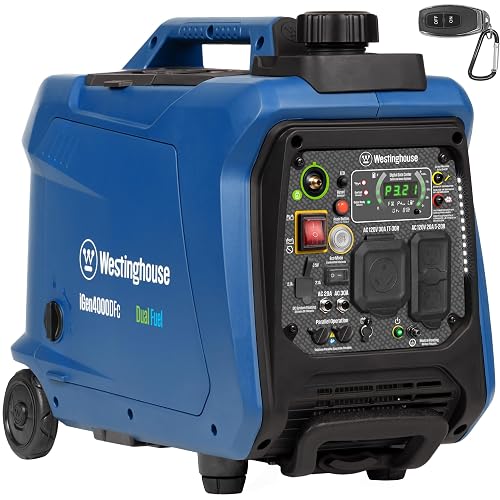 TOP CHOICEBest overallWestinghouse 4000 Peak Watt Super Quiet Dual Fuel Portable Inverter GeneratorView on Amazon
- 2
 TOP CHOICEBest for RV and campingWestinghouse 5000 Peak Watt Super Quiet Portable Inverter GeneratorView on Amazon
- 3
 TOP CHOICEBest for quiet camp and home useAIVOLT 4300W Dual Fuel Inverter Generator 53dB QuietView on Amazon
- 4
 Best for whole-home backupGENMAX GM7250iEDC Super Quiet Dual Fuel Portable GeneratorView on Amazon
- 5
 Best budget pickLIFAN 4800W Gas Inverter Generator with Remote StartView on Amazon
- 6
 Best for tri-fuel flexibilityWestinghouse 8200 Peak Watt Tri-Fuel Portable Inverter GeneratorView on Amazon
- 7
 Best for wireless remote convenienceChampion 4500-Watt Wireless Remote Start Portable Inverter GeneratorView on Amazon
Our Top Picks
| Product | Best for | Key feature |
|---|---|---|
| Westinghouse 4000 Peak Watt Super Quiet Dual Fuel Portable Inverter Generator | Best overall | Dual fuel (gas or propane) with remote electric start |
| Westinghouse 5000 Peak Watt Super Quiet Portable Inverter Generator | Best for RV and camping | Remote electric start with auto choke and RV-ready outlets |
| AIVOLT 4300W Dual Fuel Inverter Generator 53dB Quiet | Best for quiet camp and home use | 53 dB rating stated in the listing |
| GENMAX GM7250iEDC Super Quiet Dual Fuel Portable Generator | Best for whole-home backup | 7250 W rated output with parallel capability |
| LIFAN 4800W Gas Inverter Generator with Remote Start | Best budget pick | Remote start with CO sensor and eco mode |
| Westinghouse 8200 Peak Watt Tri-Fuel Portable Inverter Generator | Best for tri-fuel flexibility | Gas, propane and natural gas operation |
| Champion 4500-Watt Wireless Remote Start Portable Inverter Generator | Best for wireless remote convenience | Wireless remote start with parallel readiness |
Westinghouse 4000 Peak Watt Super Quiet Dual Fuel Portable Inverter Generator
Westinghouse 4000 Peak Watt Super Quiet Dual Fuel Portable Inverter Generator, Remote Electric Start, Gas & Propane Powered, RV Ready, CO Sensor, Parallel Capable
Best for: Best overall
This model suits homeowners who want a quiet backup unit that can run on gasoline or propane and be started from a distance. It also fits RV owners who want a compact inverter with clean output for sensitive electronics.
Key specs
- Peak output of 4000 watts per the listing name
- Dual fuel operation on gasoline or propane
- Remote electric start
- Parallel capable for adding a second unit later
- CO sensor included
Pros
- Dual fuel gives a backup option when gasoline is hard to get
- Remote electric start simplifies cold-weather starts
- Parallel capability supports future expansion
Cons
- Peak wattage is lower than the larger Westinghouse models, limiting whole-house use
- Propane runtime is shorter than gasoline on a comparable tank
Bottom line: A strong first pick for households that want one quiet unit for outages, camping and job sites, with the flexibility to switch fuels.
Westinghouse 5000 Peak Watt Super Quiet Portable Inverter Generator
Westinghouse 5000 Peak Watt Super Quiet Portable Inverter Generator, Remote Electric Start with Auto Choke, Wheel & Handle Kit, RV Ready, Gas Powered, Parallel Capable
Best for: Best for RV and camping
Campers and RV owners who need more output than a 4000-watt unit, but still want an inverter that stays calm at camp sites, will find this model fits their routine.
Key specs
- Peak output of 5000 watts per the listing name
- Remote electric start with auto choke
- Wheel and handle kit included
- RV ready
- Gasoline powered, parallel capable
Pros
- Auto choke makes remote starts more dependable in cold weather
- Wheel kit eases moving the unit across gravel or uneven pads
- Higher peak output than the 4000-watt Westinghouse
Cons
- Gasoline only, so no propane fallback
- Heavier than smaller inverters, which reduces portability
Bottom line: Best for RV owners and campers who want more headroom on the power side and a quieter operating profile than open-frame conventional generators.
AIVOLT 4300W Dual Fuel Inverter Generator 53dB Quiet
AIVOLTRemote/Electric Start. 64lbs Wheels Kit. Gas Propane Powered. 34h Propane Runtime. CO Auto-Shutoff. Parallel Ready. 4300W Dual Fuel Inverter Generator 53dB Quiet for RV Camp Home
Best for: Best for quiet camp and home use
Buyers who care most about the decibel number on the spec sheet, and who may run the unit close to a campsite or a bedroom window, will find this model’s stated rating a useful starting point.
Key specs
- Stated noise rating of 53 dB per the listing name
- Rated 4300 W, dual fuel
- Remote and electric start
- Wheel kit included
- CO auto-shutoff
Pros
- Explicit decibel rating makes comparison easier
- Dual fuel adds flexibility
- Wheel kit helps with positioning
Cons
- Brand has less long-term owner history than established names
- Stated decibel figures are measured under manufacturer conditions and may read higher at full load
Bottom line: A good match for shoppers who want a clearly labeled quiet rating and dual fuel at a moderate output level.
GENMAX GM7250iEDC Super Quiet Dual Fuel Portable Generator
GENMAX Portable Generator, 7250W Super Quiet Dual Fuel Portable Engine with Parallel Capability, Remote/Electric Start, Ideal for Home backup power.EPA &CARB Compliant (GM7250iEDC)
Best for: Best for whole-home backup
Homeowners who need to run more circuits during an outage, such as a refrigerator, well pump and furnace blower, and who still want a remote start, should look at this higher-output option.
Key specs
- 7250 W rated output per the listing name
- Dual fuel operation
- Remote and electric start
- Parallel capability
- Listing states EPA and CARB compliance
Pros
- Higher output covers more household loads
- Parallel capability allows doubling output later
- Dual fuel improves fuel flexibility
Cons
- Heavier and larger than the 4000 and 4300-watt models
- Higher output units generally produce more noise under heavy load
Bottom line: Pick this if your priority is running more of the house on a single unit while keeping remote start convenience.
LIFAN 4800W Gas Inverter Generator with Remote Start
Gasoline powered, 3800W running output, remote/electric start, CO sensor, eco mode LIFAN 4800W Gas Inverter Generator, Remote Start, 30A RV Ready
Best for: Best budget pick
Buyers who want remote start and an inverter design without premium features will find this gasoline model a practical choice for occasional outages and light recreational use.
Key specs
- 3800 W running output per the listing name, 4800 W rated
- Remote and electric start
- CO sensor
- Eco mode
- RV ready with 30A connection
Pros
- Eco mode lowers fuel use and noise at light loads
- CO sensor adds a safety layer
- RV-ready outlet suits camper setups
Cons
- Gasoline only
- Owner feedback on long-term durability varies, so check warranty terms closely
Bottom line: A sensible choice for shoppers who want the core features of a remote start inverter without stepping up to premium pricing tiers.
Westinghouse 8200 Peak Watt Tri-Fuel Portable Inverter Generator
Westinghouse 8200 Peak Watt Tri-Fuel Portable Inverter Generator, Remote Electric Start, Transfer Switch Ready, Gas, Propane, Natural Gas, Low THD, Safe for Electronics, Parallel Capable, CO Sensor
Best for: Best for tri-fuel flexibility
Users who want the option to run on gasoline, propane or natural gas, and who may connect a transfer switch, will find this model covers the widest range of fuel scenarios in this lineup.
Key specs
- 8200 peak watts per the listing name
- Tri-fuel: gasoline, propane and natural gas
- Remote electric start
- Transfer switch ready
- Low THD output, listed as safe for electronics
- CO sensor and parallel capable
Pros
- Natural gas option suits homes with gas service
- Transfer switch readiness supports cleaner home integration
- Low THD output is helpful for sensitive electronics
Cons
- Higher output means a larger, heavier footprint
- Natural gas consumption rates should be checked against your meter before relying on it
Bottom line: Best for homeowners who want a true multi-fuel unit and plan to connect it to the house through a transfer switch.
Champion 4500-Watt Wireless Remote Start Portable Inverter Generator
Wireless Remote Start, Gas Powered, RV Ready, Parallel Ready, Quiet Technology, Free 3-Year Warranty Champion 4500-Watt Wireless Remote Start Portable Inverter Generator
Best for: Best for wireless remote convenience
Buyers who want to start the unit from a distance using a wireless key fob, and who value a warranty period stated on the listing, will find this model meets those needs.
Key specs
- 4500 W rated output per the listing name
- Wireless remote start
- Gasoline powered
- RV ready and parallel ready
- Listing states a 3-year warranty
Pros
- Wireless remote is convenient for garages and storm-season setups
- Parallel readiness allows future expansion
- Stated warranty period adds purchase confidence
Cons
- Gasoline only
- Remote range and battery life should be confirmed in the manual
Bottom line: A practical pick for households that want wireless start convenience and a mid-range output for essentials.
Buying Guide
Noise rating and how to read decibel figures
Manufacturers usually state noise as a decibel value measured at a set distance, often 7 meters (about 23 feet), at a specified load. A rating near 50 to 55 dB is generally considered quiet for an inverter, but the number only means something when the test load and distance match your use. Look for the load percentage in the spec sheet: a unit rated 53 dB at quarter load can sound much louder at full output. Compare numbers only between models with the same test conditions.
Good picks for this: AIVOLT 4300W Dual Fuel Inverter Generator 53dB Quiet, Westinghouse 4000 Peak Watt Super Quiet Dual Fuel Portable Inverter Generator
Inverter versus conventional design
Inverter generators vary engine speed to match the load, which is the main reason they run quieter and more fuel-efficiently than conventional open-frame units. If your priority is low noise near people, an inverter design is the starting point. Conventional generators can be cheaper to buy for raw output, but they typically sound harsher and run at constant speed.
Good picks for this: Westinghouse 5000 Peak Watt Super Quiet Portable Inverter Generator, LIFAN 4800W Gas Inverter Generator with Remote Start
Remote and electric start reliability
Electric start removes the pull cord, and remote start lets you begin the engine from a distance or from indoors. Check whether the unit has auto choke, since choke control affects cold starts. Keep the remote fob’s battery and range in mind, and confirm the manual’s instructions for resetting the unit if the remote loses connection.
Good picks for this: Westinghouse 5000 Peak Watt Super Quiet Portable Inverter Generator, Champion 4500-Watt Wireless Remote Start Portable Inverter Generator
Fuel type: gasoline, propane, dual fuel and tri-fuel
Dual fuel units run on gasoline or propane, which helps during fuel shortages and gives you a cleaner-burning option for storage. Tri-fuel adds natural gas for homes already connected to a gas line. Propane runtime on a standard tank is typically shorter than gasoline on the same tank size, so estimate runtime for your load before you commit to a fuel plan.
Good picks for this: Westinghouse 8200 Peak Watt Tri-Fuel Portable Inverter Generator, GENMAX GM7250iEDC Super Quiet Dual Fuel Portable Generator
Output and running load
Separate the running watts from the peak watts. Running watts are what the unit can supply continuously, and they determine how many appliances you can run at once. Add up the running watts of the devices you need, then add a margin. Running a unit near its limit typically increases noise and heat, so sizing up slightly often means a quieter experience.
Good picks for this: GENMAX GM7250iEDC Super Quiet Dual Fuel Portable Generator, Westinghouse 5000 Peak Watt Super Quiet Portable Inverter Generator
Portability, weight and wheel kits
Inverter generators in the 4000 to 5000 watt range often weigh enough that a wheel kit makes a real difference. Check the listed weight, the handle design and whether the unit ships with wheels. Consider where the generator will sit: on a gravel pad, a deck or a garage floor. Portability matters most when you need to move the unit away from the house to meet placement distance guidelines.
Good picks for this: AIVOLT 4300W Dual Fuel Inverter Generator 53dB Quiet, Westinghouse 5000 Peak Watt Super Quiet Portable Inverter Generator
Safety features and carbon monoxide protection
Carbon monoxide is an invisible, odorless gas produced by all combustion engines. Never run a generator inside a home, garage, basement or any enclosed space, and keep it at a distance from doors and windows as your owner’s manual specifies. Units with a built-in CO sensor or auto-shutoff add a layer of protection, but they do not replace proper placement and ventilation. For placement guidance, see Whole House Generator Placement: Where to Put It for Safety and Quiet (2026).
Good picks for this: LIFAN 4800W Gas Inverter Generator with Remote Start, Westinghouse 4000 Peak Watt Super Quiet Dual Fuel Portable Inverter Generator
FAQ
What does super quiet mean for a generator?
There is no regulated definition. Manufacturers usually use the term for inverter designs that run at roughly 50 to 60 dB at quarter load and specify the test distance. Always compare the stated decibel figure, its distance and its load condition.
Is remote start worth it on a portable generator?
For many owners it is. Remote start allows you to begin the engine from indoors or from a distance, which helps in storms, cold weather or when mobility is limited. Check the remote range and battery in the manual.
Can a dual fuel generator run on propane in cold weather?
Propane vaporizes more readily than gasoline, which makes it a common choice for cold-weather starts. Performance still depends on tank pressure and temperature, so consult the owner’s manual for minimum temperature guidance.
How far should a generator be from the house?
Placement guidance varies by manufacturer and local code, but generators are generally kept well away from doors, windows and vents. Check your owner’s manual and local regulations before placing a unit.
Do inverter generators run quieter than conventional generators?
In general, yes. Inverter designs adjust engine speed to the load, which typically reduces noise at partial load. At full output, the difference narrows, so the load you plan to run matters.
Should I size a generator for peak watts or running watts?
Size for running watts, the continuous output you need. Peak watts are the short surge a unit can deliver for a few seconds, typically when a motor starts.
Is a CO sensor enough protection?
No. A CO sensor or auto-shutoff is a useful backup, but generators must still be operated outdoors and away from openings. Install battery-powered CO alarms in your home as an additional safeguard.
Conclusion
For most households, the Westinghouse 4000 Peak Watt Super Quiet Dual Fuel Portable Inverter Generator is a balanced starting point, offering dual fuel, remote electric start and parallel capability. RV owners and campers may prefer the Westinghouse 5000 Peak Watt for its added output and wheel kit. Buyers who focus on the stated decibel rating should look at the AIVOLT 4300W, and whole-home users who need more running watts should compare the GENMAX GM7250iEDC. For tri-fuel flexibility, the Westinghouse 8200 is the widest option, while the LIFAN 4800W and Champion 4500-Watt cover budget-minded and wireless-start needs. Match the output, fuel type and noise rating to your actual loads and location before you decide.
Sources
- Guidance on safe generator operation, sizing and fuel options for home backup power (energy.gov)
- Carbon monoxide hazard warnings and safety recommendations for portable generators (cpsc.gov)
- Workplace and temporary power guidance covering generator placement and ventilation (osha.gov)
Before you buy: helpful guides
Related reading
About Owen Palmer
Owen Palmer is part of our editorial team and reviews and edits our generators & noise guides, checking product details against manufacturer specifications and owner feedback.