By Evelyn Fairbanks
As an Amazon Associate I earn from qualifying purchases. This page may contain affiliate links.
The WEN 3600 dual fuel generator, sold as the DF360iX, suits homeowners and RV owners who want a quiet, lightweight inverter that runs on gasoline or propane and can be ready for clean power at short notice. It is a strong fit for light-to-moderate loads such as refrigerators, lighting, fans, phone and laptop charging, and a small window air conditioner or CPAP in a pinch. It is a weaker choice for anyone who needs to run well-sized central air, a well pump with a large motor, or a full home circuit at once, and for buyers who want the highest possible running time on a single tank. If your loads fit inside its rated output and you value a compact footprint and a built-in CO safeguard, it deserves a close look. If you need heavy surge capacity or extended runtime without refueling, look at a larger unit instead.

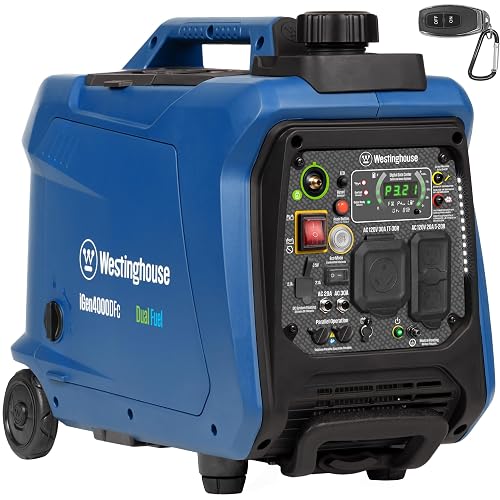
WEN Quiet and Lightweight 3600-Watt Dual Fuel RV-Ready Portable Inverter Generator with Fuel Shut Off and CO Watchdog (DF360iX)
Product Overview
The WEN DF360iX is a portable inverter generator aimed at people who want something smaller and quieter than a conventional open-frame generator. Its name identifies it as a 3600-watt, dual fuel, RV-ready unit with a fuel shut-off feature and a CO Watchdog, which is a carbon monoxide sensor that shuts the engine down when dangerous levels build up. Inverter designs generally produce cleaner, more stable AC power than conventional generators, which matters for sensitive electronics. Because it runs on either gasoline or propane, you can switch fuels depending on what is available during an outage or on a camping trip.
Inverter generators are a good match for this kind of use. Their engines speed up and down with the load instead of running at a fixed high speed, which is a major reason they tend to be quieter and more fuel-efficient at partial load. The DF360iX sits in the middle of the WEN lineup, below the 4800-watt DF480iX and above the simpler 56360i inverter, so it fills the gap for buyers who want more capacity than a small unit but do not need the larger model.
Key Features & Specifications
The table below lists the features that the product name states, along with the general characteristics that define this class of generator. Confirm exact figures on the manufacturer’s specification sheet before purchase, as dual fuel ratings differ between gasoline and propane.
| Feature | Details |
|---|---|
| Rated output | 3600 watts (per product name) |
| Generator type | Portable inverter |
| Fuel options | Dual fuel: gasoline or propane |
| Fuel shut-off | Included |
| Safety monitoring | CO Watchdog carbon monoxide sensor |
| Design | Lightweight, compact, RV-ready |
| Noise profile | Quiet operation, typical of inverter designs at partial load |
| Model code | DF360iX |
Pros & Cons
Pros
- Dual fuel flexibility lets you run on gasoline or propane depending on availability and storage.
- Inverter design typically delivers quieter operation at part load than open-frame generators.
- Lightweight, compact body makes it easier to move, store and transport.
- RV-ready labeling suits campers who want a quiet power source for sensitive devices.
- CO Watchdog and fuel shut-off add safety layers that many budget portable units lack.
- Clean inverter output is generally gentler on phones, laptops and other electronics.
Cons
Performance Analysis
Performance for a 3600-watt inverter generator depends heavily on how you size the load. Start by adding the running watts of everything you plan to power at once, then add surge watts for motor-driven items such as refrigerators, sump pumps and window air conditioners. A common approach is to total the running watts, then make sure the largest single surge is covered by the generator’s surge rating. Keep a margin of at least 20 percent below the rated output for steady loads to reduce heat and extend engine life.
Owners of inverter generators in this class often report that the unit runs noticeably quieter than traditional open-frame models, especially when the load is light and the engine is throttling down. That behavior is the main reason to choose an inverter over a conventional generator for a campsite or a residential yard. Owners also commonly note that the CO shutdown feature has given them peace of mind, though it should never be treated as a substitute for good ventilation and placement.
Fuel behavior is the area where expectations need the most care. Gasoline offers the longest runtime on a full tank, while propane is convenient for long storage and does not degrade in the tank the way gasoline does. Propane output is typically a bit lower than gasoline output at the same setting, so plan your heaviest loads with that in mind. Running either fuel at moderate load, rather than always at the top of the rated range, generally produces better fuel economy and quieter operation.
Who Should Buy This Product?
This generator makes the most sense for a homeowner who wants backup power for a short list of essentials during outages, such as a refrigerator, a few lights, a furnace blower, phone and laptop charging, and perhaps a small fan or window unit. It is also a good match for RV owners and campers who want a quiet, lightweight unit for sensitive electronics and light climate control. People who value a dual fuel option, and who keep either gasoline or propane on hand, will appreciate the flexibility.
You should skip this model if your backup plan involves running central air, an electric range, a well pump with a large motor, or a full electrical panel. It is also a poor fit if you need to run for many hours without refueling on a single fuel source, or if you plan to power heavy construction tools continuously. For those cases, a larger inverter or a conventional generator with a transfer switch will serve better. Consult a licensed electrician before connecting any generator to your home wiring, since improper backfeeding is dangerous.
Buying Guide
Before buying any dual fuel generator, work through three questions: how many watts you need at peak, how long you need to run, and which fuels you can reliably store or access. A simple load worksheet, listing each device with its running and surge watts, will tell you quickly whether a 3600-watt unit is enough. Pay attention to the outlet types as well, since you will need the right cords and adapters for your devices.
If the DF360iX does not fit your needs, two other well-known options are worth comparing. The larger WEN model offers more capacity for buyers who need to run bigger motor loads, and it is a logical step up if the 3600-watt rating feels tight:

WEN Quiet and Lightweight 4800-Watt Dual Fuel RV-Ready Electric Start Portable Inverter Generator with Fuel Shut Off and CO Watchdog (DF480iX)
For a smaller, simpler inverter, the 56360i model covers the basics for light loads and quiet camping use without the added dual fuel features:

WEN 3600-Watt Portable Inverter Generator, RV-Ready, Quiet and Lightweight with Fuel Shut Off (56360i)
When comparing options, check the surge rating against your largest motor, look at fuel consumption figures at half load, read the noise rating at the distance you plan to use it, and confirm that the unit includes the safety features you want. Also check whether the warranty covers both fuel types.
For more context on sizing and noise, you may find these useful: Dual Fuel Backup Generator Buyer's Guide: 7 Best Picks for Home Power (2026) covers home backup sizing in depth, and Quietest Dual Fuel Generator: 10 Best Picks Compared (2026) compares noise performance across a wider field. If you are weighing dual fuel against other fuel types, Dual Fuel vs Tri Fuel Generator (2026): Which Is Better for Quiet Home Backup? is a helpful read.
FAQ
Is the WEN 3600 dual fuel generator quiet enough for camping?
Inverter designs like this one are generally quieter than open-frame generators, particularly at light loads. Owners often find it workable at campsites, but actual sound depends on load, distance and surroundings. Check the manufacturer’s noise rating for the distance you plan to use.
Can it run a refrigerator and a few lights at the same time?
In most cases, yes. A typical refrigerator has a surge demand that should be checked against the generator’s surge rating, and the running load of lights and small devices should be added to the refrigerator’s running watts. Keep total steady load comfortably below the rated output.
Can I run it on propane and gasoline interchangeably?
That is the purpose of a dual fuel design. Switch fuels according to the manufacturer’s instructions, and expect slightly different output and runtime depending on which fuel you use.
Does the CO Watchdog mean I can run it indoors?
No. A carbon monoxide sensor is a safety backup, not a substitute for ventilation. Always operate portable generators outdoors, well away from windows, doors and vents.
Can it power central air conditioning?
Generally not at 3600 watts. Central air units often draw more starting power than a unit this size can handle reliably. A small window air conditioner may be possible depending on its ratings, but verify the numbers first.
How often does it need maintenance?
Follow the owner’s manual for oil changes, air filter cleaning and spark plug checks. Regular maintenance is one of the best ways to keep an inverter generator running quietly and reliably over the long term.
Do I need a transfer switch to use it for home backup?
Yes, for connecting to a home’s circuits safely. Plugging a generator into a wall outlet and backfeeding the grid is dangerous. A properly installed transfer switch or interlock kit is the safe method. Consult a licensed electrician for installation.
Final Verdict
The WEN DF360iX is a sensible choice for buyers who want a quiet, lightweight 3600-watt inverter generator with dual fuel flexibility and built-in safety features such as fuel shut-off and CO Watchdog. It shines for campers, RV owners and homeowners who need power for essentials rather than whole-house loads. Size your needs carefully, keep steady loads below the rated output, and operate it only outdoors with proper ventilation. If your requirements exceed its capacity, step up to a larger model rather than stretching this one beyond its limits.

About Evelyn Fairbanks
Evelyn writes about generators & noise. Each guide starts with research into how products are built and what owners report after months of use, and is revised when better options appear.