 By Miles Sinclair
Updated November 2026
Choosing the most reliable whole house generator comes down to a few measurable things: fuel type, automatic transfer switch integration, sustained wattage, and how the unit handles noise and maintenance over time. The picks below are compared on those criteria, using product listings, brand reputation, and owner feedback patterns. None of this is based on our own testing.
Our top picks at a glance
- 1
 TOP CHOICEBest overallGenerac 14kW Whole Home Generator, Transfer Switch and Cellular CapabilityView on Amazon
- 2
 TOP CHOICEBest for dual-fuel flexibilityDuroMax XP13000EH Dual Fuel Portable GeneratorView on Amazon
- 3
 TOP CHOICEBest for a permanent standby installHoneywell 14kW Home Standby GeneratorView on Amazon
- 4
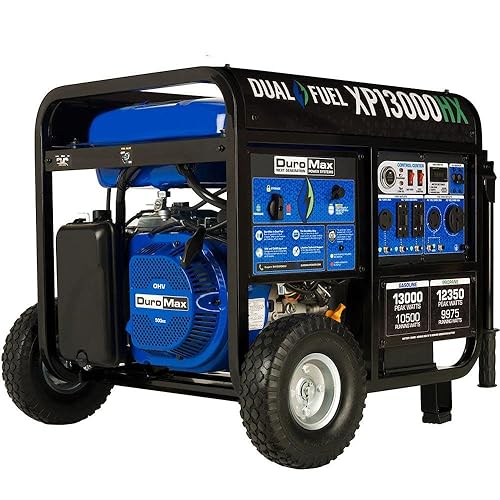 Best for budget-minded buyersDuroMax XP13000HX Dual Fuel Portable GeneratorView on Amazon
- 5
 Best for high-load homesChampion 22,000-Watt Dual Fuel Home Standby GeneratorView on Amazon
- 6
 Best for battery-based backupJackery HomePower 3600 Plus Power StationView on Amazon
Our Top Picks
| Product | Best for | Key feature |
|---|---|---|
| Generac 14kW Whole Home Generator | Overall reliability | 200 amp transfer switch |
| DuroMax XP13000EH | Dual-fuel flexibility | Gas and propane operation |
| Honeywell 14kW Home Standby Generator | Permanent standby install | Weather-resistant enclosure |
| DuroMax XP13000HX | Budget-minded buyers | Electric start, transfer ready |
| Champion 22,000-Watt Home Standby Generator | High-load homes | 200 amp transfer switch |
| Jackery HomePower 3600 Plus | Battery-based backup | 3584Wh expandable storage |
Generac 14kW Whole Home Generator, Transfer Switch and Cellular Capability
Whole House Backup Power, Automatic 200 Amp Transfer Switch, Outdoor Gas Propane, Protects Home Outages, Storm Protection Generac 14kW Whole Home Generator, Transfer Switch & Cellular Capability
Best for: Overall reliability and automatic whole-house coverage.
This suits homeowners who want an automatic standby setup that restores power without manual switching during outages.
Pros
- Integrated 200 amp automatic transfer switch
- Outdoor propane operation suited to long outages
Cons
- Installation requires a licensed electrician and permits
DuroMax XP13000EH Dual Fuel Portable Generator
DuroMax XP13000EH 13,000-Watt Dual Fuel Portable Generator – Gas & Propane, Electric Start, Whole Home Backup Power, Transfer Switch Ready, RV & Emergency Ready
Best for: Dual-fuel flexibility on gas or propane.
This fits buyers who want a portable unit that can be wired to a transfer switch for whole-home use and run on either fuel.
Pros
- Runs on gasoline or propane
- Electric start simplifies operation
Cons
- Requires manual setup and refueling during extended outages
Honeywell 14kW Home Standby Generator
Honeywell 14kW Home Standby Generator – Automatic Backup Power for Whole Home – Runs on Natural Gas or Propane – Weather-Resistant Enclosure – Installation Pad Included
Best for: A permanent standby install with automatic switching.
This suits homeowners planning a fixed outdoor unit on a pad who prefer natural gas or propane fueling.
Pros
- Runs on natural gas or propane
- Weather-resistant enclosure and installation pad included
Cons
- Professional installation is required
DuroMax XP13000HX Dual Fuel Portable Generator
DuroMax XP13000HX 13,000-Watt Dual Fuel Portable Generator – Gas & Propane, Electric Start, Whole Home Power Backup, Transfer Switch Ready, RV & Emergency Ready
Best for: Budget-minded buyers wanting whole-home backup.
This is aimed at owners who need a lower-cost portable option with transfer switch compatibility for essential circuits.
Pros
- Electric start with dual-fuel capability
- Transfer switch ready
Cons
- Noise output is typical of open-frame portable units
Champion 22,000-Watt Dual Fuel Home Standby Generator
Champion 22,000-Watt Dual Fuel (Liquid Propane/Natural Gas) Whole House Home Standby Generator and 200-Amp Automatic Transfer Switch with fleX Technology
Best for: High-load homes needing large sustained wattage.
This suits larger houses with central air, well pumps, and other heavy loads that a smaller unit could not carry.
Pros
- 22,000-watt output for heavy loads
- Includes a 200 amp automatic transfer switch
Cons
- Higher installation complexity and sizing requirements
Jackery HomePower 3600 Plus Power Station
Jackery HomePower 3600 Plus Power Station, 3584Wh, 3600W AC Output | LFP Battery, Expandable to 21kWh, Solar Generator, Essential Home Backup for Home Use, Emergencies, RV (Solar Panel Optional)
Best for: Battery-based backup with no combustion engine.
This fits homeowners who want quiet, fume-free essential power for lights, refrigeration, and devices rather than full-house loads.
Pros
- No fuel or exhaust, quiet operation
- Expandable battery capacity
Cons
- Not sized for whole-house loads like central air
Buying Guide
Fuel type and supply reliability
Natural gas is typically the most dependable long-term fuel because it is piped in, while propane is stored on site and lasts longer in a sustained outage. Dual-fuel units let you switch depending on what is available.
Good picks for this: Honeywell 14kW Home Standby Generator, DuroMax XP13000EH
Automatic transfer switch integration
An automatic transfer switch detects utility loss and starts the generator without manual action. Confirm the switch rating matches your service panel amperage, commonly 200 amps for whole-house setups.
Good picks for this: Generac 14kW Whole Home Generator, Champion 22,000-Watt Home Standby Generator
FAQ
Which fuel type is the most reliable for a whole house generator?
Natural gas is generally considered the most dependable choice for standby whole house generators because it is supplied through a utility line and does not need to be stored on site. Propane is also reliable, but it depends on tank levels, so you will need to keep the tank filled and monitored. Dual fuel models give you the flexibility to run on either source.
Do I need an automatic transfer switch with a whole house generator?
An automatic transfer switch is strongly recommended because it detects a power outage and switches your home to generator power without manual effort. Without one, you would have to flip circuits yourself and could lose power during the switchover. It also protects the generator and your home’s wiring by keeping the utility and generator supplies separate.
How much wattage do I need to back up my whole house?
The right size depends on the total running load of the appliances and systems you want to keep powered, such as the furnace or heat pump, refrigerator, well pump, and lighting. Add up the starting and running watts of the essentials and choose a unit with some headroom above that total. A licensed electrician or installer can help you run an accurate load calculation for your home.
How often does a standby generator need maintenance?
Most standby generators are designed for periodic self-testing and should have their oil, filters, and spark plugs serviced on the schedule set by the manufacturer. Many owners also schedule an annual professional inspection to check the battery, fuel connections, and transfer switch. Keeping up with routine maintenance is one of the biggest factors in long-term reliability.
Are portable generators a good substitute for a whole house standby unit?
Portable generators can power important circuits and appliances, but they usually cannot run an entire home continuously and typically require manual setup. Standby units connect permanently to your fuel line and transfer switch, so they start and supply power automatically. For full-home coverage with minimal effort, a standby system is usually the better fit.
Can a power station like the Jackery HomePower 3600 Plus run a whole house?
A battery power station is better suited to essential loads, such as lights, refrigeration, phone charging, and some medical or communication devices, than to a full-home load. Its capacity and output are limited compared with a whole house generator, so it works best as a supplement or for a smaller backup need. Check the total wattage of the devices you plan to run before relying on it for extended outages.
Conclusion
If you want the most hands-off, always-ready backup for your entire home, a permanently installed standby generator with an automatic transfer switch is the strongest choice, and the Generac, Honeywell, and Champion units fit that role. If your budget or installation options are more limited, a dual fuel portable unit such as one of the DuroMax models can cover essential circuits with a transfer switch, though it requires more manual involvement.
For smaller backup needs, such as keeping lights, refrigeration, and devices running, the Jackery power station offers a simpler, quieter solution. Match your choice to the loads you truly need to keep powered and to how much setup and maintenance you are willing to handle.
Related reading
- Most Quiet Whole House Generator: 5 Best Picks Compared (2026)
- 4 Best Liquid Cooled Whole House Generator Picks for Reliable Home Backup
- Whole-House Generator Noise Reduction: 8 Steps That Actually Work
- Whole House UPS with Generator: 3 Best Options for Home Backup
- Whole House Switch for Generator: How to Choose and Install One Safely
- Whole House Standby Generator Installation: A Step-by-Step Guide
- Whole House Standby Generator Installation Cost: What Drives the Price (2026)
About Miles Sinclair
Miles Sinclair is part of our editorial team and reviews and edits our generators & noise guides, checking product details against manufacturer specifications and owner feedback.


