 By Owen Palmer
Updated November 2026
An ultra quiet propane generator is worth the effort if you need backup power near a bedroom, campsite or neighbor’s fence line. Noise output in dBA, the way propane fuel burns at partial load, and whether the unit is an inverter design all matter more than raw wattage. The picks below were chosen by comparing manufacturer noise specifications, brand reputation and common owner feedback about how these units sound in real use.
Our top picks at a glance
- 1
 TOP CHOICEBest overallWEN Quiet and Lightweight 3600-Watt Dual Fuel RV-Ready Portable Inverter GeneratorView on Amazon
- 2
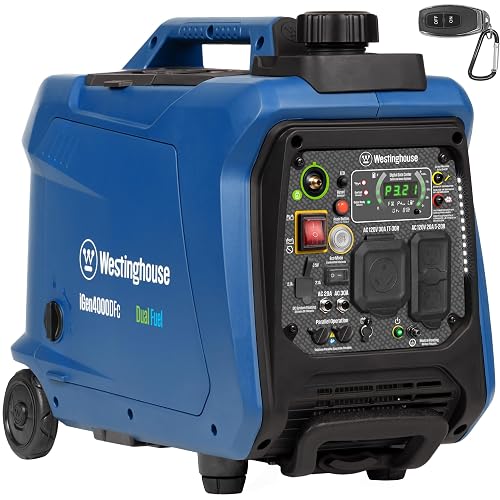
 TOP CHOICEBest for quiet home backupWestinghouse 2800 Peak Watt Super Quiet Dual Fuel Portable Inverter GeneratorView on Amazon
- 3
 TOP CHOICEBest for RV and campingChampion 4000-Watt Dual Fuel RV Ready Portable Inverter GeneratorView on Amazon
- 4
 Best for low noise at mid loadPowerSmart 3800 Watt Portable Inverter Generator for Home UseView on Amazon
- 5
 Best for larger loadsWEN 6800-Watt Dual Fuel RV-Ready Electric Start Portable Inverter GeneratorView on Amazon
Our Top Picks
Quick Comparison
| Product | Best for | Key feature |
|---|---|---|
| WEN DF360iX 3600-Watt | Overall quiet use | Fuel shut-off, CO watchdog |
| Westinghouse 2800 Peak Watt | Quiet home backup | Parallel capable, CO sensor |
| Champion 4000-Watt Dual Fuel | RV and camping | Recoil start, parallel ready |
| PowerSmart 3800 Watt | Mid-load quiet running | Eco mode, under 3% THD |
| WEN DF680iX 6800-Watt | Larger loads | Electric start, CO watchdog |
WEN Quiet and Lightweight 3600-Watt Dual Fuel RV-Ready Portable Inverter Generator
WEN Quiet and Lightweight 3600-Watt Dual Fuel RV-Ready Portable Inverter Generator with Fuel Shut Off and CO Watchdog (DF360iX)
Best for: Overall quiet use
This suits homeowners and RV owners who want a light, quiet inverter that runs on either gasoline or propane.
Pros
- Fuel shut-off and CO watchdog built in
- Lightweight, easy to position away from living areas
Cons
- Output is modest for large appliances
Westinghouse 2800 Peak Watt Super Quiet Dual Fuel Portable Inverter Generator
Westinghouse 2800 Peak Watt Super Quiet & Lightweight Dual Fuel Portable Inverter Generator, Gas & Propane Powered, CO Sensor, Parallel Capable, Long Run Time
Best for: Quiet home backup
A good fit for households that need steady power for refrigerators, lights and electronics during outages.
Pros
- CO sensor and parallel capability
- Long run time on propane for its size
Cons
- Lower peak output limits whole-house use
Champion 4000-Watt Dual Fuel RV Ready Portable Inverter Generator
Gas & Propane Powered, LPG Hose, RV Ready, Recoil Start, Parallel Ready, Quiet Technology, Free 3-Year Warranty Champion 4000-Watt Dual Fuel RV Ready Portable Inverter Generator
Best for: RV and camping
Aimed at campers who want a propane-capable unit with an LPG hose option and a three-year warranty listed by the manufacturer.
Pros
- LPG hose and RV-ready design
- Parallel ready for more capacity later
Cons
- Recoil start can be harder to pull in cold weather
PowerSmart 3800 Watt Portable Inverter Generator for Home Use
PowerSmart 3800 Watt Portable Inverter Generator for Home Use | Super Quiet <59dBA, Long Runtime, Eco Mode, <3% THD Clean Power
Best for: Low noise at mid load
Listed at under 59 dBA by the manufacturer, it suits users running moderate loads who care most about sound.
Pros
- Manufacturer-listed noise below 59 dBA
- Eco mode reduces engine speed at light load
Cons
- Not designed for heavy continuous loads
WEN 6800-Watt Dual Fuel RV-Ready Electric Start Portable Inverter Generator
WEN 6800-Watt Dual Fuel RV-Ready Electric Start Portable Inverter Generator with Fuel Shut Off and CO Watchdog for Electric Vehicle Backup (DF680iX)
Best for: Larger loads
For households that need more output, including EV charging backup, while keeping the CO watchdog and fuel shut-off features.
Pros
- Electric start for easier cold-weather use
- Higher wattage for larger loads
Cons
- Heavier and louder under full load than smaller units
Buying Guide
Check the dBA rating at your real load
Manufacturers usually list noise at a quarter or half load, and that is where inverter designs are quietest. Compare the dBA figure at the load you actually run, not just the peak wattage on the box.
Understand propane run time
A 20-pound cylinder lasts far fewer hours at high load than at light load. Estimate runtime from the fuel consumption figures in the owner’s manual before you rely on the unit during an outage. For whole-house context, see Whole House Generator Propane Usage: How Much You'll Burn (2026).
Look for CO protection and proper placement
A CO sensor or watchdog shuts the unit down or sounds an alarm when carbon monoxide builds up. Never run any generator indoors or in an attached garage. Consult a qualified electrician or the manufacturer before connecting to a home’s electrical system.
Consider an enclosure if noise is still an issue
A properly ventilated sound enclosure can cut perceived noise, but it must not trap exhaust or heat. For a practical overview, read Quiet Box for Inverter Generator: How to Build or Buy One That Cuts Noise.
Good picks for this: PowerSmart 3800 Watt Portable Inverter Generator for Home Use, Westinghouse 2800 Peak Watt Super Quiet Dual Fuel Portable Inverter Generator
FAQ
How quiet is an ultra quiet propane generator compared with a standard model?
Inverter designs typically run much quieter than conventional open-frame generators, especially at partial load, because the engine speed adjusts to demand. Noise levels are best compared using the dBA rating at a stated load and distance, since manufacturers measure under different conditions. Keep in mind that real-world sound also depends on placement, terrain and nearby reflective surfaces.
Does propane produce less noise than gasoline in a generator?
Propane burns more cleanly and smoothly than gasoline, which can contribute to a slightly quieter and steadier operation. The bigger noise factor is usually the engine design and whether the unit is an inverter model. Propane also stores well for long periods, which makes it a practical choice for standby backup.
How long will a propane tank power a generator?
Run time depends on the tank size, the generator’s fuel consumption and how much load you place on it. Running at a lower load generally stretches the fuel much further than running near the rated maximum. Check the manufacturer’s propane run-time chart for your specific model and expected load before relying on it for an outage.
Can I safely run a propane generator inside my garage or home?
No. Portable generators produce carbon monoxide, which can build up quickly in enclosed or partially enclosed spaces, even with doors or windows open. Always operate the unit outdoors, away from windows, doors and vents, and use a CO alarm in your home.
Can two of these generators be run together for more power?
Some models in this group are parallel-capable, which means two identical units can be linked with a compatible cable to share a load and provide more total wattage. Confirm that both units are the same model and that the manufacturer supports parallel operation before connecting them. Follow the owner’s manual for the correct procedure.
Do I need a transfer switch to use one of these generators for home backup?
A transfer switch is the safest and most code-compliant way to connect a generator to your home’s electrical panel, because it prevents backfeeding into the utility lines. Plugging appliances directly into the generator with heavy-duty extension cords works for small loads but is more limited. If you plan to power circuits in your home, consider consulting a licensed electrician.
Conclusion
If you want the quietest all-around option for home backup, the Westinghouse 2800 and WEN DF360iX are strong choices, with the WEN also suited to RV and camping use. Buyers who need more wattage for larger household loads or an electric vehicle charging setup should look at the higher-output WEN DF680iX or the Champion 4000-Watt model.
For a more compact, budget-minded home backup unit, the PowerSmart 3800 is worth comparing against the others. Match the wattage to the appliances you truly need to run, check the noise rating at a realistic load, and always plan for proper outdoor placement and carbon monoxide protection.
Related reading
- Super Quiet Propane Generator: How to Get the Lowest Noise (2026)
- Quiet Propane Generator 5000 Watt: A Practical Guide (2026)
- 7 Best Ultra Quiet Inverter Generator Models Compared (2026)
About Owen Palmer
Owen Palmer is part of our editorial team and reviews and edits our generators & noise guides, checking product details against manufacturer specifications and owner feedback.