 By Owen Palmer
Updated November 2026
Shopping for a super quiet 50 amp generator means balancing three things: how loud the unit runs under load, whether it can feed a 50 amp outlet for RV or heavy home circuits, and how much its power output and fuel flexibility match your needs. This list compares seven models using manufacturer-listed noise figures, outlet configurations, fuel options and the patterns owners tend to mention in feedback. Noise is measured in dBA at a stated distance, so we weigh those specs heavily.
Our top picks at a glance
- 1
 TOP CHOICEBest overallGenkins 8000W Portable Quiet Inverter GeneratorView on Amazon
- 2
 TOP CHOICEBest for dual fuel flexibilityGENMAX GM7250iEDCView on Amazon
- 3
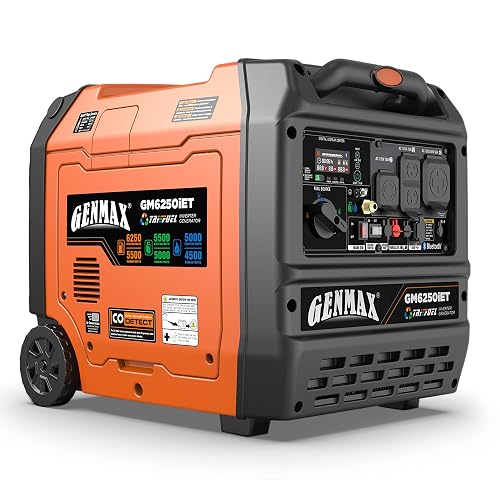 TOP CHOICEBest for tri-fuel with app controlGENMAX 6250w Tri-Fuel Silent Inverter GeneratorView on Amazon
- 4
 Best for whole-home backup8000W Dual Fuel Inverter Generator (Black)View on Amazon
- 5
 Best for lightweight portabilitymaXpeedingrods 5KW Inverter GeneratorView on Amazon
- 6
 Best for RV campsitesWEN 56455i Super Quiet 4500-Watt Inverter GeneratorView on Amazon
- 7
 Best for budget-conscious buyersPowerSmart 4800-Watt Portable Inverter Generator with Electric Start,View on Amazon
Our Top Picks
Quick Comparison
| Product | Best for | Key feature |
|---|---|---|
| Genkins 8000W Portable Quiet Inverter Generator | Overall quiet operation | Listed under 62 dBA |
| GENMAX GM7250iEDC | Dual fuel flexibility | Parallel capability, remote start |
| GENMAX 6250w Tri-Fuel Silent Inverter Generator | Tri-fuel with app control | Bluetooth app, CO sensor |
| 8000W Dual Fuel Inverter Generator (Black) | Whole-home backup | 30A and 50A outlets |
| maXpeedingrods 5KW Inverter Generator | Lightweight portability | Roughly 50 lb build |
| WEN 56455i Super Quiet 4500-Watt Inverter Generator | RV campsites | Fuel shut-off, electric start |
| PowerSmart 4800-Watt Portable Inverter Generator | Budget-conscious buyers | CO protection, 30A outlet |
Genkins 8000W Portable Quiet Inverter Generator
Long runtime, Ultra-Quiet <62 dBA, Clean Power <3% THD, Parallel Ready, Generator for Camping or Home Backup Power Supply Genkins 8000W Portable Quiet Inverter Generator for Home, Electric Start
Best for: Overall quiet operation
This suits buyers who want the lowest noise figure on the list for extended runtime at camp or during home outages.
Pros
- Listed noise level under 62 dBA
- Clean power output with low total harmonic distortion
Cons
- Heavier than smaller inverter units
GENMAX GM7250iEDC
GENMAX Portable Generator, 7250W Super Quiet Dual Fuel Portable Engine with Parallel Capability, Remote/Electric Start, Ideal for Home backup power.EPA &CARB Compliant (GM7250iEDC)
Best for: Dual fuel flexibility
A good fit for households that want to switch between gasoline and propane depending on fuel availability.
Pros
- Parallel capability for future power expansion
- Remote and electric start options
Cons
- Fuel switching adds a setup step owners should practice
GENMAX 6250w Tri-Fuel Silent Inverter Generator
GENMAX 6250w Tri-Fuel Silent Inverter Generator Features 2-Wire Auto Start/Stop,bluetooth APP Control,CO Sensor,Digital Display&50A Outlet-Ideal for Home Backup&Camping Outdoor,EPA Compliant
Best for: Tri-fuel with app control
Suited to users who want monitoring from a phone and the option to run on three fuel types.
Pros
- Bluetooth app control and digital display
- Built-in CO sensor and 50A outlet
Cons
- App features depend on a working Bluetooth connection
8000W Dual Fuel Inverter Generator (Black)
8000W Dual Fuel Inverter Generator – Super Quiet with Remote/Electric Start, CO Sensor, Low THD, 30A & 50A Outlets, Gas & Propane Powered, Perfect for Home Backup, Camping & RV (Black)
Best for: Whole-home backup
Aimed at homeowners who need high wattage for several circuits and both 30A and 50A connections.
Pros
- Both 30A and 50A outlets on one unit
- Remote and electric start with CO sensor
Cons
- Full power output means a noticeably louder load than lighter models
maXpeedingrods 5KW Inverter Generator
5000 Watt Portable Generator,Hopme Backup,50lbs Lightweight,RV Ready,w/ CO Sennsor PGMA EPA,MXR5000,Stable Power Output maXpeedingrods 5KW Inverter Generator,Quiet and Lightweight for RV, Camping
Best for: Lightweight portability
Works for campers and RV owners who move the unit often and value a lighter frame.
Pros
- Light build for carrying and storage
- RV-ready with CO sensor
Cons
- Lower wattage than the 8000W units for whole-home loads
WEN 56455i Super Quiet 4500-Watt Inverter Generator
WEN 56455i Super Quiet 4500-Watt RV-Ready Portable Inverter Generator with Fuel Shut-Off and Electric Start Black
Best for: RV campsites
A practical choice for campers who need quiet running near neighboring sites and a simple electric start.
Pros
- Marketed as super quiet for campground use
- Fuel shut-off and electric start
Cons
- Lower continuous output than the 8000W models
Buying Guide
Noise Level and Measurement Distance
Quiet ratings are only useful when you know how they were measured. Look for the dBA figure under load and the distance it was taken at, since a unit rated at a longer distance may sound quite different at your campsite or backyard. Inverter designs that throttle their engine speed generally run quieter than conventional open-frame generators.
Outlet Configuration for 50 Amp Use
A true 50 amp outlet (typically a NEMA 14-50 receptacle) is what most RVs and some home transfer setups require. Some models list a 50 amp outlet, while others offer only 30 amp connections, so confirm the outlet types before you buy. Check whether the generator provides 120/240V output as well, since that is needed for many RV air conditioners and larger appliances.
Clean Power and Total Harmonic Distortion
Sensitive electronics, laptops, medical devices and modern RV control boards do best with clean sine-wave output. Lower total harmonic distortion (THD) figures generally indicate cleaner power. Pay attention to whether the manufacturer lists a THD number and how that number relates to the loads you plan to run.
Fuel Flexibility and Runtime
Dual-fuel and tri-fuel models can run on gasoline, propane or, in some cases, natural gas, which helps during fuel shortages or when you want a steady supply for home backup. Runtime depends on tank size and the load you draw, so compare listed run times at a typical load rather than at idle. Consider how often you will refuel and whether propane tanks are convenient for your setup.
Parallel Capability and Safety Features
If you may need more power later, a parallel-ready model lets you link two matching units to double output. Safety features such as CO sensors, automatic shutoff and low-oil protection add peace of mind, especially for home backup and enclosed campsite use. Electric or remote start is a practical convenience, particularly for larger, heavier units.
FAQ
Can a super quiet generator really run an RV air conditioner?
Many inverter generators with a 50 amp outlet and 240V output can run an RV air conditioner, but the unit must have enough running wattage for the unit’s startup surge. Check the air conditioner’s starting and running requirements against the generator’s rated output before you rely on it. Running one air conditioner is often possible while lighter loads are shared on the remaining circuits.
What does dBA mean on a generator spec sheet?
dBA is a decibel scale weighted to match how the human ear perceives sound, so it is the most useful way to compare noise levels. Manufacturers usually state the dBA at a specific distance under a defined load. Lower numbers mean quieter operation, but the distance and load conditions matter just as much.
Is a dual-fuel generator better than gasoline only?
A dual-fuel generator gives you the option to switch between gasoline and propane, which can extend your options during shortages and make storage easier. Propane burns cleaner and stores longer, while gasoline is often easier to find. The better choice depends on your fuel access and how you plan to use the unit.
Do I need a CO sensor on a portable generator?
A CO sensor is a valuable safety feature because carbon monoxide is dangerous even in small amounts, and generators should never be run indoors or in enclosed spaces. A built-in sensor adds protection but does not replace proper outdoor placement and ventilation. Always follow the manufacturer’s safety instructions.
What is the difference between 30 amp and 50 amp outlets?
A 30 amp outlet supplies roughly half the power of a 50 amp outlet at 120/240V, so it can handle smaller RVs and lighter home loads. A 50 amp outlet is better suited to larger RVs with air conditioners and multiple appliances running together. Choose based on the largest load you expect to run at the same time.
Conclusion
If you need a quiet, lightweight unit for camping and light RV use, a smaller inverter model with a 30 amp or RV-ready outlet may be the most practical choice. Buyers who plan to run an RV air conditioner or heavier home backup loads should focus on higher-output, dual-fuel models with a true 50 amp outlet and parallel capability for future expansion.
For the quietest operation with the most fuel flexibility, prioritize inverter designs with clear dBA ratings, clean-power specifications and built-in safety features. Match the generator’s running wattage and outlet configuration to your actual loads, and the right model will be easier to identify from this list.
Related reading
- Top 5 Quiet Generators for RV 30 Amp Picks Compared for Campers
- Super Quiet Propane Generator: How to Get the Lowest Noise (2026)
- Quiet Generator with 50 Amp Plug: 6 Best Picks for Home and RV (2026)
- Quiet Generator 50 Amp: How to Cut Noise on a 50 Amp Unit (2026)
- Quiet 50 Amp Generator for RV: 6 Best Picks Compared (2026)
- Predator 5000 Watt Dual Fuel Super Quiet Inverter Generator: A Practical Guide (2026)
- Inverter Generator Super Quiet: 5 Best Picks Compared (2026)
- 6 Best Super Quiet Small Generator Picks for Home Backup (2026)
About Owen Palmer
Owen Palmer is part of our editorial team and reviews and edits our generators & noise guides, checking product details against manufacturer specifications and owner feedback.