 By Owen Palmer
Updated November 2026
Shopping for the most quiet power generator usually means balancing decibel ratings against output, fuel type and weight. Most buyers want a unit that won’t wake the neighbors at a campsite or disrupt a home office during an outage. The picks below were selected from product listings, brand reputation and common owner feedback about noise, runtime and portability. Noise figures are as published by manufacturers and are not independently verified here.
Best overall: WEN 56477i – View on Amazon
Best for whole-house backup: Genkins 8000W – View on Amazon
Best for ultra-quiet camping: Honda EU2200i – View on Amazon
Best for clean electronics power: PowerSmart 3800W – View on Amazon
Best for RV and cabin use: Power Equipment 4400W – View on Amazon
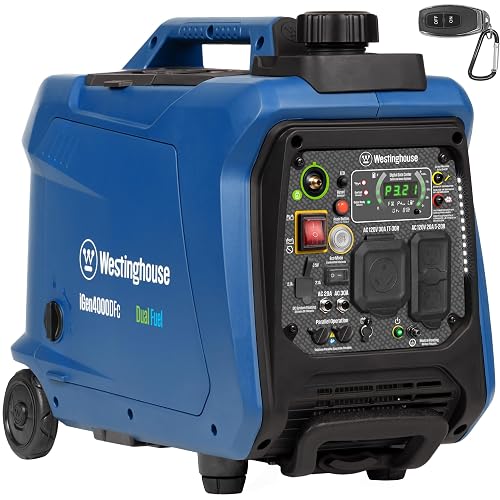
Best for dual-fuel flexibility: WEN DF680iX – View on Amazon
Best budget pick: 2800W Portable Inverter Generator – View on Amazon
Our Top Picks
Quick Comparison
| Product | Best for | Key feature |
|---|---|---|
| WEN 56477i 4800W | Overall quiet use | Fuel shut-off, RV-ready |
| Genkins 8000W | Whole-house backup | Parallel ready, under 62 dBA |
| Honda EU2200i | Ultra-quiet camping | Long runtime, eco mode |
| PowerSmart 3800W | Sensitive electronics | Under 3% THD |
| Power Equipment 4400W | RV and cabin use | ECO mode, open frame |
| WEN DF680iX 6800W | Dual-fuel flexibility | CO watchdog, electric start |
| Portable Inverter 2800W | Budget camping | EPA compliant, lightweight |
WEN Quiet and Lightweight 4800-Watt RV-Ready Portable Inverter Generator with Fuel Shut Off (56477i)

WEN Quiet and Lightweight 4800-Watt RV-Ready Portable Inverter Generator with Fuel Shut Off (56477i)
Best for: Overall quiet operation at campsites and home use.
This suits buyers who want a capable inverter unit that stays manageable in noise and weight for everyday portable power.
- Fuel shut-off helps reduce carburetor issues in storage.
- RV-ready design fits many camping setups.
Cons:
- Output is modest for running large appliances at once.
Long runtime, Ultra-Quiet <62 dBA, Clean Power <3% THD, Parallel Ready, Generator for Camping or Home Backup Power Supply Genkins 8000W Portable Quiet Inverter Generator for Home, Electric Start

Long runtime, Ultra-Quiet <62 dBA, Clean Power <3% THD, Parallel Ready, Generator for Camping or Home Backup Power Supply Genkins 8000W Portable Quiet Inverter Generator for Home, Electric Start
Best for: Whole-house backup needs where higher output matters.
Owners planning to cover more circuits during outages often look at this model for its higher wattage and parallel capability.
- Parallel-ready design allows pairing two units for more output.
- Electric start is convenient for regular use.
Cons:
- Heavier than smaller inverter units, so transport takes more effort.
Super Quiet 120V Gas Powered Portable Generator for Camping or Home Backup Power Supply, Up to 8.1 Hour Run Time Honda EU2200i 2200 Watt Inverter Generator (EU2200ITAN)

Honda EU2200i 2200 Watt Inverter Generator (EU2200ITAN) | Super Quiet 120V Gas Powered Portable Generator for Camping or Home Backup Power Supply, Up to 8.1 Hour Run Time
Best for: Ultra-quiet camping and light backup loads.
Campers and anyone running phones, lights and small devices tend to favor this model for its low noise and long runtime at moderate load.
- Long runtime at light load is a common owner highlight.
- Eco mode lowers fuel use and noise at partial load.
Cons:
- Limited wattage rules out most whole-home use.
Super Quiet <59dBA, Long Runtime, Eco Mode, <3% THD Clean Power PowerSmart 3800 Watt Portable Inverter Generator for Home Use

PowerSmart 3800 Watt Portable Inverter Generator for Home Use | Super Quiet <59dBA, Long Runtime, Eco Mode, <3% THD Clean Power
Best for: Sensitive electronics and quiet home backup.
Households with laptops, medical devices or sensitive audio gear often prioritize the low total harmonic distortion this listing advertises.
- Manufacturer specifies under 3% THD for clean power.
- Published noise figure below 59 dBA.
Cons:
- Fuel tank capacity limits continuous runtime at full load.
Power Equipment 4400 Watts Inverter Generator Gas Powered, Portable Open Frame Generator, Low Noise with ECO Mode, RV Ready, Emergency Home Backup
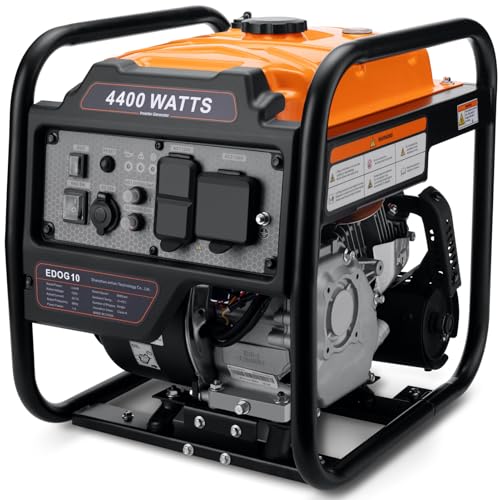
Oxseryn Power Equipment 4400 Watts Inverter Generator Gas Powered, Portable Open Frame Generator, Low Noise with ECO Mode, RV Ready, Emergency Home Backup
Best for: RV and cabin use with moderate loads.
This is a fit for people who want midrange wattage in an open-frame design that is easy to access for maintenance.
- Open frame simplifies access for maintenance.
- ECO mode is listed for quieter partial-load running.
Cons:
- Open frame offers less sound dampening than enclosed designs.
Buying Guide
Decibel Rating and Real-World Noise
Manufacturers publish decibel figures measured under specific conditions, so a lower number generally signals a quieter unit. Keep in mind that noise also depends on load, distance and surrounding terrain, so treat published ratings as a useful comparison point rather than a guarantee.
Inverter generators typically run quieter than conventional open-frame models because they adjust engine speed to match the power draw. If noise is your top priority, favor inverter designs with an eco mode.
Running Wattage and What You Need to Power
Add up the wattage of the devices you plan to run at the same time, and then choose a generator with some headroom above that total. Starting motors such as refrigerators or well pumps can require a surge of extra power, so check the starting wattage as well as the running wattage.
Choosing a unit that is much larger than you need can mean more noise, more fuel use and more weight, so match the output to your actual loads.
Clean Power and Electronics Compatibility
Total harmonic distortion, often listed as THD, describes how clean the electrical output is. Lower figures are better for sensitive electronics such as laptops, medical equipment, and modern appliances with digital controls.
Inverter generators generally produce cleaner power than traditional generators, which makes them a practical choice for home offices, camping electronics and devices with circuit boards.
Portability, Weight and Fuel Options
Consider how often you will move the generator and how far you need to carry it. Compact, lighter units are easier to transport for camping and RV trips, while heavier models with wheels or electric start may suit a fixed backup setup at home.
Look at fuel flexibility too. Some models run on gasoline only, while dual fuel units can also use propane, which can be useful during extended outages when gasoline is hard to store or obtain.
Runtime, Safety Features and Expandability
Fuel tank size and load level determine how long a generator can run before refueling. Check the listed runtime at the load you expect rather than at maximum output.
Safety features such as automatic fuel shut off and carbon monoxide monitoring add protection, especially when a generator is used near living spaces. Some inverter models can also be paired with a second unit for more power, so review parallel capability if you may need to expand later.
FAQ
How quiet is the most quiet power generator?
The quietest models on the market are typically inverter generators rated in the high 50s to low 60s decibels under standard conditions. Actual noise will vary with load, distance and the surrounding environment. Running at lower loads usually makes the unit quieter.
Is an inverter generator better than a conventional generator for noise?
In most cases, yes. Inverter generators adjust their engine speed to match demand, which reduces noise and fuel use compared with a fixed-speed open-frame design. They also tend to deliver cleaner power for electronics.
How many watts do I need for camping or home backup?
For camping with lights, phones and a small cooler, a generator in the 2000 to 3000 watt range is often sufficient. Home backup for essential appliances may require a larger unit, so add up the running and starting watts of the devices you want to power.
Can I run an RV air conditioner on a quiet generator?
Some RV-ready inverter generators can support small air conditioners, but starting surge requirements can be high. Confirm the unit’s starting wattage and the air conditioner’s requirements before relying on it.
Does eco mode actually reduce noise and fuel use?
Eco mode lets the engine slow down when the load is light, which generally lowers both noise and fuel consumption. The benefit is greatest when you are running small loads for long periods.
Conclusion
If you want a balance of low noise, portability and clean power for camping or RV use, a compact inverter model with a strong published decibel rating is a practical choice. Buyers who need to keep essential appliances running through a home outage should look at higher-output units with more runtime and expandability.
Match the generator to your real power needs, your transport plans and how close you will be to neighbors or living spaces, and the right quiet option will be easier to identify.
Related reading
- Top 5 Quiet Power Inverter Generators Compared for Home and Camping
- Power Inverter Generator vs Generator (2026): Which Is Better for Quiet Backup?
- Most Quiet Whole House Generator: 5 Best Picks Compared (2026)
- Most Quiet Generator on the Market: Top Picks and How to Compare Noise (2026)
- Generac Portable Inverter Generator: A Buyer's and Setup Guide for Quiet Power
- 7 Best Quiet Home Backup Generators for Power Outages (2026)
- 7 Best Dual Power Inverter Generator Models for Quiet Home Backup
- 7 Best Clean Power Inverter Generator Models for Quiet Home and Camping (2026)
About Owen Palmer
Owen Palmer is part of our editorial team and reviews and edits our generators & noise guides, checking product details against manufacturer specifications and owner feedback.