 By Owen Palmer
Updated November 2026
Shopping for the most quiet gas generator means balancing decibel output against power, runtime and portability. The picks below are ranked by how well their listed noise levels, eco modes and feature sets fit common needs, based on manufacturer specifications and patterns owners commonly mention. Noise figures are typically quoted at a set distance under specific load, so compare them with that in mind.
Best overall: Super Quiet PowerSmart 3800 Watt – View on Amazon
Best for RV and dual fuel: WEN 6800-Watt DF680iX – View on Amazon
Best for lightweight portability: WEN DF360iX 3600-Watt – View on Amazon
Best for low noise at mid power: Westinghouse 2800 Peak Watt – View on Amazon
Best for higher output: Power Equipment 4400 Watt – View on Amazon
Best for parallel expansion: Champion 4000-Watt Dual Fuel – View on Amazon
Our Top Picks
Quick Comparison
| Product | Best for | Key feature |
|---|---|---|
| PowerSmart 3800 Watt Portable Inverter Generator | Quiet home backup | Under 59 dBA rating |
| Westinghouse 2800 Peak Watt Dual Fuel | Light, quiet daily use | Gas and propane, CO sensor |
| WEN DF680iX 6800-Watt Dual Fuel | RV and larger loads | Fuel shut-off, CO Watchdog |
| WEN DF360iX 3600-Watt Dual Fuel | Campsites and portability | RV-ready, lightweight build |
| Power Equipment 4400 Watt Inverter | Emergency home backup | ECO mode, low noise |
| Champion 4000-Watt Dual Fuel | Parallel expansion | Parallel ready, quiet tech |
PowerSmart 3800 Watt Portable Inverter Generator

PowerSmart 3800 Watt Portable Inverter Generator for Home Use | Super Quiet <59dBA, Long Runtime, Eco Mode, <3% THD Clean Power
Best for: Quiet home backup with long runtime
This unit suits homeowners who want steady power for a refrigerator, lights and a few devices during outages, with noise kept low enough for nearby neighbors. The listing specifies a sub-59 dBA rating and under 3% total harmonic distortion.
Pros
- Listed noise level under 59 dBA
- Eco mode for reduced fuel use
Cons
- Output is modest for large appliances
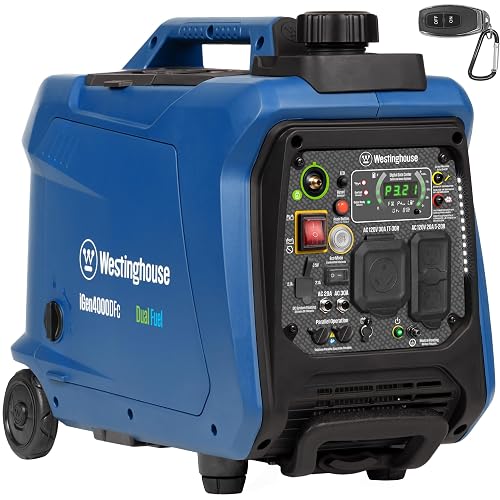
Westinghouse 2800 Peak Watt Super Quiet Dual Fuel Portable Inverter Generator

Westinghouse 2800 Peak Watt Super Quiet & Lightweight Dual Fuel Portable Inverter Generator, Gas & Propane Powered, CO Sensor, Parallel Capable, Long Run Time
Best for: Light, quiet everyday use on gas or propane
Owners who want to switch between gasoline and propane and keep the unit easy to move will find this model a fit. Its carbon monoxide sensor and parallel capability add flexibility for light-duty jobs.
Pros
- Runs on gas or propane
- Built-in CO sensor and parallel capable
Cons
- Peak wattage limits heavy loads
WEN 6800-Watt Dual Fuel RV-Ready Electric Start Portable Inverter Generator DF680iX

WEN 6800-Watt Dual Fuel RV-Ready Electric Start Portable Inverter Generator with Fuel Shut Off and CO Watchdog for Electric Vehicle Backup (DF680iX)
Best for: RV use and larger backup loads
This model fits RV owners and households that need more headroom for air conditioning or power tools. It includes fuel shut-off and CO Watchdog features listed by the manufacturer.
Pros
- 6800 watts with electric start
- Fuel shut-off and CO Watchdog
Cons
- Heavier than smaller inverter units
WEN Quiet and Lightweight 3600-Watt Dual Fuel RV-Ready Portable Inverter Generator DF360iX

WEN Quiet and Lightweight 3600-Watt Dual Fuel RV-Ready Portable Inverter Generator with Fuel Shut Off and CO Watchdog (DF360iX)
Best for: Campsites and easy portability
Campers and anyone who carries a generator by hand will appreciate the lighter build. Its RV-ready design and CO Watchdog make it practical for shared campgrounds where noise matters.
Pros
- Lightweight for carrying
- RV-ready with fuel shut-off
Cons
- Lower output than the 6800-watt model
Power Equipment 4400 Watts Inverter Generator Gas Powered Open Frame
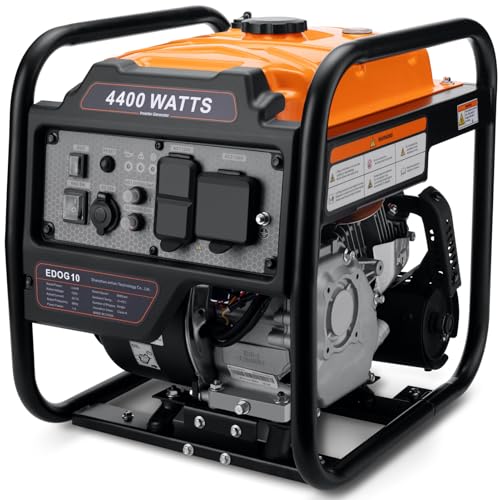
Oxseryn Power Equipment 4400 Watts Inverter Generator Gas Powered, Portable Open Frame Generator, Low Noise with ECO Mode, RV Ready, Emergency Home Backup
Best for: Emergency home backup with low noise
This open-frame design suits homeowners who want more output than a 3000-watt unit while keeping sound levels down with an eco mode. It is marketed as RV ready as well.
Pros
- ECO mode for quieter operation
- 4400 watts for mid-size loads
Cons
- Open frame offers less enclosure noise damping
Champion 4000-Watt Dual Fuel RV Ready Portable Inverter Generator

Gas & Propane Powered, LPG Hose, RV Ready, Recoil Start, Parallel Ready, Quiet Technology, Free 3-Year Warranty Champion 4000-Watt Dual Fuel RV Ready Portable Inverter Generator
Best for: Parallel expansion and fuel flexibility
Buyers who may later want to double capacity will value the parallel-ready design. The quiet technology and included LPG hose make it versatile for both gas and propane setups.
Pros
- Parallel ready for more power later
- Gas and propane with LPG hose
Cons
- Recoil start only, no electric start
Buying Guide
Decibel Rating and How It Is Measured
Noise ratings for generators are usually quoted at a set distance, often around 23 feet, under a specific load. Lower numbers mean quieter operation, but the figure may not reflect real-world noise at a campsite or in a backyard. When comparing models, check whether the rating is listed at full load or at a lighter load, since eco modes can change the result considerably.
Power Output and Starting Versus Running Watts
Match the generator’s running watts to what you plan to power, such as a refrigerator, lights, a window air conditioner or RV appliances. Starting watts are higher and matter for motors that surge when they turn on. Adding a little headroom above your total running load helps the unit avoid strain and extends its life.
Fuel Type and Dual Fuel Flexibility
Some models run on gasoline only, while dual fuel units can also use propane. Propane stores well for long periods and burns cleanly, which makes it useful for emergency backup. Gasoline is easier to find in many places, so a dual fuel design gives you more options when supplies run short.
Runtime, Fuel Tank Size and Eco Mode
Runtime depends on tank capacity and how heavily the generator is loaded. Eco mode adjusts engine speed to match demand, which usually reduces noise and fuel use at lighter loads. If you expect long outages or extended camping trips, look for a larger tank or a design that performs well at partial load.
Portability, Safety Features and Parallel Capability
Weight and frame design determine how easily you can move the unit, and open frame models can be lighter but offer less protection. Built-in carbon monoxide sensors and automatic fuel shutoff add a layer of safety, especially indoors or near living spaces. Parallel capability lets you link two compatible units to double available power when you need it.
FAQ
Which gas generator is the quietest overall?
The Super Quiet PowerSmart 3800 Watt is the top pick for overall low noise in this roundup. Its listed decibel rating and eco mode make it a good fit for home backup where neighbors or sleeping family members are nearby. Compare the rating conditions carefully, since noise depends on load and distance.
Can I run an RV air conditioner on these generators?
Several models in this list are labeled RV ready, which suggests they are designed for RV use, but whether they can run a specific air conditioner depends on its starting and running wattage. Check the appliance label and compare it with the generator’s rated output before connecting. Consider a soft start device if your air conditioner has high starting demand.
Is propane or gasoline better for a backup generator?
Propane is convenient for long-term storage and burns cleanly, while gasoline is widely available and often gives slightly different runtime. Many people choose a dual fuel model so they can switch depending on what is on hand. Your local fuel access and how long you plan to store fuel should guide the decision.
Do inverter generators run quieter than conventional generators?
Inverter generators generally operate more quietly because they adjust engine speed to match the load rather than running at full speed constantly. They also produce cleaner power that is safer for sensitive electronics. Quiet operation still depends on the specific model and how heavily it is loaded.
Is it safe to use a generator inside a garage or home?
No, generators should never be run indoors, in garages or in enclosed spaces, because they produce carbon monoxide. Place the unit outside at a safe distance from doors, windows and vents. A built-in CO sensor is a helpful extra layer of protection, but it does not replace proper ventilation.
Conclusion
For home backup where quiet operation matters most, the Super Quiet PowerSmart 3800 Watt is a strong all-around choice. RV owners and anyone wanting fuel flexibility should look at the WEN DF680iX, while those who prioritize lightweight portability will find the WEN DF360iX easier to move and store.
Related reading
- Most Quiet Whole House Generator: 5 Best Picks Compared (2026)
- Most Quiet Generator on the Market: Top Picks and How to Compare Noise (2026)
- 7 Best Quiet Gas Powered Generators of 2026: Our Picks
- 6 Best Quiet Portable Gas Generators for Home and Camping (2026)
- Whole House Generator Placement: Where to Put It for Safety and Quiet (2026)
About Owen Palmer
Owen Palmer is part of our editorial team and reviews and edits our generators & noise guides, checking product details against manufacturer specifications and owner feedback.