By Owen Palmer
Updated November 2026
The generac iq3500 inverter generator is a 3,500-watt portable unit aimed at people who want clean power for sensitive electronics without the bulk of a full-size standby set. It suits homeowners who need backup for a refrigerator, lights, a sump pump and a few devices during outages, and campers or RV owners who want quieter running than a conventional open-frame generator. It is a weaker fit for anyone who needs to run central air, an electric range or a well pump at the same time, since its running capacity falls short of what those loads demand. Buyers who need true whole-house coverage should look at a standby model or a larger transfer-switch setup. Read on for specifications, noise considerations and a buying framework you can apply to any inverter unit.
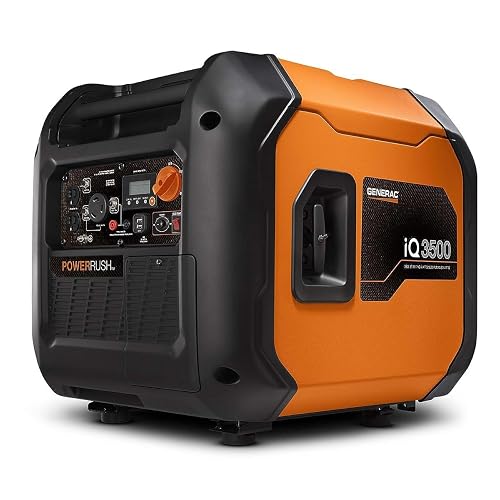
Generac 7127 iQ3500 3,500-Watt Gas-Powered Portable Inverter Generator – Durable, Lightweight Design – Speed Selection for Quiet Performance or Maximum Power – CARB Compliant – Orange/Black
Product Overview
The Generac 7127 iQ3500 is a gas-powered portable inverter generator sold under the Generac brand, which is one of the best-known names in home backup power. It belongs to the iQ line, which Generac positions as its quieter, lighter inverter series. Its design centers on a speed-selection feature that lets you choose between a quieter, fuel-efficient mode and a higher-output mode when you need maximum power. The listing describes it as CARB compliant, which matters if you live in California or another state that follows California emissions rules. The unit is finished in orange and black, a color scheme that has become the signature look of the Generac portable range.
Inverter generators differ from conventional generators in how they produce electricity. Instead of running the engine at a fixed speed to hold 60 Hz, an inverter model generates raw power and converts it to stable, clean AC. That conversion is what makes inverter designs quieter and better suited to sensitive loads. The iQ3500 follows that architecture, so it is a good candidate for laptops, phones, medical devices that specify clean power, and modern appliances with microprocessor controls.
Key Features & Specifications
The table below lists the specifications that the product name and widely published manufacturer information support. Verify any figure against the printed label and owner’s manual on the unit you receive before planning around it.
| Feature | Specification |
|---|---|
| Model | Generac 7127 iQ3500 |
| Generator type | Gas-powered portable inverter |
| Rated wattage class | 3,500 watts (listed in product name) |
| Power output type | Clean, stable inverter AC |
| Speed selection | Eco-style quieter mode and maximum power mode |
| Emissions certification | CARB compliant |
| Design | Lightweight, durable portable frame |
| Color | Orange and black |
| Intended use | Home backup, camping, RV use |
Check the owner’s manual for exact running and starting watts, fuel tank capacity, runtime at half load, oil capacity and dB(A) rating at a stated distance. Manufacturers typically publish these in a separate spec sheet, and values can differ by production year and region.
Pros & Cons
Pros
- Inverter design produces clean, stable power suitable for sensitive electronics.
- Speed selection lets you trade output for noise and fuel use, which helps with overnight camping or neighbor-friendly operation.
- Portable, lighter-weight frame compared with open-frame conventional generators of similar rating.
- CARB compliance supports use in states with strict emissions rules.
- Generac has a broad service and parts network in the United States, which simplifies maintenance and repair.
Cons
- A 3,500-watt class unit cannot run central air conditioning, an electric range and a well pump together.
- Maximum-power mode is noticeably louder, so the quiet benefit depends on how you run it.
- Fuel runtime at higher load is shorter than at light load, so planning around tank size matters for extended outages.
- Owners who need electric-start convenience should confirm whether their configuration includes it, since not every listing variant does.
- Like all gas portable units, it needs outdoor placement away from windows and vents to avoid carbon monoxide exposure.
Performance Analysis
Performance for a unit like this comes down to three questions: how much power it delivers, how clean that power is, and how much noise it makes while doing so. On paper, the 3,500-watt rating puts it in the range that handles essential household loads. A typical plan is to add up running watts for a refrigerator (often 600 to 800 watts running, with a higher surge on startup), a sump pump, a few lights, a router and phone chargers, then leave margin of roughly 20 to 25 percent under the rated output. Surge capacity matters more than the headline number for motor-driven appliances, so check the starting watts column on the spec sheet before you commit.
Power quality is where inverter designs earn their reputation. Clean sine-wave output with low total harmonic distortion is the reason many owners choose inverters for laptops, televisions with power-supply boards, and medical devices that specify clean power. Owners of inverter generators in this class commonly report that electronics run without the flicker or buzzing sometimes associated with conventional units.
Noise is the second pillar. Inverter generators run the engine at variable speed, so light loads let it idle down. Owners often describe the eco-style mode as noticeably quieter than the maximum mode and say it is manageable for overnight camping at moderate distances. Expect the unit to be louder at full load than at light load, and plan placement accordingly. The best practice is to position the exhaust away from the campsite or house, place the unit on a flat surface with clearance around intake vents, and avoid enclosing it in a shed or tent.
Runtime depends on fuel tank size and load. At light load, owners commonly report many hours on a single tank in eco mode. At higher load, runtime shortens considerably. For multi-day outages, you will need a fuel plan: stored gasoline with stabilizer, or a dual-fuel option if your model supports it.
Who Should Buy This Product?
This unit fits several buyer profiles well. Homeowners who want backup for essential circuits and sensitive electronics, and who do not need whole-house power, are the core audience. Campers and RV owners who need quiet, clean power for phones, laptops, CPAP machines and small appliances also fit. Renters or people with limited garage space will appreciate the portable frame compared with larger units.
Skip this unit if you need to run central air, an electric dryer, an electric water heater or a well pump under load. Those appliances can push a 3,500-watt generator past its limit quickly. If your main goal is powering a job site with heavy tools, a higher-output conventional generator is a better match. Buyers who want a fully automatic standby system with a transfer switch should look at permanently installed standby generators instead.
Buying Guide
Before buying any inverter generator in this class, work through a simple process. First, list every device you intend to run during an outage and note each one’s running watts and starting watts from its label or manual. Second, add the running watts of the devices you will run at the same time, then add the largest starting surge on top. Keep the total at or under about 80 percent of the generator’s rated output for steady, long-term operation. Third, decide how long you need to run it per tank and match that against fuel capacity and your fuel storage plan.
Next, compare outlets and connectivity. Confirm you have the receptacles you need, including any 120-volt household-style outlets, USB ports for charging, and whether a 240-volt option exists on the model you are considering. Check the noise rating in dB(A) at a stated distance, and compare it against the spec sheet of any alternative you consider, since test conditions vary between brands.
Finally, consider whether you need CARB compliance, warranty length, and the availability of local service. If you live in a state that enforces CARB rules, verify that the exact model you buy carries that certification.
Two well-known alternatives worth comparing are listed below. Each lists the same tradeoffs of wattage, noise and portability to weigh against your loads.
The GeneracClean Stable Power 3,500 Watt Gas Powered Portable Inverter Generator with electric start is a close relative in the 3,500-watt class and is marketed for RV, camping and home backup use. Its electric start is a useful convenience feature for users who prefer not to pull a cord.

GeneracClean Stable Power, Sensitive Electronics, Lightweight, RV-Ready, Home Backup, Camping, Ultra Quiet, 49 State Compliant 3,500 Watt Gas Powered Portable Inverter Generator, Electric Start
The Generac 2,500 running watt inverter generator with a 3,300 starting watt rating is a lighter option for buyers whose load list is smaller. It is a reasonable choice for camping, RV use and a few essential circuits at home, though it leaves less margin for motor-driven appliances.

Generac2,500 Running Watts, Clean Stable Power, Lightweight, RV Ready, Home Backup, Camping, 49 State Compliant 3,300 Starting Watt Gas Powered Portable Inverter Generator
For broader context on how inverter designs differ from conventional units, read What Is Difference Between Generator and Inverter? Which Should You Choose?. If you are weighing a model with dual-fuel flexibility, Top 5 Dual Fuel Generator Inverter Models for Home Backup and RV Use compares several options. For planning loads across any inverter unit, Westinghouse 5000 Watt Inverter Generator: Specs, Noise and Load Planning walks through the arithmetic in detail.
FAQ
Can the Generac iQ3500 run a refrigerator and lights at the same time?
In most cases, yes. A typical household refrigerator draws several hundred running watts with a higher surge at startup, and LED lights draw very little. Add those together, check the total against the generator’s running and starting ratings, and keep steady load under roughly 80 percent of rated output for reliable operation.
Is the generac iq3500 inverter generator quiet enough for camping?
Owners often describe the eco-style speed setting as manageable for camping, especially at light load. Maximum power mode is louder. Placing the unit downwind and away from sleeping areas helps, and you should never run it inside a tent, vehicle or enclosed space.
Can it run central air conditioning?
No. Central air systems require far more starting and running power than a 3,500-watt inverter unit can provide. Window units and small fans are more realistic loads for this class, and even those should be checked against the starting watts on the label.
Is it CARB compliant?
The product listing describes it as CARB compliant, which means it meets California Air Resources Board emissions standards. This is useful if you live in California or another state that follows those rules. Confirm the certification on the unit’s emissions label before purchase.
How should I store fuel for it?
Use fresh gasoline, add a fuel stabilizer if storage exceeds a month or two, and keep the fuel in an approved container away from living areas. Manufacturer manuals typically recommend draining the carburetor or running the unit dry before long storage, depending on the engine design.
Do I need a transfer switch to power my house?
A transfer switch lets you connect the generator to a home’s circuits safely. Without one, you should only power devices directly from the generator’s outlets using heavy-duty extension cords rated for outdoor use. Never backfeed a home through a standard outlet, since that can endanger utility workers and damage the generator.
Should I consult a professional for installation?
Yes. Connecting any generator to household wiring requires a licensed electrician to install a properly rated transfer switch or interlock kit. Ask a qualified professional to confirm the setup meets local electrical code before use.
Final Verdict
The generac iq3500 inverter generator is a sensible choice for buyers who want clean, portable power for essential loads, quiet operation in eco mode, and the reassurance of a major US brand with a service network. It is less suitable for whole-house backup or heavy motor loads. Match its 3,500-watt output to your real load list, plan fuel for your expected runtime, and confirm the CARB and noise specifications on the exact unit you buy.
Related reading
About Owen Palmer
Owen Palmer is part of our editorial team and reviews and edits our generators & noise guides, checking product details against manufacturer specifications and owner feedback.