 By Owen Palmer
Updated November 2026
If you are shopping for a powersmart 4400 inverter generator, the main decision points are output quality, noise level, runtime on a tank, and whether the unit can be paralleled with a second generator for more power. This list compares seven models sold under the PowerSmart and Power Equipment names, sorted by how well each one fits the most common uses: home backup, camping, and RV power. Selection is based on published listing specifications, brand reputation, and patterns in owner feedback. We have not tested these units ourselves. You may also like 5 Best Powersmart 2500 Watt Inverter Generator Models Compared (2026).
Our top picks at a glance
- 1
 TOP CHOICEBest overallPowerSmart12H Long Runtime 4300 Watt Portable Generator with Inverter TechView on Amazon
- 2
 TOP CHOICEBest for quiet campingPowerSmart 8H Run Time Ultra-Quiet 3800 Watt Dual Fuel Inverter GeneratorView on Amazon
- 3
 TOP CHOICEBest for CO safety at homePowerSmart 4400-Watt Portable Generator with Inverter Technology DL5040CView on Amazon
- 4
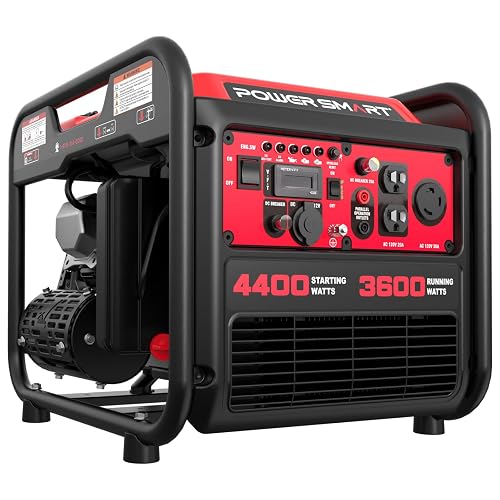 Best for parallelingPowerSmart Inverter Technology 4400 Watt Portable Generator for Home Emergency UseView on Amazon
- 5
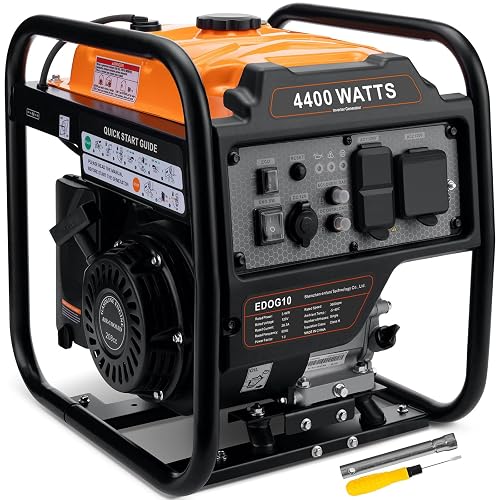 Best for RV usePower Equipment 4400 Watts Inverter Generator Open Frame with RV Ready OutletView on Amazon
- 6
 Best for eco-minded low noisePower Equipment 4400 Watts Inverter Generator Gas Powered, Portable OpView on Amazon
- 7
 Best for clean power budgetsPowerSmartClean Power <3% THD, CO Protect, Parallel Ready, Long RuntimView on Amazon
Our Top Picks
Quick Comparison
| Product | Best for | Key feature |
|---|---|---|
| PowerSmart12H Long Runtime 4300 Watt | Overall use | Long runtime, parallel ready |
| PowerSmart 8H Run Time Ultra-Quiet 3800 Watt | Quiet camping | Under 59 dBA, dual fuel |
| PowerSmart 4400-Watt DL5040C | CO safety at home | CO Protect shutdown |
| PowerSmart Inverter Technology 4400 Watt | Paralleling | Parallel ready, digital display |
| Power Equipment 4400 Watts Open Frame | RV use | 30A RV outlet |
| Power Equipment 4400 Watts ECO Mode | Low-noise running | ECO Mode throttling |
| PowerSmart Clean Power 4400 Watt | Sensitive electronics | Under 3% THD output |
PowerSmart12H Long Runtime 4300 Watt Portable Generator with Inverter Tech
PowerSmart12H Long Runtime, Gas Powered, Clean Power <3% THD, Parallel Ready, Digital Display, Low-oil Shutdown 4300 Watt Portable Generator with Inverter Tech
Best for: Overall use and long outages
This model suits buyers who want the longest time between refueling and the option to run two units together for more power.
Pros
- Listed as long runtime on a single tank
- Parallel ready for expanding capacity
Cons
- Output is rated slightly below the 4400-watt label
PowerSmart 8H Run Time Ultra-Quiet 3800 Watt Dual Fuel Inverter Generator
PowerSmart8H Run Time, Ultra-Quiet <59 dBA, CO Protect, Clean Power <3% THD, Parallel Ready 3800 Watt Dual Fuel Inverter Generator for Camping or Home Use
Best for: Quiet camping and home use
Best for campers and neighborhoods where noise limits matter, since the listing cites a noise rating below 59 dBA.
Pros
- Listed noise level under 59 dBA
- Dual fuel option for flexibility
Cons
- Rated at 3800 watts, below the 4400 label
PowerSmart 4400-Watt Portable Generator with Inverter Technology DL5040C
PowerSmart 4400-Watt Portable Generator with Inverter Technology, CO Protect, Home Use, DL5040C
Best for: CO safety at home
Suited to households that want an automatic shutdown feature for carbon monoxide, though it must still be run outdoors.
Pros
- CO Protect shutdown feature listed
- Inverter output for home electronics
Cons
- CO sensor does not replace proper ventilation
PowerSmart Inverter Technology 4400 Watt Portable Generator for Home Emergency Use
PowerSmartInverter Technology <3% THD, Long Runtime, Parallel Ready, Digital Display 4400 Watt Portable Generator for Home Emergency Use
Best for: Paralleling for more power
A fit for homeowners planning to add a second matching unit later to double available watts.
Pros
- Parallel ready with matching units
- Digital display for monitoring
Cons
- Paralleling requires a second unit and proper cable
Power Equipment 4400 Watts Inverter Generator Open Frame with RV Ready Outlet
4400-Watts Inverter Generator, Open Frame Generator Gas Powered, Emergency Home Backup, RV Ready 30A Outlet, EPA Compliment
Best for: RV use
Best for RV owners who need a 30-amp outlet for trailer-style loads and plan to keep the unit on an open frame.
Pros
- 30A RV outlet listed
- EPA compliance noted in listing
Cons
- Open frame is louder than enclosed designs
Buying Guide
Output Quality and Total Harmonic Distortion
Inverter generators produce a clean sine wave, which matters for sensitive electronics like laptops, medical devices, and modern appliances. Look for a listed total harmonic distortion figure, since lower numbers mean cleaner power. Several models in this group advertise under 3% THD, which is a useful benchmark when comparing listings.
Runtime and Fuel Options
Runtime determines how long the unit can keep running on one tank, which is critical during extended outages or long camping trips. Check whether the model is gas only or dual fuel, since dual fuel units can switch to propane when gasoline runs low. Consider how far you will need to travel to refuel and how much fuel you can store safely.
Noise Level
Noise is a major factor if the generator will sit near a home, campsite, or RV. Listings that mention an eco or low-noise mode typically reduce engine speed under light loads, which cuts both sound and fuel use. Compare the decibel ratings published by each manufacturer, keeping in mind that test conditions can vary.
Parallel Capability and Safety Features
Parallel-ready models can link with a second matching unit to double available power, which is helpful if you need more capacity later. Safety features such as CO protection sensors and low-oil shutdown help prevent damage and reduce the risk of carbon monoxide exposure. Always operate any generator outdoors and away from windows and doors, regardless of the features listed.
FAQ
Is a 4400 watt inverter generator enough for a home during a power outage?
A 4400 watt unit can typically run essentials such as a refrigerator, lights, a furnace fan, and phone chargers at the same time. It usually cannot run large loads like central air conditioning or an electric dryer simultaneously. Adding up the running wattage of the appliances you need is the best way to check fit.
What is the difference between an inverter generator and a conventional generator?
An inverter generator adjusts engine speed to match the load and produces clean, stable power suitable for electronics. Conventional generators run at a constant speed, which tends to be louder and less fuel efficient. Inverter models are generally the better choice for camping, RVs, and homes with sensitive equipment.
Can I connect two of these generators together?
Parallel-ready models can be linked to a second identical unit using a compatible parallel cable, which combines their output. Both units should be the same model and in good working order before connecting. Check the owner’s manual for the correct procedure, since improper parallel connections can damage equipment.
Are these generators safe to run in a garage?
No generator should be run inside a garage, even with the door open, because exhaust can build up to dangerous carbon monoxide levels quickly. Place the unit outdoors at least several feet from openings and use a battery-operated CO alarm nearby. Models with CO protection features add a layer of safety but do not replace proper ventilation.
Which model is best for RV use?
The open frame model listed as RV ready includes a 30 amp outlet, which matches the power connection used by many recreational vehicles. Confirm your RV’s plug type and amperage before buying, and check whether an adapter is needed. Low noise and eco mode features are also useful for quiet campground use.
How often should I service an inverter generator?
Follow the maintenance schedule in the owner’s manual, which usually includes oil changes, air filter checks, and spark plug inspection. Running the unit with fresh fuel and stabilizer during storage helps prevent starting problems later. Regular maintenance supports reliable performance during emergencies, when you need the generator most.
Conclusion
Buyers who need dependable home backup for essentials should consider the models with long runtime, parallel readiness, and CO protection, since these features support extended outages and future expansion. Campers and anyone who wants the quietest operation will benefit most from the ultra-quiet dual fuel option, which offers flexibility on the road.
RV owners looking for a direct connection to their rig should choose the open frame model with the 30 amp outlet, while those focused on clean power for electronics can prioritize the units with the lowest published THD. Matching the generator’s features to your primary use will make the choice much clearer.
Related reading
- Powersmart 3800 Watt Dual Fuel Inverter Generator: 5 Best Picks Compared
- Powersmart 2500w Inverter Generator: Setup, Noise Tips and Load Planning Guide
- Yamaha Generator EF2000iS Inverter Review: Is It Worth It?
About Owen Palmer
Owen Palmer is part of our editorial team and reviews and edits our generators & noise guides, checking product details against manufacturer specifications and owner feedback.