By Owen Palmer
Updated November 2026
Choosing an inverter generator for fridge backup comes down to three things: enough running wattage to start and run a refrigerator compressor, clean enough power to avoid stressing the appliance’s electronics, and noise low enough that you can live with it through a multi-day outage. This list compares seven models sold on Amazon US against those criteria, using manufacturer specifications, brand reputation and common owner feedback patterns. None of these units were tested by us; the notes below reflect published data and reported experience.
Our top picks at a glance
- 1
 TOP CHOICEBest overallPower Equipment 4400 Watts Inverter GeneratorView on Amazon
- 2
 TOP CHOICEBest for quiet operationPowerSmart 3800 Watt Portable Inverter GeneratorView on Amazon
- 3
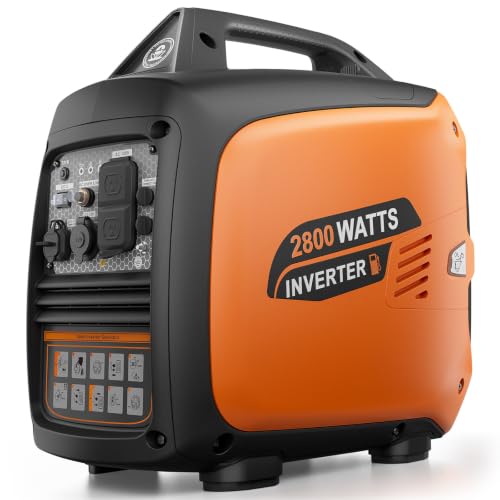 TOP CHOICEBest for camping and RVs2800W Portable Inverter GeneratorView on Amazon
- 4
 Best for long runtimePowerSmart 4300 Watt Portable Generator with Inverter TechView on Amazon
- 5
 Best for small kitchens2800-Watts Portable Inverter GeneratorView on Amazon
- 6
 Best for dual fuel flexibilityWEN 6800-Watt Dual Fuel RV-Ready Electric Start Portable Inverter Generator (DF680iX)View on Amazon
- 7
 Best budget pickWEN Quiet and Lightweight 3600-Watt Dual Fuel RV-Ready Portable InvertView on Amazon
Our Top Picks
Quick Comparison
| Product | Best for | Key feature |
|---|---|---|
| Power Equipment 4400 Watts Inverter Generator | Overall home backup | Eco mode and RV-ready outlets |
| PowerSmart 3800 Watt Portable Inverter Generator | Quiet operation | Listed under 59 dBA with eco mode |
| 2800W Portable Inverter Generator | Camping and RVs | EPA-compliant, lightweight frame |
| PowerSmart 4300 Watt Portable Generator with Inverter Tech | Long runtime | 12-hour runtime and parallel ready |
| 2800-Watts Portable Inverter Generator | Small kitchens | Fuel shut-off and 1.1 gal tank |
| WEN 6800-Watt Dual Fuel Inverter Generator (DF680iX) | Dual fuel flexibility | Propane or gasoline with CO Watchdog |
| WEN 3600-Watt Dual Fuel Inverter Generator (DF360iX) | Budget dual fuel backup | Lightweight dual fuel with CO Watchdog |
Power Equipment 4400 Watts Inverter Generator
Power Equipment 4400 Watts Inverter Generator Gas Powered, Portable Open Frame Generator, Low Noise with ECO Mode, RV Ready, Emergency Home Backup
Best for: Overall home backup with a refrigerator plus a few lights and devices.
This model suits homeowners who want a single unit that can start a standard refrigerator and handle a modest set of additional loads. Its open frame and eco mode position it for both home and RV use.
Key specs
- Inverter-type output rated at 4400 watts (per listing name)
- Eco mode for reduced fuel use and noise under light loads
- RV-ready outlet configuration
Pros
- Enough headroom for refrigerator starting surge in most cases
- Eco mode lowers noise when loads are light
- Versatile for home and RV backup
Cons
- Open frame design is louder than enclosed models
- Heavier than the smaller units on this list
Bottom line: A strong first choice for buyers who want the most running capacity without moving to a large portable unit.
PowerSmart 3800 Watt Portable Inverter Generator
Super Quiet <59dBA, Long Runtime, Eco Mode, <3% THD Clean Power PowerSmart 3800 Watt Portable Inverter Generator for Home Use
Best for: Quiet operation near living spaces.
Buyers who run a generator close to the house or sleep nearby will value the sound-level claim. The listing states operation under 59 dBA, which is in the range of a quiet conversation at a short distance, though real-world readings depend on load and placement.
Key specs
- 3800-watt rated output (per listing name)
- Listed noise level below 59 dBA
- Total harmonic distortion under 3 percent (per listing name)
Pros
- Low listed noise for a 3800-watt class unit
- Clean power output suitable for sensitive electronics
- Eco mode for extended runtime
Cons
- Noise claims are manufacturer-stated; verify with your own measurements
- Sufficient for a fridge but limited if you add high-draw appliances
Bottom line: Best for buyers whose top priority is keeping noise down while still covering refrigerator loads.
2800W Portable Inverter Generator
2800W Portable Inverter Generator, Quiet Gas Generator for Camping, RVs, Home Backup and Outdoor Activities, EPA Compliant
Best for: Camping, RVs and light home backup.
This 2800-watt unit targets people who need portability as much as backup power. It is a reasonable match for a small efficient refrigerator, though it has less margin than the larger models above.
Key specs
- 2800-watt rated output (per listing name)
- EPA compliant (per listing name)
Pros
- Lightweight and easy to move
- Quiet design suited to campsites
- EPA compliance noted in the listing
Cons
- Limited headroom for refrigerator starting surge
- Smaller fuel capacity means shorter runtime at full load
Bottom line: A good pick for mobile use that can also cover a compact refrigerator, not a full-size one with other loads.
PowerSmart 4300 Watt Portable Generator with Inverter Tech
12H Long Runtime, Clean Power <3% THD, Parallel Ready, Digital Display, Low-oil Shutdown PowerSmart 4300 Watt Portable Generator with Inverter Tech
Best for: Long outages where runtime matters most.
Owners planning for extended outages often prioritize fuel efficiency and runtime. The listing cites a 12-hour runtime and parallel capability, which can be useful if you later add a second unit.
Key specs
- 4300-watt rated output (per listing name)
- 12-hour runtime claim (per listing name)
- Parallel ready and digital display (per listing name)
Pros
- Strong runtime claim for overnight and multi-day use
- Parallel capability for future expansion
- Digital display and low-oil shutdown for monitoring
Cons
- Runtime figures depend heavily on load
- Heavier than compact camping units
Bottom line: Ideal for buyers who expect long outages and want room to grow their backup setup.
2800-Watts Portable Inverter Generator
2800-Watts Portable Inverter Generator, Gas Generators for Home Use, Camping, Super Quiet Emergency Home Backup, with Fuel Shut Off, 1.1Gal Fuel Tank, 39Lbs, EPA Compliant
Best for: Small kitchens and apartments with limited space.
Compact footprint and a fuel shut-off feature make this a practical choice where storage and safety are concerns. It suits a single efficient refrigerator and a few small loads.
Key specs
- 2800-watt rated output (per listing name)
- 1.1-gallon fuel tank (per listing name)
- Approximately 39 lb (per listing name)
Pros
- Compact and lightweight for its class
- Fuel shut-off feature for safer handling
- EPA compliant per listing
Cons
- Small tank limits runtime
- Limited capacity for simultaneous loads
Bottom line: A sensible choice for space-constrained homes that only need refrigerator-level backup.
WEN 6800-Watt Dual Fuel RV-Ready Electric Start Portable Inverter Generator (DF680iX)
WEN 6800-Watt Dual Fuel RV-Ready Electric Start Portable Inverter Generator with Fuel Shut Off and CO Watchdog for Electric Vehicle Backup (DF680iX)
Best for: Households that want fuel flexibility and electric start.
Dual fuel units let you run on gasoline or propane, which matters when one supply runs low. The electric start and CO Watchdog feature add convenience and safety for regular use.
Key specs
- 6800-watt rated output (per listing name)
- Dual fuel: gasoline or propane (per listing name)
- Electric start and fuel shut-off (per listing name)
Pros
- Large running capacity with ample refrigerator headroom
- Dual fuel flexibility during extended outages
- CO Watchdog feature for added safety
Cons
- Heavier and bulkier than smaller units
- Propane runtime and output differ from gasoline
Bottom line: The right pick for buyers who want the most power and fuel options and have space to store a larger unit.
WEN Quiet and Lightweight 3600-Watt Dual Fuel RV-Ready Portable Inverter Generator (DF360iX)
WEN Quiet and Lightweight 3600-Watt Dual Fuel RV-Ready Portable Inverter Generator with Fuel Shut Off and CO Watchdog (DF360iX)
Best for: Budget-minded buyers who still want dual fuel.
This model offers dual fuel capability in a lighter 3600-watt package. It is a reasonable middle ground for refrigerator backup without the bulk of the 6800-watt unit.
Key specs
- 3600-watt rated output (per listing name)
- Dual fuel capability (per listing name)
- CO Watchdog and fuel shut-off (per listing name)
Pros
- Dual fuel option at a lighter weight
- Adequate headroom for a standard refrigerator
- Safety features included
Cons
- Less surge margin than the larger WEN model
- Limited for simultaneous high-draw loads
Bottom line: A practical choice for buyers who want dual fuel and portability on a tighter setup.
Buying Guide
Running Watts and Starting Surge
A refrigerator compressor draws a brief starting surge several times its running load. Check the appliance nameplate for running watts and plan for a surge margin. Units rated 3000 watts and above generally give more room, while smaller units may struggle with some compressors.
Good picks for this: Power Equipment 4400 Watts Inverter Generator, WEN 6800-Watt Dual Fuel Inverter Generator (DF680iX)
Clean Power and Total Harmonic Distortion
Inverter generators produce a sine-wave output, and total harmonic distortion (THD) indicates how closely that waveform matches a clean sine. Lower THD is better for modern refrigerator electronics. Look for figures under 3 percent when the manufacturer publishes them.
Good picks for this: PowerSmart 3800 Watt Portable Inverter Generator, PowerSmart 4300 Watt Portable Generator with Inverter Tech
Noise Levels in Decibels
Noise is rated in dBA at a stated distance, usually seven meters. Because a 10 dBA increase sounds roughly twice as loud, small differences matter. Manufacturer-stated figures are a starting point; measure in your own location if noise is critical.
Good picks for this: PowerSmart 3800 Watt Portable Inverter Generator, 2800W Portable Inverter Generator
Runtime and Fuel Capacity
Runtime depends on tank size and load. Estimate fuel use by dividing tank capacity by hourly consumption at your expected load. Long-runtime claims are often measured at light loads, so plan conservatively for a refrigerator running intermittently.
Good picks for this: PowerSmart 4300 Watt Portable Generator with Inverter Tech, 2800-Watts Portable Inverter Generator
Dual Fuel Capability
Dual fuel generators run on gasoline or propane. Propane stores longer and is useful when gasoline goes stale, but output and runtime can differ between fuels. Check the manufacturer’s rated output for each fuel type.
Good picks for this: WEN 6800-Watt Dual Fuel Inverter Generator (DF680iX), WEN 3600-Watt Dual Fuel Inverter Generator (DF360iX)
Size, Weight and Portability
Larger generators provide more power but are harder to move and store. Consider where the unit will sit during an outage, how far it must be from the house, and whether you will carry it up stairs.
Good picks for this: 2800W Portable Inverter Generator, 2800-Watts Portable Inverter Generator
Safety Features and Placement
Generators must run outdoors, away from windows and doors, to prevent carbon monoxide buildup. CO monitoring, fuel shut-off and low-oil shutdown add protection. Always follow the manufacturer’s clearance guidance. For installation questions about connecting a generator to household wiring, consult a licensed electrician.
Good picks for this: WEN 6800-Watt Dual Fuel Inverter Generator (DF680iX), PowerSmart 4300 Watt Portable Generator with Inverter Tech
FAQ
How many watts do I need to run a refrigerator?
Most standard refrigerators need roughly 600 to 1200 running watts with a starting surge that can be several times higher. Check your appliance label and choose a generator with comfortable headroom above the surge figure.
Can an inverter generator run a fridge continuously?
Yes, if the generator’s rated output covers the refrigerator and you have enough fuel. Refrigerators cycle on and off, so actual average load is lower than peak, but runtime still depends on tank size and load.
Is an inverter generator better than a conventional generator for a fridge?
Inverter generators typically produce cleaner power and run quieter, which suits sensitive electronics and nearby living spaces. Conventional units can handle surges well but often run louder.
What does THD mean on a generator spec sheet?
THD, or total harmonic distortion, measures how much the output waveform deviates from a pure sine wave. Lower values mean cleaner power. Manufacturers often list it as a percentage.
Can I run a generator indoors if it is quiet?
No. Generators produce carbon monoxide regardless of noise level. Run them outdoors at a safe distance from doors and windows, and install CO alarms. Consult local fire or code officials for guidance on placement.
How long will a 4300-watt generator run a refrigerator?
It depends on tank size and the fridge’s duty cycle. Divide the tank capacity by the hourly fuel use at your actual load. Listed runtimes are often measured under light loads, so treat them as best-case figures.
Conclusion
For most refrigerator backup needs, start with the running watts and surge margin, then weigh noise, clean power and portability. The Power Equipment 4400 Watts model suits overall home backup, the PowerSmart 3800 Watt unit fits quiet operation, and the WEN 6800-Watt dual fuel model serves buyers who want the most capacity and fuel flexibility. Smaller units like the 2800W and WEN 3600-Watt models work for compact refrigerators and budget-conscious setups. Verify specifications against your appliance label before buying.
Sources
- Guidance on generator safety, sizing and home backup power planning (energy.gov)
- Consumer safety information on portable generators and carbon monoxide hazards (cpsc.gov)
- Fire and electrical safety standards relevant to generator installation (nfpa.org)
Related reading
- Wen Inverter Generator 2000w: Specs, Noise Data and Buying Tips
- WEN 6800 Dual Fuel Inverter Generator Review: Is It Worth It?
- Top 7 LP Gas Inverter Generators Compared for Home and RV Use
About Owen Palmer
Owen Palmer is part of our editorial team and reviews and edits our generators & noise guides, checking product details against manufacturer specifications and owner feedback.