By Lily Fitzgerald
Updated November 2026
Shopping for a 50 amp generator inverter usually comes down to one question: can this unit safely run the loads you care about without pushing your ears or your budget past their limits? A 50-amp, 120/240-volt outlet is the standard for powering a whole house circuit panel, a large RV, or a job site subpanel, and inverter technology is what keeps the output clean enough for sensitive electronics. The picks below were chosen by comparing manufacturer specifications, brand reputation and the patterns owners commonly report, with attention to noise output, fuel flexibility, 50A outlet availability, carbon monoxide protection and portability.
Our top picks at a glance
- 1
 TOP CHOICEBest overallAIVOLT 8000W Dual Fuel Inverter Generator 50A RV GeneratorView on Amazon
- 2
 TOP CHOICEBest for quiet home backupWEN 6800-Watt Dual Fuel RV-Ready Electric Start Portable Inverter Generator (DF680iX)View on Amazon
- 3
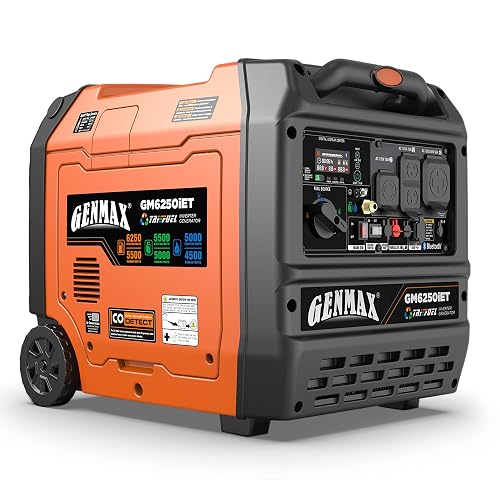 TOP CHOICEBest for smart monitoringGENMAX 6250w Tri-Fuel Silent Inverter GeneratorView on Amazon
- 4
 Best for heavy-duty loadsGENMAX 10500 Peak Watt Tri Fuel Open Frame Inverter Generator (GM10500XiT)View on Amazon
- 5
 Best for whole-home or job site powerWEN 13,000-Watt 120V/240V Tri-Fuel Inverter Generator (TF1300iX)View on Amazon
Our Top Picks
Quick Comparison
| Product | Best for | Key feature |
|---|---|---|
| AIVOLT 8000W Dual Fuel Inverter Generator 50A RV Generator | Overall balance for RV and home backup | Dual fuel, 50A outlet, 62 dBA rating |
| WEN 6800-Watt Dual Fuel RV-Ready Inverter Generator (DF680iX) | Quiet home backup | Dual fuel, fuel shut-off, CO Watchdog |
| GENMAX 6250w Tri-Fuel Silent Inverter Generator | Smart monitoring | Bluetooth app control, auto start/stop |
| GENMAX 10500 Peak Watt Tri Fuel Open Frame Inverter Generator | Heavy-duty loads | 10,500 peak watts, ATS |
| WEN 13,000-Watt 120V/240V Tri-Fuel Inverter Generator (TF1300iX) | Whole-home or job site power | 13,000 watts, wheel kit, 550cc engine |
AIVOLT 8000W Dual Fuel Inverter Generator 50A RV Generator
Dual Fuel Ready, 120V/240V, Super Quiet 62 dBA, Clean Inverter Power, CO Auto-Shutoff, Electric Start, Portable with Wheels AIVOLT 8000W Dual Fuel Inverter Generator 50A RV Generator
Best for: Overall balance for RV and home backup
This unit suits owners who want a single generator that can run an RV’s 50-amp service or a home’s critical circuits, and who want to switch between gasoline and propane.
Key specs:
- Dual fuel capability (gasoline and propane)
- 120V/240V output with a 50A outlet
- Rated noise level of 62 dBA as listed
- Clean inverter power for sensitive electronics
- Electric start and wheels for portability
- CO auto-shutoff
Pros:
- Dual fuel flexibility for longer runtimes
- Electric start simplifies cold-weather use
- Wheels make repositioning easier
Cons:
- Heavier than small inverter models, so lifting it into a truck bed takes effort
- Output at full 50A load will be louder than the rated low-load figure
Bottom line: A strong fit for RV owners and households that want one unit covering both camping and emergency home power.
WEN 6800-Watt Dual Fuel RV-Ready Electric Start Portable Inverter Generator (DF680iX)
WEN 6800-Watt Dual Fuel RV-Ready Electric Start Portable Inverter Generator with Fuel Shut Off and CO Watchdog for Electric Vehicle Backup (DF680iX)
Best for: Quiet home backup
Homeowners who need steady power for refrigeration, heating controls and lighting during outages, and who want a fuel shut-off and CO protection built in, will find this model practical.
Key specs:
- 6,800-watt rated dual fuel design
- RV-ready configuration with 50A service
- Electric start
- Fuel shut-off feature
- CO Watchdog protection
Pros:
- CO Watchdog adds a safety layer for enclosed or semi-enclosed setups
- Electric start is convenient for regular standby use
- Inverter design generally runs quieter than open-frame conventional generators
Cons:
- Output is lower than the larger tri-fuel units on this list
- Owners often recommend a sound enclosure or placement away from the house for the quietest operation
Bottom line: Best for households prioritizing noise and safety features over maximum wattage.
GENMAX 6250w Tri-Fuel Silent Inverter Generator
GENMAX 6250w Tri-Fuel Silent Inverter Generator Features 2-Wire Auto Start/Stop,bluetooth APP Control,CO Sensor,Digital Display&50A Outlet-Ideal for Home Backup&Camping Outdoor,EPA Compliant
Best for: Smart monitoring
This model fits users who like to check status from a phone and want automatic start and stop tied to load demand.
Key specs:
- Tri-fuel capability
- 2-wire auto start/stop
- Bluetooth app control
- CO sensor and digital display
- 50A outlet
- Listed as EPA compliant
Pros:
- App control and digital display make monitoring simple
- Auto start/stop reduces unnecessary runtime
- Tri-fuel flexibility covers gasoline, propane and natural gas
Cons:
- Bluetooth range is limited, so remote monitoring beyond the property needs a different solution
- Electronic controls add setup steps that some owners find fussy at first
Bottom line: A good match for tech-oriented homeowners who want automation and visibility.
GENMAX 10500 Peak Watt Tri Fuel Open Frame Inverter Generator (GM10500XiT)
GENMAX 10500 Peak Watt Tri Fuel Open Frame Inverter Generator,with ATS,CO Sensor,digital display and 50A,Ideal for Home backup,contruction site and RV Camping (GM10500XiT)
Best for: Heavy-duty loads
Contractors, workshops and homeowners running well pumps, larger air conditioners or power tools will need the headroom this open-frame design offers.
Key specs:
- 10,500 peak watts
- Tri-fuel capability
- Automatic transfer switch (ATS) support
- CO sensor and digital display
- 50A outlet
Pros:
- Peak wattage handles motor startup surges
- ATS integration suits standby home backup
- Open frame makes service access straightforward
Cons:
- Open-frame design is louder than enclosed inverter models
- Requires a sound enclosure or distance for noise-sensitive settings
Bottom line: Best for users who need the most power and can manage noise with placement or an enclosure.
WEN 13,000-Watt 120V/240V Tri-Fuel Inverter Generator (TF1300iX)
WEN 13,000-Watt 120V/240V Tri-Fuel Inverter Generator with Quiet 550cc Engine, Electric Start, Wheel Kit, and CO Watchdog, Gas, Propane, and Natural Gas Powered (TF1300iX)
Best for: Whole-home or job site power
This is the highest-output option here, aimed at users powering a large portion of a house, a shop, or a construction site from a single unit.
Key specs:
- 13,000-watt rating
- 120V/240V output
- Tri-fuel capability (gasoline, propane, natural gas)
- 550cc engine
- Electric start and wheel kit
- CO Watchdog protection
Pros:
- Enough capacity for whole-home backup in many setups
- Natural gas option suits homes with existing gas lines
- Wheel kit helps with a heavy unit
Cons:
- Large and heavy, which limits portability
- Higher fuel consumption at full load
Bottom line: Ideal for those who need the most capacity and have a permanent or semi-permanent placement.
Buying Guide
Fuel Type and Dual or Tri-Fuel Capability
Dual fuel units typically run on gasoline and propane, while tri-fuel units add natural gas. Propane stores well and burns cleaner than gasoline, which matters for long-term standby. Natural gas removes refueling entirely if your home has a line.
Good picks for this: AIVOLT 8000W Dual Fuel Inverter Generator 50A RV Generator, GENMAX 6250w Tri-Fuel Silent Inverter Generator
Noise Level and Enclosure Design
Check the manufacturer’s rated decibel level and note the test distance. Inverter engines generally run quieter at partial load than at full load, and enclosed designs usually outperform open-frame units. Placement away from living spaces adds further reduction.
Good picks for this: WEN 6800-Watt Dual Fuel RV-Ready Electric Start Portable Inverter Generator (DF680iX), AIVOLT 8000W Dual Fuel Inverter Generator 50A RV Generator
Output Wattage and Peak Versus Running Watts
Add the running watts of the loads you plan to power, then add a margin for motor startup surges. Peak watts matter most for well pumps, compressors and large air conditioners. Verify the 50A outlet rating matches your RV or transfer equipment.
Good picks for this: GENMAX 10500 Peak Watt Tri Fuel Open Frame Inverter Generator (GM10500XiT), WEN 13,000-Watt 120V/240V Tri-Fuel Inverter Generator (TF1300iX)
Outlets and 50 Amp Compatibility
A true 50A, 120/240V output with the correct twist-lock receptacle is necessary for RV and many transfer switch connections. Confirm the outlet configuration matches your cord or inlet before buying.
Good picks for this: AIVOLT 8000W Dual Fuel Inverter Generator 50A RV Generator, GENMAX 6250w Tri-Fuel Silent Inverter Generator
Safety Features
Carbon monoxide sensors or shutoffs, low-oil shutdown and fuel shut-off valves reduce risk. Never operate any generator inside a home, garage or enclosed space. Carbon monoxide poisoning remains a serious hazard, so consult a qualified electrician or safety professional before connecting any generator to household wiring.
Good picks for this: WEN 6800-Watt Dual Fuel RV-Ready Electric Start Portable Inverter Generator (DF680iX), GENMAX 10500 Peak Watt Tri Fuel Open Frame Inverter Generator (GM10500XiT)
Portability, Weight and Wheels
Measure weight and frame size before buying. Wheel kits and handles help, but a heavy unit still needs two people or a lift. Consider where the generator will live between uses.
Good picks for this: AIVOLT 8000W Dual Fuel Inverter Generator 50A RV Generator, WEN 13,000-Watt 120V/240V Tri-Fuel Inverter Generator (TF1300iX)
Maintenance and Engine Care
Oil changes, air filter cleaning and spark plug checks keep any engine reliable. Follow the manufacturer’s schedule and use fuel stabilizer for gasoline stored longer than a season.
Good picks for this: GENMAX 6250w Tri-Fuel Silent Inverter Generator, WEN 13,000-Watt 120V/240V Tri-Fuel Inverter Generator (TF1300iX)
FAQ
What does a 50 amp generator inverter power?
A 50-amp, 120/240-volt output can supply roughly 12,000 watts at 240 volts in theory, but practical capacity depends on the generator’s rated watts and the transfer equipment. Most homes power critical circuits rather than the full panel.
Is an inverter generator quieter than a conventional one?
Generally yes. Inverter designs adjust engine speed to load, so they often run more quietly at partial load. Enclosed models usually produce less noise than open-frame units.
Can I plug a 50 amp generator directly into my house?
No. Connecting a generator to household wiring requires a transfer switch or interlock kit installed by a licensed electrician to prevent backfeeding the utility grid.
What is the difference between dual fuel and tri-fuel?
Dual fuel models run on gasoline and propane. Tri-fuel models add natural gas, which can provide longer runtime if you have a gas supply connection.
How far should a generator be from the house?
Operate any generator outdoors, away from windows, doors and vents. Manufacturers typically specify a minimum clearance, and carbon monoxide can accumulate quickly near structures.
Do I need a CO detector if the generator has a CO sensor?
A built-in sensor is helpful, but a standalone battery-backed CO alarm inside the home is still recommended. Consult a qualified safety professional for your specific setup.
How long can a 50 amp generator inverter run continuously?
Runtime depends on tank size, fuel type and load. Check the manufacturer’s runtime chart at your expected load and plan refueling accordingly.
Conclusion
For a balance of RV and home backup, the AIVOLT 8000W is a strong starting point. Households prioritizing quiet operation and safety features should look at the WEN DF680iX. Smart monitoring suits the GENMAX 6250w, while the GENMAX 10500 and WEN TF1300iX serve heavier loads and whole-home or job site needs. Match the output, fuel options and noise level to your actual loads, and have an electrician install any transfer equipment.
Sources
- Guidance on generator sizing, fuel options and safe standby power practices (energy.gov)
- Carbon monoxide safety recommendations for portable generator use (cpsc.gov)
- Electrical standards relevant to generator transfer and connection (nfpa.org)
Related reading
- 8 Best 50 Amp Dual Fuel Inverter Generator Picks for Home Backup (2026)
- 3 Best Dual Fuel Inverter Generator 30 Amps for Home and RV Use (2026)
- Triple Fuel Inverter Generator: 8 Best Picks Compared (2026)

About Lily Fitzgerald
Lily has been writing about generators & noise for this site, with an eye on clear explanations, honest trade-offs and options for different needs and budgets.