By Evelyn Fairbanks
Updated November 2026
Shoppers looking for a dual fuel generator with 50 amp plug usually need one thing above all: reliable backup power that can feed a 240-volt circuit, such as a transfer switch, an RV hookup or a heavy-duty extension setup. This list compares five models using manufacturer specifications, brand reputation and common owner feedback patterns. We weighed the 50 amp connection, fuel flexibility (gasoline and propane, plus natural gas on some units), output rating, noise level in dBA, electric start, carbon monoxide protection and portability. Where a listing does not state a figure, we say so rather than guess.
Our top picks at a glance
- 1
 TOP CHOICEBest overallAIVOLT 8000W Dual Fuel Inverter Generator 50A RV GeneratorView on Amazon
- 2
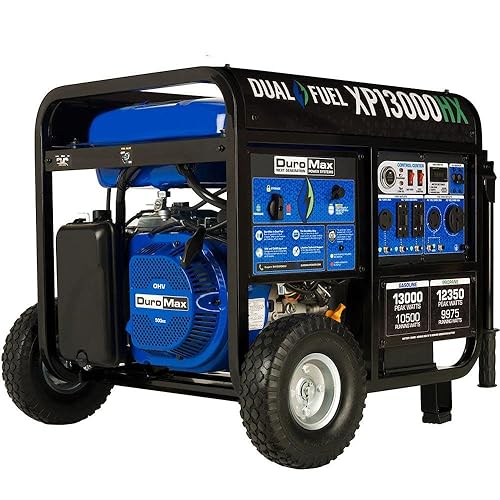 TOP CHOICEBest for whole-home backupDuroMax XP13000HX 13,000-Watt Dual Fuel Portable GeneratorView on Amazon
- 3
 TOP CHOICEBest for RV owners on a budgetAIVOLT 7500 Watt Dual Fuel Portable Generator with WheelsView on Amazon
- 4
 Best for multi-fuel flexibilityGenerac 12,500 Starting Watt Tri-Fuel Portable GeneratorView on Amazon
- 5
 Best for transfer-switch setupsWEN 8000-Watt Dual Fuel Portable Generator (DF8000X)View on Amazon
Our Top Picks
| Product | Best for | Key feature |
|---|---|---|
| AIVOLT 8000W Dual Fuel Inverter Generator 50A RV Generator | Quiet RV and home use | Super quiet 62 dBA rating with clean inverter power |
| DuroMax XP13000HX 13,000-Watt Dual Fuel Portable Generator | Whole-home backup | 13,000-watt rating with transfer switch readiness |
| AIVOLT 7500 Watt Dual Fuel Portable Generator with Wheels | Budget RV backup | 30A RV-ready output with CO sensor |
| Generac 12,500 Starting Watt Tri-Fuel Portable Generator | Multi-fuel flexibility | Gasoline, propane or natural gas, with COsense detection |
| WEN 8000-Watt Dual Fuel Portable Generator (DF8000X) | Transfer-switch homes | 120V/240V output with electric start and CO Watchdog |
AIVOLT 8000W Dual Fuel Inverter Generator 50A RV Generator
Dual Fuel Ready, 120V/240V, Super Quiet 62 dBA, Clean Inverter Power, CO Auto-Shutoff, Electric Start, Portable with Wheels AIVOLT 8000W Dual Fuel Inverter Generator 50A RV Generator
Best for: Quiet home and RV backup where noise matters most
This model suits homeowners who run a generator near living areas or campgrounds and want to keep noise and exhaust fumes down. Its inverter design is built for clean power to sensitive electronics.
Key specs
- Dual fuel ready (gasoline and propane)
- 120V/240V output with 50A connection
- Noise rating stated at 62 dBA
- Electric start
- CO auto-shutoff
- Portable with wheels
Pros
- Low stated noise level for its output class
- Inverter power suits electronics
- Electric start simplifies cold-weather use
Cons
- Inverter units generally run at lower maximum output than conventional open-frame models of similar size
- Owners should verify the 50A receptacle matches their transfer switch or RV inlet
Bottom line: A strong first choice for anyone who puts noise and clean power ahead of raw wattage.
DuroMax XP13000HX 13,000-Watt Dual Fuel Portable Generator
DuroMax XP13000HX 13,000-Watt Dual Fuel Portable Generator – Gas & Propane, Electric Start, Whole Home Power Backup, Transfer Switch Ready, RV & Emergency Ready
Best for: Whole-home backup with a transfer switch
Households that need to power a large share of the house during outages, including refrigeration, HVAC blowers and well pumps, will look first at this higher-output model.
Key specs
- 13,000-watt rated output
- Gas and propane operation
- Electric start
- Transfer switch ready
- RV and emergency rated
Pros
- High output for larger loads
- Dual fuel gives backup when gasoline is scarce
- Transfer switch readiness simplifies home wiring
Cons
- Heavier and bulkier than the smaller models here
- Higher-output open-frame designs are typically louder than inverter units
Bottom line: Best for homeowners who need serious capacity and can accept more weight and noise in exchange.
AIVOLT 7500 Watt Dual Fuel Portable Generator with Wheels
Gas and Propane Powered, 30A RV Ready, CO Sensor, 4-Stroke OHV Air Cooled Engine, EPA-PGMA300 Compliant AIVOLT Generator 7500 Watt Dual Fuel Portable Generator with Wheels
Best for: Budget-minded RV owners who want 30A output
This unit fits RV owners and small-home users who need a 30A RV-ready output without paying for a premium inverter. The wheels make it easier to move around a campsite or driveway.
Key specs
- 7,500-watt rated output
- Gas and propane operation
- 30A RV-ready outlet
- CO sensor
- 4-stroke OHV air-cooled engine
- Portable with wheels
Pros
- 4-stroke engine is generally more fuel-efficient than 2-stroke designs
- Built-in CO sensor adds a safety layer
- Wheels help with movement
Cons
- A 30A outlet is not the same as a 50A connection, so check the adapter you need
- Conventional engines run louder than inverter generators
Bottom line: A sensible pick for RV owners who mostly need 30A service and want to keep spending modest.
Generac 12,500 Starting Watt Tri-Fuel Portable Generator
Gas, Propane, Or Natural Gas Fuel Options, COsense CO Detection, 9.5 Hour Runtime, Emergency Home Backup, 49 State Compliant Generac 12,500 Starting Watt Tri-Fuel Portable Generator, Electric Start
Best for: Users who want gasoline, propane and natural gas options
Generac is a long-established brand in standby and portable power. This tri-fuel model suits people who want the option to run on natural gas where a supply line exists.
Key specs
- 12,500 starting watts
- Gasoline, propane or natural gas
- COsense CO detection
- Stated 9.5-hour runtime
- Electric start
- 49-state compliant
Pros
- Three fuel options add resilience
- COsense detection is a recognized safety feature
- Strong brand support network
Cons
- Natural gas operation requires a compatible supply and reduced output compared with gasoline
- Heavier than many dual fuel models, which limits portability
Bottom line: Good for buyers who value fuel flexibility and a major-brand warranty process.
WEN 8000-Watt Dual Fuel Portable Generator (DF8000X)
WEN 8000-Watt 120V/240V Dual Fuel Portable Generator, Electric Start, 340cc, Transfer-Switch and RV-Ready with CO Watchdog (DF8000X)
Best for: Homes with a transfer switch and a 240V backup plan
WEN offers budget-friendly portable generators, and this model is aimed at users who want 120V and 240V output with transfer-switch compatibility.
Key specs
- 8,000-watt rated output
- 120V/240V output
- Electric start
- 340cc engine
- Transfer-switch and RV ready
- CO Watchdog
Pros
- Clear 240V capability for home wiring
- CO Watchdog adds protection
- Competitive value for its output class
Cons
- Conventional engine means more noise than inverter models
- Owners often recommend a dedicated transfer switch professionally installed
Bottom line: A practical choice for homeowners planning a transfer switch on a moderate budget.
Buying Guide
Confirm the 50 amp receptacle and your wiring plan
A 50 amp plug (NEMA 14-50) delivers 240 volts and up to 50 amps, but the generator is only one part of the system. Check whether your RV or home setup requires a 50A or 30A connection, and whether you need a transfer switch for home backup. Never backfeed a household circuit through an outlet. Consult a licensed electrician for any permanent connection.
Good picks for this: WEN 8000-Watt Dual Fuel Portable Generator (DF8000X), DuroMax XP13000HX 13,000-Watt Dual Fuel Portable Generator
Running wattage versus starting wattage
Starting watts are the short surge needed to start motors such as well pumps or air conditioners. Running watts are what the unit sustains. Add the running loads you plan to power, then add the highest starting surge on top. Manufacturers’ rated figures can vary, so compare the same rating type across models.
Good picks for this: Generac 12,500 Starting Watt Tri-Fuel Portable Generator, AIVOLT 8000W Dual Fuel Inverter Generator 50A RV Generator
Noise level in dBA
Decibel ratings are measured at a stated distance, and manufacturers do not always use the same test method. Inverter units usually run quieter than conventional open-frame generators because engine speed adjusts to load. A stated figure in the low 60s dBA is quieter than many older models, but actual results depend on placement, load and surfaces around the unit.
Good picks for this: AIVOLT 8000W Dual Fuel Inverter Generator 50A RV Generator, AIVOLT 7500 Watt Dual Fuel Portable Generator with Wheels
Fuel flexibility
Dual fuel units run on gasoline and propane. Propane stores well and burns cleaner, while gasoline is easier to find in many areas. Tri-fuel models add natural gas. Note that propane output is typically lower than gasoline output on the same engine, so check the rated figures for each fuel.
Good picks for this: Generac 12,500 Starting Watt Tri-Fuel Portable Generator, DuroMax XP13000HX 13,000-Watt Dual Fuel Portable Generator
Safety features and carbon monoxide
Carbon monoxide is odorless and can be fatal. Look for CO shutoff, CO sensors or detection systems, and never run any generator inside a home, garage or enclosed space. Place the unit at least 20 feet from doors and windows, as recommended by safety agencies. Install battery-powered CO alarms on every level of the home.
Good picks for this: AIVOLT 7500 Watt Dual Fuel Portable Generator with Wheels, WEN 8000-Watt Dual Fuel Portable Generator (DF8000X)
Portability and weight
Wheels and handles matter when the unit has to move across a campsite or into a garage. Heavier open-frame models provide more output but are harder to lift. Check the listed weight before buying and plan for a second person if the unit is above roughly 100 pounds.
Good picks for this: AIVOLT 7500 Watt Dual Fuel Portable Generator with Wheels, AIVOLT 8000W Dual Fuel Inverter Generator 50A RV Generator
Electric start and maintenance
Electric start is easier on older users and in cold weather, though it adds a battery that needs charging. Regular oil changes, air filter checks and fresh fuel keep any generator reliable. Owners who want to understand routine care can review Generator Maintenance Basics: Oil, Air Filter, Spark Plug and Fuel.
Good picks for this: WEN 8000-Watt Dual Fuel Portable Generator (DF8000X), Generac 12,500 Starting Watt Tri-Fuel Portable Generator
FAQ
What does a 50 amp plug on a dual fuel generator power?
A NEMA 14-50 receptacle provides 240 volts and up to 50 amps, which is typically used for RV hookups, electric ranges in some installations and larger loads. Whether it powers your home depends on your transfer switch and circuit design.
Can I run a dual fuel generator on propane indoors?
No. Propane produces carbon monoxide just as gasoline does. Use any generator outdoors, away from openings, and follow the manufacturer’s manual.
Do I need a transfer switch to connect a generator to my house?
For safe home backup, yes. A transfer switch isolates the home from the utility grid so power does not flow back into utility lines. A licensed electrician should install it.
Are inverter generators quieter than conventional ones?
Generally yes, because the engine can slow down at light loads. Stated dBA ratings should still be compared at the same test distance.
What is the difference between running watts and starting watts?
Running watts are the continuous output. Starting watts are the short surge needed to start motors. Size your generator for the sum of running loads plus the largest motor surge.
How long can a dual fuel generator run?
Runtime depends on load, fuel type and tank size. Check the manufacturer’s stated runtime at a specific load, and refuel or manage loads accordingly.
Does propane give the same power as gasoline?
Usually not. Propane generally produces less rated output than gasoline on the same engine, so confirm the figures for each fuel.
Conclusion
For a dual fuel generator with 50 amp plug, the best fit depends on your use. The AIVOLT 8000W Dual Fuel Inverter Generator 50A RV Generator suits buyers who prioritize low noise and clean power. The DuroMax XP13000HX 13,000-Watt Dual Fuel Portable Generator fits whole-home backup needs. The AIVOLT 7500 Watt model is a sensible RV-focused option, the Generac tri-fuel unit suits multi-fuel planning, and the WEN DF8000X works well for transfer-switch homes. Match the output, fuel type and noise rating to your loads, and consult a licensed electrician before any permanent connection.
Sources
- Guidance on generator sizing, home backup power and safe operation (energy.gov)
- Carbon monoxide poisoning prevention and generator safety warnings (cpsc.gov)
- Standards for electrical installations and transfer equipment (nfpa.org)
Related reading
- 8 Best 50 Amp Dual Fuel Inverter Generator Picks for Home Backup (2026)
- 6 Best 50 Amp Dual Fuel Generators for Home and RV Backup (2026)

About Evelyn Fairbanks
Evelyn writes about generators & noise. Each guide starts with research into how products are built and what owners report after months of use, and is revised when better options appear.