 By Miles Sinclair
Updated November 2026
If you’re asking how much is a whole house generator with installation, the answer depends on the unit’s output, fuel type, and how much electrical work your home needs. This guide compares six models across the criteria that most affect total cost: fuel flexibility, wattage coverage, transfer switch readiness, and whether the unit is a permanent standby system or a portable one. Each pick is matched to a specific need so you can narrow the field quickly.
Our top picks at a glance
- 1
 TOP CHOICEBest overallGenerac 26kW Whole Home GeneratorView on Amazon
- 2
 TOP CHOICEBest for dual-fuel standbyChampion 22,000-Watt Dual Fuel Standby GeneratorView on Amazon
- 3
 TOP CHOICEBest for transfer-switch portable backupDuroMax XP13000EHView on Amazon
- 4
 Best for solar and battery backupJackery HomePower 3600 PlusView on Amazon
- 5
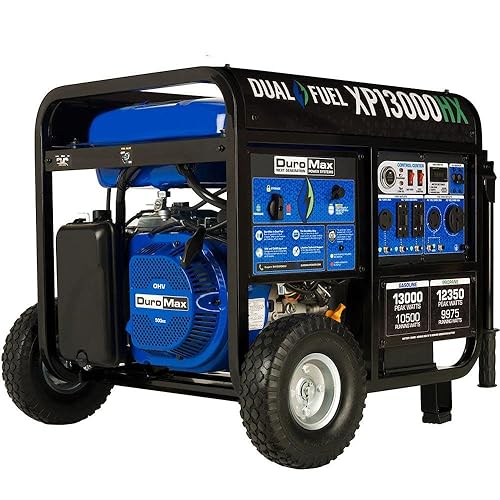 Best for budget portable powerDuroMax XP13000HXView on Amazon
- 6
 Best for split-phase solar backupOSCAL PowerMax 6000View on Amazon
Our Top Picks
| Product | Best for | Key feature |
|---|---|---|
| Generac 26kW Whole Home Generator | Full-home permanent backup | WiFi and cellular monitoring |
| Champion 22,000-Watt Dual Fuel Standby Generator | Propane or natural gas homes | 200-amp automatic transfer switch |
| DuroMax XP13000EH | Portable backup with a transfer switch | Dual fuel, electric start |
| Jackery HomePower 3600 Plus | Solar-charged essential loads | Expandable to 21kWh |
| DuroMax XP13000HX | Lower-cost portable backup | Dual fuel, transfer switch ready |
| OSCAL PowerMax 6000 | Split-phase 120V/240V solar backup | 9000W peak output |
Generac 26kW Whole Home Generator
Automatic Backup Power, Whole House Coverage, WiFi & Cellular Monitoring, Weather-Activated, Natural Gas or Propane Ready Generac 26kW Whole Home Generator, Cellular Capability
Best for: Full-home permanent backup with remote monitoring
Aimed at homeowners who want a standby unit that starts automatically during outages and can be tracked from a phone. Installed cost is typically the highest of the six because it requires a permanent pad, gas or propane line, and transfer switch.
Pros
- Automatic startup on outage detection
- WiFi and cellular monitoring options
Cons
- Professional installation adds significantly to total cost
Champion 22,000-Watt Dual Fuel Standby Generator
Champion 22,000-Watt Dual Fuel (Liquid Propane/Natural Gas) Whole House Home Standby Generator and 200-Amp Automatic Transfer Switch with fleX Technology
Best for: Dual-fuel standby backup with a built-in transfer switch
Suited to homeowners who want standby power and can run either liquid propane or natural gas. The included 200-amp transfer switch reduces the number of separate components an installer must source.
Pros
- Runs on liquid propane or natural gas
- Includes a 200-amp automatic transfer switch
Cons
- Requires a licensed electrician and fuel line work
DuroMax XP13000EH
DuroMax XP13000EH 13,000-Watt Dual Fuel Portable Generator – Gas & Propane, Electric Start, Whole Home Backup Power, Transfer Switch Ready, RV & Emergency Ready
Best for: Portable dual-fuel backup for homes with a transfer switch
A good fit for homeowners who prefer a movable unit and plan to connect it through a transfer switch rather than a permanent standby setup. Electric start is listed as a convenience feature.
Pros
- Dual fuel with electric start
- Transfer switch ready
Cons
- Manual operation during outages, unlike standby units
Jackery HomePower 3600 Plus
LFP Battery, Expandable to 21kWh, Solar Generator, Essential Home Backup for Home Use, Emergencies, RV Jackery HomePower 3600 Plus & 2x200W Solar Panels, 3584Wh, 3600W AC Output
Best for: Solar-charged backup for essential household loads
Designed for homeowners who want quiet, fuel-free backup for refrigerators, lighting and devices rather than full-home coverage. Capacity can be expanded as needs grow.
Pros
- Expandable to 21kWh storage
- No fuel required when paired with solar panels
Cons
- Not designed to run full-home heating or central air for long periods
DuroMax XP13000HX
DuroMax XP13000HX 13,000-Watt Dual Fuel Portable Generator – Gas & Propane, Electric Start, Whole Home Power Backup, Transfer Switch Ready, RV & Emergency Ready
Best for: Lower-cost portable backup with transfer switch support
Fits homeowners comparing portable options who want dual-fuel flexibility and a transfer-switch connection at a more modest equipment cost than standby units.
Pros
- Dual fuel: gasoline or propane
- Transfer switch ready
Cons
- Manual startup and refueling during extended outages
OSCAL PowerMax 6000
OSCAL PowerMax 6000 Solar Generator with 3×400W Solar Panel, 120V/240V Split Phase Voltage 6000W AC Outlets (9000W Peak), 2200W AC Charging/2400W Solar Charging, Emergency for Home, Battery Backup
Best for: Split-phase 120V/240V solar backup for larger loads
Suited to homeowners who want 240V outlets for appliances like well pumps or electric ranges, paired with solar panels for recharging.
Pros
- 120V/240V split-phase output
- Includes three 400W solar panels
Cons
- Output is still below what a full standby generator supplies
Buying Guide
Fuel type and availability
Natural gas, liquid propane and gasoline each affect both equipment choice and running cost. Standby units typically connect to a fixed gas or propane supply, while portable units usually need stored fuel.
Wattage coverage
Total the running wattage of the circuits you want backed up, then add startup surge for motors and compressors. Under-sizing is the most common reason backup systems fail under load.
FAQ
Is a permanent standby generator better than a portable one for a whole house?
A permanent standby unit such as the Generac or Champion models connects to your home’s electrical system through a transfer switch and starts automatically during an outage. A portable unit like the DuroMax models or the solar-powered options can also support a home with a transfer switch, but it requires you to start it and manage fuel or charging yourself.
Does fuel type affect how much a whole house generator costs to run?
Yes, the fuel you use changes both your operating costs and how reliable the system is during a long outage. Dual fuel units can run on either gasoline or propane, or on natural gas in standby models, which gives you flexibility if one supply is interrupted. Your local fuel prices and availability should guide which option makes sense for you.
Why does the wattage rating matter when choosing a generator?
The wattage rating determines how many appliances and systems you can run at the same time. Before buying, add up the running wattage of the circuits you want to keep powered, such as the furnace or heat pump, refrigerator, well pump, and lighting. Starting loads for motors and compressors can be much higher than their running loads, so leave some headroom.
Do I need a transfer switch to power my home safely?
Yes, a transfer switch is the safe way to connect a generator to your home’s wiring. It isolates your house from the utility grid so power does not flow back into the lines, which protects utility workers and your equipment. Never plug a generator directly into a wall outlet or backfeed a panel without one.
Is installation included in the price of a whole house generator?
Installation is often a separate cost from the generator itself and can vary based on your electrical panel, the fuel line or gas connection, the location of the unit, and local permit requirements. Some dealers bundle installation into a package, so it is worth asking for an itemized quote. Get estimates from licensed electricians or installers in your area to compare.
Can a solar generator replace a whole house generator?
A solar generator with a large battery can cover essential loads for a period of time, especially when paired with panels and a transfer switch. However, its capacity is limited compared with a fuel-powered standby unit, so it is better suited to critical circuits and shorter outages. Consider your typical outage length and the loads you need before deciding.
Conclusion
If you want fully automatic whole house backup with minimal effort during an outage, a permanent standby model such as the Generac or Champion is the closest match. For flexible, lower-commitment power that can also serve as a portable backup, the DuroMax units and the OSCAL or Jackery solar options are better fits, especially when you pair them with a transfer switch.
Choose based on the loads you must keep running, your preferred fuel, and whether you value automatic startup or portability. Always budget for installation and permits separately, and confirm your wattage needs before you buy.
Related reading
- Whole House Generator Propane Usage: How Much You'll Burn (2026)
- Whole House Generator Installation Contractors: How to Hire the Right Pro (2026)
- How Much Propane Does a Whole-House Generator Use? A Practical Guide (2026)
- How Much Is a Whole House Generator Installed? Costs and Key Factors (2026)
- How Much Is a Generac Whole House Generator Installed? Costs by Part (2026)
About Miles Sinclair
Miles Sinclair is part of our editorial team and reviews and edits our generators & noise guides, checking product details against manufacturer specifications and owner feedback.