 By Miles Sinclair
Updated November 2026
Choosing the best home generator dual fuel model comes down to running capacity, fuel flexibility, and whether it can connect to your home’s wiring. This list weighs wattage, electric start, transfer switch compatibility, and the kinds of feedback owners commonly share about noise, fuel switching, and build quality.
Our top picks at a glance
- 1
 TOP CHOICEBest overallWestinghouse 12500 Watt Dual Fuel Home Backup Portable GeneratorView on Amazon
- 2
 TOP CHOICEBest for whole-home backupDuroMax XP13000EH 13,000-Watt Dual Fuel Portable GeneratorView on Amazon
- 3
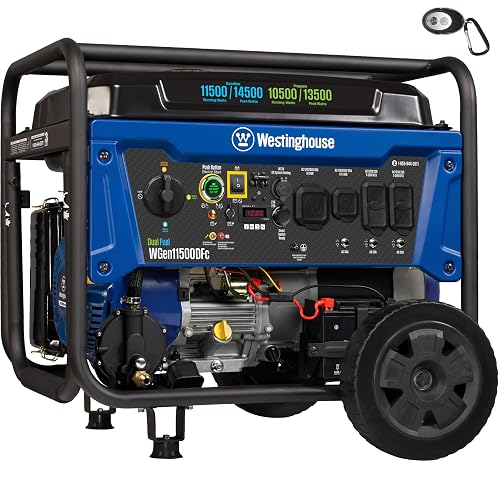 TOP CHOICEBest for larger homesWestinghouse 14500 Peak Watt Dual Fuel Home Backup Portable GeneratorView on Amazon
- 4
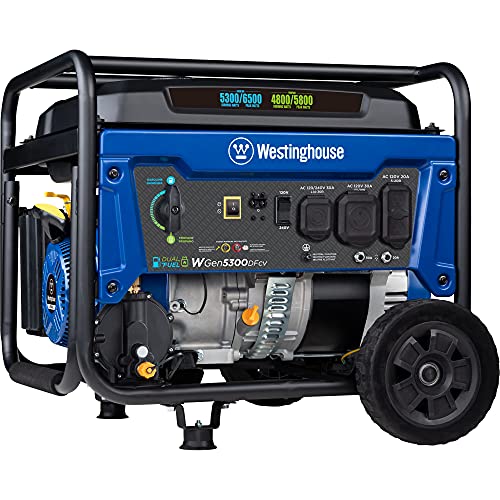 Best for RV and camping useWestinghouse 6500 Watt Dual Fuel Home Backup Portable GeneratorView on Amazon
- 5
 Best budget-friendly optionWestinghouse 4650 Peak Watt Dual Fuel Portable GeneratorView on Amazon
Our Top Picks
| Product | Best for | Key feature |
|---|---|---|
| Westinghouse 12500 Watt Dual Fuel | Overall home backup | Remote electric start |
| DuroMax XP13000EH | Whole-home backup | Electric start, transfer switch ready |
| Westinghouse 14500 Peak Watt Dual Fuel | Larger homes | Highest peak output listed |
| Westinghouse 6500 Watt Dual Fuel | RV and camping use | 30A RV-ready outlet |
| Westinghouse 4650 Peak Watt Dual Fuel | Essential circuits | CO sensor included |
Westinghouse 12500 Watt Dual Fuel Home Backup Portable Generator
Westinghouse 12500 Watt Dual Fuel Home Backup Portable Generator, Remote Electric Start, Transfer Switch Ready, Gas and Propane Powered
Best for: Overall home backup with a balance of output and fuel flexibility.
This suits homeowners who want enough capacity for a refrigerator, well pump, furnace blower, and several lights, with the option to run on gasoline or propane.
Pros
- Remote electric start for easier operation
- Transfer switch ready for connection to home wiring
Cons
- Heavy enough that owners often mention needing a second person to move it
DuroMax XP13000EH 13,000-Watt Dual Fuel Portable Generator
DuroMax XP13000EH 13,000-Watt Dual Fuel Portable Generator – Gas & Propane, Electric Start, Whole Home Backup Power, Transfer Switch Ready, RV & Emergency Ready
Best for: Whole-home backup on a generator-to-panel setup.
This is aimed at households that want high running capacity and are comfortable setting up a transfer switch or interlock kit.
Pros
- Electric start with a 13,000-watt rating
- Listed as transfer switch ready and RV ready
Cons
- Owners commonly note it is loud at full load
Westinghouse 14500 Peak Watt Dual Fuel Home Backup Portable Generator
Westinghouse 14500 Peak Watt Dual Fuel Home Backup Portable Generator, Remote Electric Start, Transfer Switch Ready, Gas and Propane Powered
Best for: Larger homes that need a high peak output for motor startup loads.
This fits larger houses with central air or multiple large appliances that draw heavy starting current.
Pros
- High peak rating for starting large motors
- Remote electric start and transfer switch ready
Cons
- Large footprint makes placement harder in tight spaces
Westinghouse 6500 Watt Dual Fuel Home Backup Portable Generator
Westinghouse 6500 Watt Dual Fuel Home Backup Portable Generator, Transfer Switch Ready 30A Outlet, RV Ready 30A Outlet, CO Sensor
Best for: RV and camping use alongside home backup.
This suits people who want one unit for storm outages and occasional trips, thanks to its 30A outlets.
Pros
- RV-ready 30A outlet and transfer switch ready
- CO sensor included
Cons
- Output is modest for whole-home loads
Westinghouse 4650 Peak Watt Dual Fuel Portable Generator
Westinghouse 4650 Peak Watt Dual Fuel Portable Generator, RV Ready 30A Outlet, Gas & Propane Powered, CO Sensor
Best for: Essential circuits and lower running demand.
This is a practical choice for keeping a few critical circuits powered during short outages without the size of larger units.
Pros
- Compact enough for easier storage
- Gas and propane capable with a CO sensor
Cons
- Not sized for central air or multiple large appliances
Buying Guide
Match running watts to your critical loads
Add up the running watts of the appliances you need during an outage, then add a margin for motor startup surges. Manufacturers often list both running and peak ratings, and the peak figure matters most for refrigerators and pumps.
Confirm transfer switch compatibility
A transfer switch or interlock kit lets you power home circuits safely without backfeeding the utility grid. Check that the generator’s outlet configuration and listed readiness match the switch you plan to install, and have a licensed electrician do the wiring.
Weigh fuel flexibility and storage
Dual fuel models run on gasoline or propane, which helps when one fuel is in short supply. Propane stores longer and burns cleaner, while gasoline usually delivers more output per gallon; choose based on your storage setup.
Plan for noise and placement
Generator noise is often measured in decibels at a set distance, so check the manufacturer’s stated figure and compare it with local noise rules. Place units outdoors, away from windows and doors, and never run them in an enclosed space because of carbon monoxide risk.
Good picks for this: Westinghouse 12500 Watt Dual Fuel Home Backup Portable Generator and DuroMax XP13000EH 13,000-Watt Dual Fuel Portable Generator
FAQ
Can a dual fuel generator run on both gasoline and propane?
Yes, dual fuel generators are designed to run on either gasoline or propane, and many let you switch between them without shutting the unit down for long. Propane tends to store longer and burns cleaner, while gasoline is often easier to find during a short outage. Check your owner’s manual for the exact switching steps and fuel requirements for your model.
Do I need a transfer switch to power my home?
A transfer switch is the safest and most code-compliant way to connect a generator to your home’s electrical panel. It keeps the generator’s power from flowing back onto the utility lines, which protects line workers and your equipment. Plugging appliances directly into the generator with extension cords works for small loads, but it is not a substitute for a properly installed transfer switch.
How many watts do I need for whole-home backup?
Start by adding up the running watts of the appliances you want to keep on during an outage, such as the refrigerator, furnace fan, lights, and well pump. Remember that motors and compressors need extra starting watts when they first turn on. Leave some margin above your total so the generator is not running at its maximum all the time.
Is electric start worth paying extra for?
Electric start makes it much easier to get the generator running, especially in cold weather or for people who have trouble pulling a starter cord. It is also convenient when the unit is mounted in a hard-to-reach spot. Manual start models are typically simpler and lighter, so the choice depends on how you plan to use the generator.
Where should I place a home generator for safety?
Generators must be operated outdoors, well away from doors, windows, and vents, so exhaust fumes cannot enter the home. Many owners also install a battery-powered or plug-in carbon monoxide alarm inside the house as an extra layer of protection. Keep the unit dry and on a stable surface, and never run it in a garage, even with the door open.
How often should I test a dual fuel generator?
Running the generator briefly every month or two helps keep the engine, carburetor, and battery in good working order. Use a load if you can, since running with no load can lead to carbon buildup over time. Check the oil, fuel, and air filter on the schedule listed in your manual, and rotate stored fuel so it does not go stale.
Conclusion
If you need the most output for whole-home backup, the larger Westinghouse and DuroMax models with transfer switch readiness are the better fit, especially when electric start and remote operation matter. Households with smaller essential loads or those who want something easier to move may find the mid-size Westinghouse units a more practical match.
For RV owners or anyone wanting portable power for camping and job sites alongside occasional home use, the 4650 and 6500 watt Westinghouse models with 30A outlets offer a balanced choice. Whichever you pick, confirm that its running capacity and connection options match your actual loads and your home’s electrical setup.
Related reading
- Top 5 Dual Fuel Generator Inverter Models for Home Backup and RV Use
- Top 5 240 Volt Inverter Generator Dual Fuel Picks for Home Backup
- Dual Fuel Generator for Home: 5 Best Picks for Backup Power (2026)
- Best Dual Fuel Inverter Generator for Home: How to Choose the Right Size (2026)
- 7 Best Smallest Dual Fuel Generator Models for Compact Home Backup (2026)
- 7 Best Quiet Dual Fuel Inverter Generator Picks for Home Backup (2026)
About Miles Sinclair
Miles Sinclair is part of our editorial team and reviews and edits our generators & noise guides, checking product details against manufacturer specifications and owner feedback.