 By Owen Palmer
Updated November 2026
Shoppers looking at a duromax 11000 watt portable tri fuel inverter generator usually want three things: enough output for essential circuits or job-site tools, the ability to run on gasoline, propane or natural gas, and a unit that will not drown out a campsite or neighborhood. The picks below were selected by reviewing manufacturer specifications, brand reputation and common owner feedback patterns, with a focus on wattage, fuel options, safety features and practical use.
Our top picks at a glance
- 1
 TOP CHOICEBest overall11,000 Watt Portable Tri Fuel Inverter Generator w/ CO AlertView on Amazon
- 2
 TOP CHOICEBest for whole-home backupDuroMax XP13000EH 13,000-Watt Dual Fuel Portable GeneratorView on Amazon
- 3
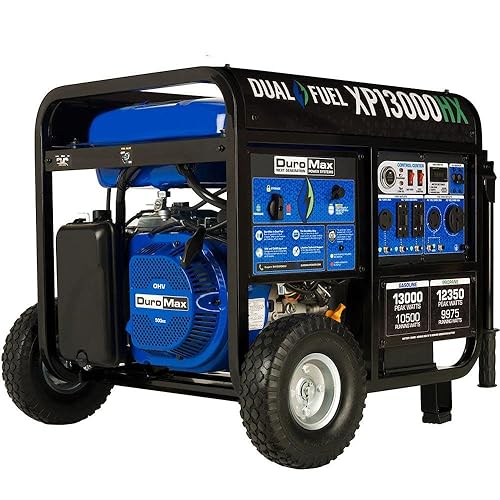 TOP CHOICEBest for transfer-switch setupsDuroMax XP13000HX 13,000-Watt Dual Fuel Portable GeneratorView on Amazon
- 4
 Best for maximum outputDuroMax XP15000HXT+ 15,000 Watt Portable Tri Fuel EFI Portable GeneratView on Amazon
- 5
 Best for light loads7,000 Watt Portable Tri Fuel Inverter Generator w/ CO AlertView on Amazon
- 6
 Best for high-capacity tri fuel13,500 Watt Portable Tri Fuel Inverter Generator w/ CO AlertView on Amazon
Our Top Picks
Quick Comparison
| Product | Best for | Key feature |
|---|---|---|
| 11,000 Watt Portable Tri Fuel Inverter Generator w/ CO Alert | Balanced home and job-site use | Gasoline, propane and natural gas |
| 13,500 Watt Portable Tri Fuel Inverter Generator w/ CO Alert | Higher-load backup | Tri fuel with CO alert |
| 7,000 Watt Portable Tri Fuel Inverter Generator w/ CO Alert | Light loads and portability | Lower weight, tri fuel |
| DuroMax XP13000EH | Whole-home backup | Electric start, transfer switch ready |
| DuroMax XP13000HX | Transfer-switch installations | Electric start, RV and emergency ready |
| DuroMax XP15000HXT+ | Maximum output | EFI, 50-state approved |
11,000 Watt Portable Tri Fuel Inverter Generator w/ CO Alert
11,000 Watt Portable Tri Fuel Inverter Generator w/ CO Alert
Best for: balanced home and job-site use with fuel flexibility
This is the model most directly matched to the 11,000-watt search. It suits owners who want backup power for refrigerators, lights, a well pump and a few tools without buying a larger, heavier unit.
Pros
- Runs on gasoline, propane or natural gas
- Built-in CO alert adds a safety layer
Cons
- Output is best suited to essential loads rather than full-home service
13,500 Watt Portable Tri Fuel Inverter Generator w/ CO Alert
13,500 Watt Portable Tri Fuel Inverter Generator w/ CO Alert
Best for: higher-load backup with tri fuel flexibility
A step up for households that run more appliances at once, such as a central air handler or a sump pump alongside refrigeration.
Pros
- More headroom for simultaneous loads
- Tri fuel operation with CO alert
Cons
- Heavier and bulkier to move than the 11,000-watt model
7,000 Watt Portable Tri Fuel Inverter Generator w/ CO Alert
7,000 Watt Portable Tri Fuel Inverter Generator w/ CO Alert
Best for: light loads and easier portability
Suited to owners who only need to power a short list of essentials, such as a refrigerator, a few lights and phone charging during outages.
Pros
- Lighter and easier to transport
- Tri fuel flexibility at a lower output
Cons
- Will not handle larger motor loads like a well pump with ease
DuroMax XP13000EH 13,000-Watt Dual Fuel Portable Generator
DuroMax XP13000EH 13,000-Watt Dual Fuel Portable Generator – Gas & Propane, Electric Start, Whole Home Backup Power, Transfer Switch Ready, RV & Emergency Ready
Best for: whole-home backup on gasoline or propane
Aimed at homeowners who want electric start and transfer-switch readiness for longer outages.
Pros
- Electric start for easier cold-weather operation
- Transfer switch ready for home wiring
Cons
- Dual fuel only, without natural gas
DuroMax XP13000HX 13,000-Watt Dual Fuel Portable Generator
DuroMax XP13000HX 13,000-Watt Dual Fuel Portable Generator – Gas & Propane, Electric Start, Whole Home Power Backup, Transfer Switch Ready, RV & Emergency Ready
Best for: transfer-switch installations and RV use
Fits owners who plan a permanent connection and also want the option to take the unit on the road.
Pros
- Electric start and transfer switch ready
- Suitable for RV and emergency use
Cons
- Heavy enough that it is best left in one spot
Buying Guide
Running Wattage and Starting Wattage
Check both the rated (running) watts and the surge (starting) watts before you buy. Add up the wattage of the devices you plan to run at the same time, then make sure the generator can handle the higher startup load of motors, such as those in refrigerators, well pumps or air conditioners. An 11,000-watt class unit gives you room for essential home circuits or heavy job-site tools, but it is still wise to leave a margin below the maximum rating.
Fuel Options: Gasoline, Propane and Natural Gas
A tri fuel generator can run on gasoline, propane or natural gas, which gives you flexibility during fuel shortages or when you want a cleaner, longer-storing option. Propane and natural gas typically produce less maintenance buildup than gasoline, though output can be somewhat lower on these fuels. Consider how you plan to store and supply fuel before deciding which features matter most to you.
Noise Level and Inverter Design
Inverter generators adjust engine speed to the load, which generally makes them quieter and more fuel efficient than conventional open-frame generators. If you plan to use the unit near a campsite, RV or residential area, look for a design that emphasizes quiet operation and check the manufacturer’s stated decibel rating. Keep in mind that noise also depends on load, distance and surroundings.
Safety Features Such as CO Alert and Low-Oil Shutoff
Carbon monoxide is a serious hazard with any portable generator, so a built-in CO alert or shutoff is a valuable feature. Low-oil shutoff protects the engine from damage if oil runs low. Always operate any generator outdoors, well away from windows, doors and vents, regardless of the features it includes.
Transfer Switch Compatibility and Connectivity
If you want to power household circuits rather than plugging in individual appliances, confirm that the model is transfer switch ready and that you can have a qualified electrician install the correct equipment. Remote electric start and portable carrying design are also worth comparing, especially if you plan to move the unit or start it from a distance.
FAQ
Can a duromax 11000 watt tri fuel generator power my whole house?
Some owners use these units for whole home backup, but this depends on your home’s total electrical demand and whether you prioritize essential circuits. A transfer switch and a licensed electrician are needed to connect the generator safely to your home wiring. Always confirm your load requirements before relying on it for full-house power.
Which fuel should I use for the best performance?
Gasoline usually delivers the highest output, while propane and natural gas offer longer storage life and cleaner running. The best choice depends on your fuel access, storage conditions and how often you plan to run the unit. Check the owner’s manual for the rated output on each fuel type.
Is a tri fuel generator safe to run indoors or in a garage?
No. Portable generators produce carbon monoxide, which can build up quickly in enclosed spaces even with doors or windows open. Operate the unit outdoors at a safe distance from any structure, and use a CO alarm in your home as an added precaution.
How often does a generator like this need maintenance?
Maintenance intervals vary by model and fuel type, but regular oil changes, air filter checks and spark plug inspections are standard. Follow the schedule in your owner’s manual and run the unit periodically to keep it in good working condition. Stabilizing fuel or using fresh gasoline can help prevent problems during storage.
Do I need a special cord or outlet to connect appliances?
Most portable generators supply standard household outlets, so you can plug in appliances with regular extension cords rated for the load. Use heavy-duty, outdoor-rated cords of adequate gauge and avoid overloading any single outlet. For connecting to your home’s wiring, a transfer switch installed by a professional is the correct approach.
Conclusion
If you want the most output and the widest fuel flexibility for whole home or heavy-duty use, the larger 13,000 and 16,000-watt models are the stronger fit, while the 11,000-watt tri fuel options suit buyers who need solid backup power with a more manageable size. Shoppers focused on campsite and RV use, or on lighter essential loads, will often be well served by the 7,000-watt model or a dual fuel 11,000-watt unit.
For most buyers balancing power, fuel flexibility and safety features, a transfer switch ready tri fuel 11,000-watt inverter generator with a CO alert is the most practical starting point. Match the model to your actual wattage needs, confirm your fuel options and always operate the unit outdoors.
Related reading
- Westinghouse 8200 Peak Watt Tri Fuel Portable Inverter Generator?
- Igen4500df 4500/3700 Watt Dual Fuel Portable Inverter Generator: A Practical Guide (2026)
- 7 Best Duromax Tri Fuel Inverter Generator Picks Compared for 2026
About Owen Palmer
Owen Palmer is part of our editorial team and reviews and edits our generators & noise guides, checking product details against manufacturer specifications and owner feedback.