By Owen Palmer
Updated November 2026
Shopping for a 50 amp inverter generator for RV use means balancing three things: enough power to run your air conditioner, clean enough output for sensitive electronics, and a noise level that won’t annoy your campground neighbors. This list compares seven models in that category. Our selection method weighed manufacturer specifications, the reputation of each brand, and patterns that owners tend to report about starting reliability, noise under load and ease of use. Where a detail is not confirmed by the listing, we leave it out rather than guess.
Our top picks at a glance
- 1
 TOP CHOICEBest overallAIVOLT 8000W Dual Fuel Inverter Generator 50A RV GeneratorView on Amazon
- 2
 TOP CHOICEBest for quiet campsitesGenkins 8000W Portable Quiet Inverter GeneratorView on Amazon
- 3
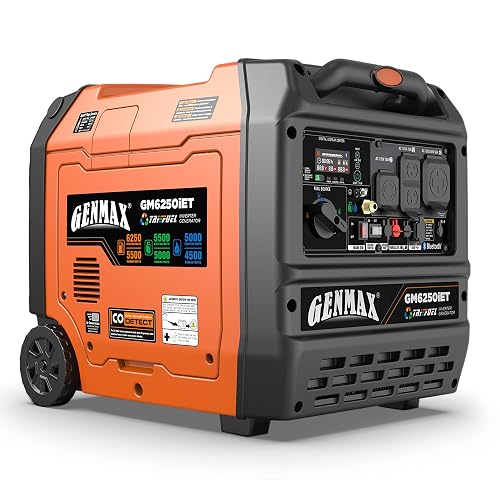 TOP CHOICEBest for tri-fuel flexibilityGENMAX 6250w Tri-Fuel Silent Inverter GeneratorView on Amazon
- 4
 Best for whole-home backup12000W Open Frame Inverter Generator 50AView on Amazon
- 5
 Best for heavy-duty open frame useGENMAX 10500 Peak Watt Tri Fuel Open Frame Inverter GeneratorView on Amazon
- 6
 Best budget pickWEN 6800-Watt Dual Fuel RV-Ready Electric Start Portable Inverter Generator (DF680iX)View on Amazon
- 7
 Best compact optionWEN 4800-Watt Dual Fuel RV-Ready Electric Start Portable Inverter Generator (DF480iX)View on Amazon
Our Top Picks
Quick Comparison
| Product | Best for | Key feature |
|---|---|---|
| AIVOLT 8000W Dual Fuel Inverter Generator 50A RV Generator | Overall RV and home use | Dual fuel, 62 dBA rating, 50A outlet |
| WEN 6800-Watt Dual Fuel RV-Ready Inverter Generator (DF680iX) | Budget-minded RV owners | Fuel shut-off and CO Watchdog |
| GENMAX 6250w Tri-Fuel Silent Inverter Generator | Flexible fuel choices | Tri-fuel, Bluetooth app control |
| Genkins 8000W Portable Quiet Inverter Generator | Quiet campgrounds | Under 62 dBA, parallel ready |
| GENMAX 10500 Peak Watt Tri Fuel Open Frame Inverter Generator | Heavy loads and job sites | 10,500 peak watts, ATS |
| WEN 4800-Watt Dual Fuel RV-Ready Inverter Generator (DF480iX) | Light weight and portability | Lightweight, CO Watchdog |
| 12000W Open Frame Inverter Generator 50A | Whole-home backup | 12,000 watts, digital meter, ECO mode |
AIVOLT 8000W Dual Fuel Inverter Generator 50A RV Generator
Dual Fuel Ready, 120V/240V, Super Quiet 62 dBA, Clean Inverter Power, CO Auto-Shutoff, Electric Start, Portable with Wheels AIVOLT 8000W Dual Fuel Inverter Generator 50A RV Generator
Best for: Overall RV and home use
This model suits RV owners who want one generator that runs on gasoline or propane and provides a 50-amp outlet for a typical camper. Its 120V/240V output covers most rig needs, and the listing emphasizes clean inverter power.
Key specs:
- Dual fuel capable
- 120V/240V output with 50A outlet
- Listed noise level of 62 dBA
- Electric start and wheels for portability
- CO auto-shutoff
Pros:
- Dual fuel gives you a backup if gasoline runs short
- Electric start simplifies cold mornings
- Wheels make repositioning easier
Cons:
- Brand support is less established than some larger names
- Propane performance can be lower than gasoline at equal settings
Bottom line: A strong first choice for RV owners who want a versatile, feature-rich 50-amp unit without going to a premium brand.
WEN 6800-Watt Dual Fuel RV-Ready Electric Start Portable Inverter Generator (DF680iX)
WEN 6800-Watt Dual Fuel RV-Ready Electric Start Portable Inverter Generator with Fuel Shut Off and CO Watchdog for Electric Vehicle Backup (DF680iX)
Best for: Budget-minded RV owners
WEN is a long-established name in portable power, and this model is aimed at campers who want RV-ready features from a familiar brand at a moderate cost.
Key specs:
- 6800 watts, dual fuel
- RV-ready 50A connection
- Electric start
- Fuel shut-off and CO Watchdog
Pros:
- Established brand with wide parts availability
- Fuel shut-off and CO Watchdog add safety margin
- Electric start is convenient for regular use
Cons:
- Output is lower than the 8000W and larger models for heavy loads
- Owners often report it is louder under full load than its listed rating suggests
Bottom line: A sensible pick for RVers with moderate power needs who value brand familiarity and safety features.
GENMAX 6250w Tri-Fuel Silent Inverter Generator
GENMAX 6250w Tri-Fuel Silent Inverter Generator Features 2-Wire Auto Start/Stop,bluetooth APP Control,CO Sensor,Digital Display&50A Outlet-Ideal for Home Backup&Camping Outdoor,EPA Compliant
Best for: Flexible fuel choices
This tri-fuel model suits owners who want to run on gasoline, propane or natural gas depending on what is available at the campsite or at home during an outage.
Key specs:
- 6250 watts, tri-fuel
- 50A outlet
- Two-wire auto start/stop
- Bluetooth app control, digital display, CO sensor
- EPA compliant
Pros:
- Tri-fuel flexibility is useful in remote locations
- App control lets you monitor the unit from a distance
- Auto start/stop reduces manual handling
Cons:
- Lower wattage limits how many appliances run at once
- App features depend on a stable Bluetooth connection
Bottom line: Best for RV owners who camp in varied locations and want fuel options built in.
Genkins 8000W Portable Quiet Inverter Generator
Long runtime, Ultra-Quiet <62 dBA, Clean Power <3% THD, Parallel Ready, Generator for Camping or Home Backup Power Supply Genkins 8000W Portable Quiet Inverter Generator for Home, Electric Start
Best for: Quiet campgrounds
Campgrounds with quiet hours and tight site spacing often call for a unit that stays well below conversational noise. This model is marketed for ultra-quiet operation.
Key specs:
- 8000 watts
- Listed noise level under 62 dBA
- Clean power rated under 3% THD
- Parallel ready
- Electric start
Pros:
- Low listed noise suits shared campgrounds
- Parallel capability allows future expansion
- Low total harmonic distortion helps protect electronics
Cons:
- Genkins is a less widely known brand, so verify warranty terms before buying
- Noise figures are manufacturer claims and vary with load and placement
Bottom line: A good match for campers who prioritize low noise and plan to run sensitive electronics.
GENMAX 10500 Peak Watt Tri Fuel Open Frame Inverter Generator
GENMAX 10500 Peak Watt Tri Fuel Open Frame Inverter Generator,with ATS,CO Sensor,digital display and 50A,Ideal for Home backup,contruction site and RV Camping (GM10500XiT)
Best for: Heavy loads and job sites
Owners who run large appliances, power tools or a whole RV with auxiliary loads often need more peak capacity than a 6000- or 8000-watt unit provides.
Key specs:
- 10,500 peak watts, tri-fuel
- 50A outlet
- Automatic transfer switch (ATS)
- CO sensor and digital display
- Open frame design
Pros:
- Higher peak output handles surge loads from air conditioners
- ATS supports automatic switchover for home backup
- Open frame design allows easier cooling and service access
Cons:
- Open frame units are typically louder than enclosed models
- Heavier and bulkier to transport
Bottom line: The right choice for heavy-duty users who accept more noise and weight in exchange for capacity.
WEN 4800-Watt Dual Fuel RV-Ready Electric Start Portable Inverter Generator (DF480iX)
WEN Quiet and Lightweight 4800-Watt Dual Fuel RV-Ready Electric Start Portable Inverter Generator with Fuel Shut Off and CO Watchdog (DF480iX)
Best for: Light weight and portability
This compact WEN model is aimed at RV owners with lighter loads who want a generator that is easy to lift, store and transport.
Key specs:
- 4800 watts, dual fuel
- RV-ready connection
- Electric start
- Fuel shut-off and CO Watchdog
Pros:
- Lightweight for its class
- Fuel shut-off and CO Watchdog add safety
- Well suited to small RVs and modest loads
Cons:
- Limited output for air conditioners larger than a small unit
- May need to be paired with load management for bigger rigs
Bottom line: A practical pick for smaller RVs and campers who run lighter loads and value portability.
12000W Open Frame Inverter Generator 50A
Gas Powered, Electric Start, RV Ready, Digital Meter, 150 lb, 77 dB, ECO Mode for Fuel Efficient, EPA Compliant 12000W Open Frame Inverter Generator, 120/240V 50A, Whole Home Backup Power
Best for: Whole-home backup
This high-output model is intended for owners who want to power a full house or large RV load during an outage, with 120V/240V capability and a 50A outlet.
Key specs:
- 12,000 watts
- 120V/240V with 50A outlet
- Gas-powered with electric start
- Digital meter and ECO mode
- EPA compliant
Pros:
- High output covers whole-home and large RV loads
- ECO mode can reduce fuel use at lighter loads
- Digital meter helps you track output
Cons:
- Heavy at about 150 pounds, so it is hard to move alone
- Open frame design is louder than enclosed alternatives
Bottom line: Best for owners who need maximum capacity and are willing to accept weight and noise.
Buying Guide
Running Watts and Surge Watts
Check both the running watts and the surge watts. Air conditioners draw a large startup surge, so the surge rating matters more than the running rating when you size a unit. Add up the running loads you plan to use at once, then confirm the generator can handle the surge from your largest appliance.
Good picks for this: GENMAX 10500 Peak Watt Tri Fuel Open Frame Inverter Generator, 12000W Open Frame Inverter Generator 50A
Outlet Types and Amperage
A true 50-amp RV connection differs from a 30-amp setup. Confirm your rig’s shore power cord and generator outlet match before buying, and use an adapter only if its rating is correct for your load. Consult a licensed electrician if you are unsure how to wire a transfer switch.
Good picks for this: AIVOLT 8000W Dual Fuel Inverter Generator 50A RV Generator, WEN 6800-Watt Dual Fuel RV-Ready Inverter Generator (DF680iX)
Fuel Options
Dual fuel models run on gasoline or propane, and tri-fuel models add natural gas. Propane often provides longer storage life and cleaner starts in cold weather, but output at the same setting can be lower than gasoline. Plan around the fuel you can reliably access.
Good picks for this: GENMAX 6250w Tri-Fuel Silent Inverter Generator, WEN 4800-Watt Dual Fuel RV-Ready Inverter Generator (DF480iX)
Noise Ratings and Campground Rules
Manufacturer decibel figures are usually measured at a set distance under specific load conditions, so they are useful for comparison but not exact predictions. Enclosed or inverter units with eco modes tend to be quieter than open frame designs. Check your campground’s quiet hours and place the unit as far from neighboring sites as practical.
Good picks for this: Genkins 8000W Portable Quiet Inverter Generator, AIVOLT 8000W Dual Fuel Inverter Generator 50A RV Generator
Clean Power and Electronics Protection
Inverter generators produce a sine wave with low total harmonic distortion, which is important for laptops, medical devices and modern RV electronics. Look for a THD rating when the manufacturer lists one, and avoid unbranded units that give no specifications.
Good picks for this: Genkins 8000W Portable Quiet Inverter Generator, WEN 6800-Watt Dual Fuel RV-Ready Inverter Generator (DF680iX)
Safety Features
Carbon monoxide sensors, automatic shutoff and fuel shut-off valves reduce risk. Never operate any generator inside a vehicle, tent or enclosed space, and keep it at least 20 feet from doors and windows. The Centers for Disease Control and Prevention and the Consumer Product Safety Commission both publish generator safety guidance worth reviewing before first use.
Good picks for this: WEN 4800-Watt Dual Fuel RV-Ready Inverter Generator (DF480iX), GENMAX 6250w Tri-Fuel Silent Inverter Generator
Weight, Portability and Durability
Open frame units are often heavier and harder to move, while smaller inverter units with wheels and handles are easier to store. Check whether the frame and housing feel solid and whether replacement parts and service are available in your area.
Good picks for this: WEN 4800-Watt Dual Fuel RV-Ready Inverter Generator (DF480iX), AIVOLT 8000W Dual Fuel Inverter Generator 50A RV Generator
FAQ
Can a 50 amp inverter generator run a full RV air conditioner?
Many 8000-watt and larger units can run one rooftop air conditioner, but startup surge matters. Check the surge rating against your air conditioner’s listed starting requirements, and consider a soft start kit if the margin is tight.
Is a dual fuel generator better than a gasoline-only model?
Dual fuel gives you a backup fuel source, which helps during shortages. Gasoline usually delivers slightly higher output at the same setting, while propane stores longer and starts more reliably in cold weather.
How loud is a 50 amp inverter generator?
Listed noise levels for models in this class often range from the low 60s to higher figures under load. Ratings are measured under specific conditions, so real-world noise depends on placement, load and surroundings.
Do I need a transfer switch with a generator?
A transfer switch allows safe connection to a home or RV electrical system and prevents backfeeding into utility lines. Have a licensed electrician install any transfer equipment for home use.
What is the difference between an inverter and a conventional generator?
Inverter generators adjust engine speed to match load, which reduces noise and fuel use and produces cleaner power. Conventional generators run at a fixed speed and are often louder and less suited to sensitive electronics.
How often should I run my generator?
Run the unit under load for a short period every month or as the manufacturer recommends, and follow the maintenance schedule in your owner’s manual for oil changes and air filter service.
Conclusion
For most RV owners, the AIVOLT 8000W Dual Fuel model offers the broadest mix of features for a 50-amp setup. Campers who prioritize quiet operation should look at the Genkins 8000W unit, while owners who camp in varied locations may prefer the GENMAX tri-fuel option. Heavy users with large loads should consider the 10500-watt and 12000-watt open frame models, and those with lighter needs will find the WEN 4800-watt model easy to manage. Match your choice to your air conditioner’s surge requirement, your campground’s noise rules, and the fuels you can reliably access.
Sources
- Carbon monoxide safety guidance for portable generators and generator placement (cdc.gov)
- Consumer product safety recalls and generator operating safety tips (cpsc.gov)
- Background on generator sizing, fuel options and backup power planning (energy.gov)
Related reading
- 5 Best 50 Amp Generator Inverter Picks for Home and RV Backup (2026)
- 3 Best Dual Fuel Inverter Generator 30 Amp Picks for RV and Home Backup
- Top 7 LP Gas Inverter Generators Compareds for Home and RV Use
About Owen Palmer
Owen Palmer is part of our editorial team and reviews and edits our generators & noise guides, checking product details against manufacturer specifications and owner feedback.